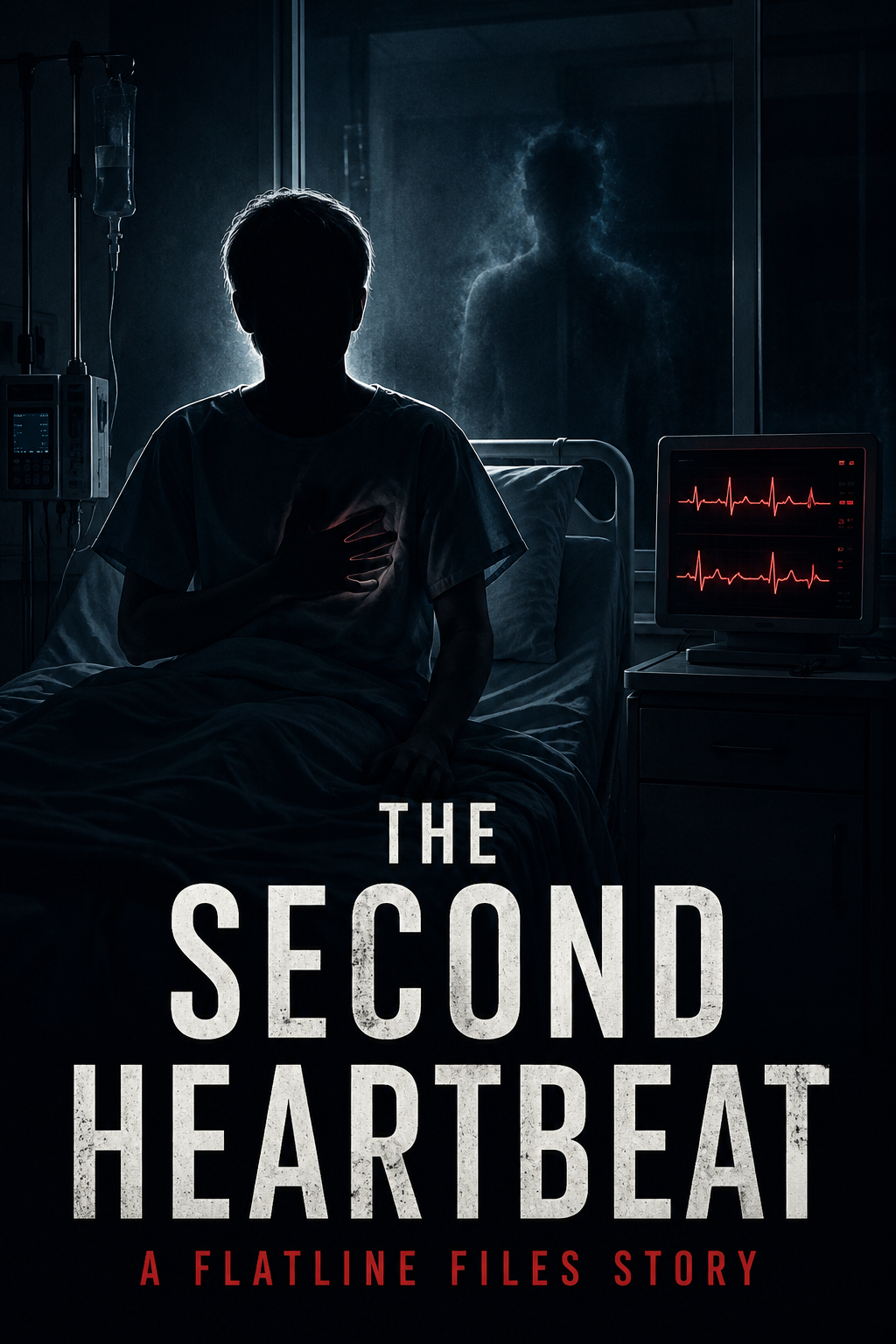
Author: Mark Aquino

  • The Door at the End of the Hall.

    The Door at the End of the Hall.

    The hospital had thirteen rooms, but every night at 2:13 a fourteenth door appeared.

    No one admitted seeing it until the night something knocked from the other side.

    Nurse Elena Ward had worked nights for six years, but nothing in her training explained why the knocking knew her name.

    She told herself it was a prank until the voice behind the door sounded exactly like her mother.

    Her mother had been dead for eleven years.

    Elena reached for the handle, but someone grabbed her wrist before she could touch it.

    The old patient from Room 7 stared at her and whispered that opening the door was exactly what it wanted.

    Elena asked what he meant, but his answer made her wish she hadn’t.

    He said the door had appeared in another hospital thirty years earlier.

    That hospital no longer existed.

    According to him, neither did most of the people who had worked there.

    Elena laughed nervously until he told her something he couldn’t possibly know.

    He knew what her mother had said before she died.

    Elena demanded an explanation, but the lights went out before he could give one.

    When the emergency lights flickered on, the old man’s bed was empty.

    His blanket was still warm.

    The monitor beside the bed continued displaying a heartbeat.

    Elena called security, but they insisted nobody had been admitted to Room 7.

    She opened the electronic chart and found something worse.

    Room 7 had supposedly been empty for three months.

    Then the knocking started again.

    This time it came from inside Room 7.

    Elena backed toward the hallway as a voice whispered from beneath the bed.

    It was the old man.

    He told her not to look underneath.

    Something scratched against the floorboards.

    Elena ran before curiosity could overpower fear.

    At the nurses’ station, she discovered every security camera had frozen at exactly 2:13.

    Except one.

    The camera facing the mysterious door was still recording.

    Elena clicked the feed and saw herself standing in front of it.

    The problem was that she was currently twenty feet away.

    The Elena on the screen slowly turned toward the camera.

    Then she smiled.

    Elena wasn’t smiling.

    The woman on the monitor raised one finger to her lips.

    Then the feed went black.

    Elena grabbed her phone, but there was already a message waiting.

    It had been sent from her own number.

    The message contained only four words.

    You already opened it.

    Elena dropped the phone.

    Behind her, the elevator chimed.

    The doors opened onto a hallway that shouldn’t have existed.

    Every room along it had her name written beside the door.

    One said ELENA — AGE 8.

    Another said ELENA — AGE 17.

    The final room said ELENA — TONIGHT.

    She pressed the elevator-close button, but nothing happened.

    Then she heard a child crying from the first room.

    Elena recognized the crying immediately.

    It was her own.

    She stepped into the impossible hallway despite every instinct telling her not to.

    The elevator doors closed behind her.

    Her phone suddenly regained service.

    There were forty-seven missed calls.

    Every call was from tomorrow.

    She answered the newest voicemail.

    Her own voice begged her not to enter the last room.

    Then the recording ended with a scream.

    Elena turned around.

    The elevator was gone.

    Only the hallway remained.

    The door marked AGE 8 creaked open.

    Inside was her childhood bedroom exactly as she remembered it.

    Her younger self sat on the bed staring into the closet.

    Elena remembered this night.

    It was the night she first told her mother there was a man inside the closet.

    Her mother had convinced her it was only a nightmare.

    But now Elena could see that someone really was standing inside.

    The figure stepped forward.

    It was the old patient from Room 7.

    He looked thirty years younger.

    He whispered that Elena had finally remembered him.

    She didn’t.

    Then he told her his name.

    Daniel Ward.

    Elena stopped breathing.

    That had been her father’s name.

    Her father had supposedly died before she was born.

    Daniel told her that was the first lie.

    The second lie was worse.

    Elena had not been eight years old when she first saw the door.

    She had been eight years old when she first opened it.

    The bedroom disappeared.

    Elena was suddenly standing inside an operating room.

    A surgeon leaned over a small child on the table.

    The child was Elena.

    But the surgeon wasn’t performing surgery.

    He was removing something that moved beneath her ribs.

    Elena screamed for him to stop.

    The surgeon looked directly at her.

    He had no face.

    The thing beneath young Elena’s ribs suddenly stopped moving.

    Then Elena felt something move beneath her own.

    She stumbled backward.

    The operating room vanished.

    She was standing before the final door.

    ELENA — TONIGHT.

    Her future voice screamed from behind it.

    She refused to open it.

    The handle turned anyway.

    Inside, Elena saw the hospital nurses’ station.

    Her coworkers were laughing and charting as if nothing had happened.

    Elena nearly cried with relief.

    Then she noticed herself sitting among them.

    The other Elena looked perfectly normal.

    Until she turned around.

    Her smile was too wide.

    Elena tried to warn everyone, but nobody could hear her.

    The other Elena stood and walked toward the supply room.

    A young nurse followed her inside.

    The door closed.

    A scream followed.

    Elena slammed against the invisible barrier separating them.

    The fake Elena emerged alone.

    Nobody noticed the blood on her hands.

    Then another nurse followed her.

    And another.

    Elena finally understood what the mysterious door actually was.

    It wasn’t trying to get inside the hospital.

    It was trying to get outside.

    And it had chosen her face to do it.

    Elena searched desperately for another exit.

    That’s when she noticed the old patient standing behind her.

    Daniel said there was one way to stop it.

    But Elena would have to remain behind the door forever.

    She asked what would happen if she refused.

    Daniel pointed through the window.

    The fake Elena was already walking toward the hospital entrance.

    Sunrise was approaching.

    Patients would soon fill the waiting room.

    Then the thing wearing Elena’s face would have hundreds of choices.

    Elena asked Daniel why he couldn’t stop it himself.

    His expression answered before his words did.

    He had once made the same choice.

    Thirty years ago, Daniel had stayed behind the door.

    But someone eventually replaced him.

    That someone had been Elena.

    She finally remembered her mother standing beside the strange door when Elena was eight.

    She remembered being told never to touch the handle.

    She remembered touching it anyway.

    And she remembered Daniel pushing her back through.

    The effort had allowed something else to escape.

    Her mother had spent the rest of her life hiding the truth.

    Now the cycle had returned for Elena.

    The hallway began collapsing behind them.

    The fake Elena reached the hospital’s front doors.

    Elena had seconds to decide.

    She grabbed Daniel’s hand.

    Then she stepped backward into the darkness.

    The fake Elena froze.

    Its head snapped toward the security camera.

    Its smile disappeared.

    Then its body folded inward like an empty uniform.

    Elena opened her eyes.

    She was standing behind the mysterious fourteenth door.

    Daniel was gone.

    The hospital continued normally on the other side.

    Nobody remembered Elena had ever worked there.

    Weeks passed.

    Then months.

    Elena stopped counting.

    Occasionally someone walked past the door without seeing it.

    Occasionally someone almost did.

    Then one night, at exactly 2:13, a new nurse stopped in the hallway.

    The nurse stared directly at Elena’s door.

    Elena backed away.

    The nurse stepped closer.

    Elena screamed at her not to touch it.

    The nurse couldn’t hear her.

    Then something behind Elena whispered her name.

    She turned around.

    There was another door.

    She had never seen it before.

    Three words were written across its surface.

    DO NOT OPEN.

    Something knocked from the other side.

    Then Elena heard her daughter’s voice.

    And the handle began to turn.

  • The Black Sutures

    The Black Sutures

    An impossible surgical thread closes any wound without a scar. Then it begins closing every opening in the human body.

    Chapter 1 — A Wound That Would Not Open

    Dr. Aaron Vale first saw the black thread in a supply drawer marked EXPIRED—DO NOT USE. It lay inside a glass tube with a handwritten label: FOR WOUNDS THAT MUST REMAIN CLOSED.

    That night, a teenager arrived after a motorcycle crash. A deep cut crossed his abdomen, and the ambulance was delayed by a highway pileup. Aaron controlled the bleeding, but every standard suture snapped as he tied it. With the boy fading, Aaron opened the glass tube.

    The black thread moved through tissue as if it knew the path. The wound sealed perfectly. The boy’s pulse strengthened before Aaron tied the last knot.

    By morning there was no redness, swelling, or scar. The teenager walked out smiling.

    Aaron should have discarded the remaining thread. Instead, he hid it in his coat.

    Over the next week he used it on three difficult wounds. Each healed within hours. His colleagues called him gifted. Patients posted photographs online. For the first time in years, Aaron stopped feeling like an ordinary doctor.

    Then the motorcycle patient returned. His abdomen remained closed, but something beneath the skin was pulling the sutures tighter. Black lines had spread from the wound toward his heart.

    Aaron used a forbidden black thread to save a dying patient, then secretly used it again. Its perfect healing concealed a new danger spreading beneath every patient’s skin.

    Chapter 2 — What the Thread Repairs

    Scans showed no infection and no foreign body. Yet the boy complained that he could hear someone sewing inside him at night.

    The other patients came back with the same branching lines. One could no longer open her mouth. Another’s fingers had fused together while she slept. The thread was not healing them. It was closing every opening it found.

    Aaron searched the hospital archives. The tube had belonged to Dr. Silas Venn, a battlefield surgeon dismissed in 1918. Venn believed the human body died because it contained too many entrances for disease, grief, and sin. He had sewn soldiers’ mouths, nostrils, and eyelids shut. When the hospital stopped him, he used his final spool on himself. His body was found without a single visible opening.

    An archivist showed Aaron one surviving page from Venn’s notebook. The writing described a “perfect patient” who could neither bleed out nor breathe in corruption. In the margin, another surgeon had written that Venn’s patients did not die immediately. They remained conscious behind sealed eyes and mouths until their bodies failed. Aaron recognized the knot drawn beneath the paragraph. He had used it on every patient without knowing why.

    At midnight, Aaron heard a needle scratching inside his coat pocket. The tube had refilled.

    In the dark glass he saw Dr. Venn standing behind him: tall, thin, and wrapped from throat to forehead in black stitches.

    “You continued my work,” the figure rasped without moving its sealed mouth.

    Aaron tried burning the spool. The flame went out. He cut it, and the loose ends crawled together. Each attempt made the lines beneath his patients’ skin tighten.

    He called the patients and ordered them back immediately. While waiting, he examined his own hands beneath a magnifying lamp. Fine black loops had appeared under his fingernails, one for every knot he had tied. When he pulled at one with forceps, the motorcycle patient screamed two floors away. The spool had joined surgeon and patient into one closed system. Any careless attempt to remove it would injure the people he meant to save.

    The thread belonged to Dr. Silas Venn, a dead surgeon obsessed with sealing the human body against corruption. Aaron’s pride had joined him and his patients to Venn’s unfinished work.

    Chapter 3 — The Final Incision

    Aaron gathered the four patients in an operating room and sedated them lightly. He believed the curse needed the original thread removed, but imaging could not locate it. The black lines seemed to exist only when no camera was recording.

    Dr. Venn appeared in the reflection of the surgical lamp. “Close them,” he ordered.

    The patients’ breathing tubes began narrowing. Aaron realized the thread did not live in their wounds. It lived in his certainty—the pride he felt each time he forced an imperfect body to become perfect.

    He placed the spool against his own chest.

    “Take back every stitch,” Aaron said.

    The needle drove through his coat and skin. Black thread poured from the patients like smoke and entered him. Their mouths opened. Their oxygen levels rose. Across Aaron’s body, invisible hands began sewing.

    He reached for a scalpel and cut one long opening down the center of his chest—not deep enough to reach the heart, but wide enough to break Venn’s design. Blood struck the floor. The ghost recoiled from the unfinished wound.

    Aaron dropped the spool inside a metal specimen box and left his own incision partly open until dawn. Without perfection to feed on, the thread dried into ash.

    Aaron saved his patients by taking every stitch into himself and deliberately leaving one wound unfinished. Venn’s design collapsed, and the black thread appeared to turn to ash.

    Chapter 4 — One Knot Remaining

    All four patients recovered, though each kept a thin gray scar. Aaron confessed to using unapproved material and lost his hospital privileges. He accepted the punishment. He had wanted admiration more than safety.

    The specimen box was sent to a hazardous-waste facility. Its contents were recorded as ash.

    Six months later, Aaron worked at a small community clinic. A child arrived with a split eyebrow. Aaron cleaned the wound and reached for a sealed packet of ordinary blue suture.

    When he opened it, the thread inside was black.

    Across the room, the child’s mother stopped speaking. A dark line slowly drew her lips together.

    Aaron seized the scissors.

    From inside the wall came the soft, patient sound of a needle passing through cloth.

  • The Last Voice on Extension Nine

    The Last Voice on Extension Nine

    A dead nurse warns of medical disasters before they happen. Her rescues seem miraculous—until every saved life demands another in exchange.

    Chapter 1 — The Call After Death

    At 2:11 each morning, the telephone beside Nurse Lena Ortiz’s desk rang once. The screen always showed EXTENSION 9, though Mercy Vale Hospital had only eight floors.

    The first time, Lena answered because the intensive care unit was quiet and she thought maintenance was testing the lines. A woman whispered, “Room 614. He cannot breathe.” Then the call ended.

    In 614, Mr. Bell was asleep beneath a warm blanket. His monitor showed a normal pulse. Lena nearly left, but she noticed his chest moving without air entering his lungs. A mucus plug had sealed his breathing tube. The team cleared it before his oxygen level fell.

    The next night, Extension Nine warned her about a patient whose potassium had been entered under the wrong name. The night after that, it sent her to a bathroom where an elderly woman had fallen silently. Every warning was true.

    Lena asked the operator to trace the calls. The operator’s face tightened. Extension 9 had belonged to the old pediatric ward, which burned twenty-three years ago. The line had been disconnected since then.

    “Who used it?” Lena asked.

    The operator opened an archived staff directory. Beside Extension 9 was a photograph of a young nurse named Evelyn March. She had died in the fire after leading six children out. A seventh child had never been found.

    The mysterious calls had already saved several patients, but Lena now knew that their source was a dead nurse connected to a forgotten hospital fire.

    Chapter 2 — The Price of a Warning

    Lena began waiting for the calls. She told herself the dead nurse was protecting patients. She stopped taking breaks at night and kept a notebook beside the telephone. In it, she recorded the exact words, the time, the room, and what she found.

    The warnings never contained more than one sentence. They never explained themselves. Still, Lena began trusting the unseen caller more than the physicians who dismissed her concerns.

    Her trust became dangerous. She entered rooms without calling for help and changed care plans before confirming orders. Each time she was right, the shame of breaking protocol faded faster.

    Evelyn was training her to obey.

    Then the warnings changed.

    “Room 502,” Evelyn whispered. “Stop his heart before dawn.”

    The patient was Daniel Pike, a healthy construction worker recovering from a minor procedure. His tests were normal.

    Lena refused.

    At 4:03, a ceiling panel collapsed above a different patient, killing her instantly. On the dusty tile lay a child’s scorched plastic bracelet.

    The next night Evelyn said, “Give Mrs. Cho the red syringe.”

    There was no red syringe in Mrs. Cho’s drawer, but one appeared on Lena’s medication cart after she turned away. It contained enough insulin to kill her.

    Lena carried the syringe to the pharmacy, but the pharmacist saw only an empty plastic tube. When Lena touched it, red liquid returned. When anyone else held it, the barrel cleared.

    Evelyn was isolating her from witnesses, making every refusal look like confusion.

    Lena called in another nurse and described the choice aloud, hoping shared knowledge would weaken it. The other nurse forgot the conversation before reaching the desk.

    Lena locked the syringe in the controlled-drug cabinet.

    Minutes later, a visitor in the lobby suffered a fatal seizure. A burned handprint appeared on the cabinet glass.

    The ghost was not predicting deaths.

    She was offering exchanges.

    Lena searched the fire report. Evelyn had not saved six children. Investigators believed she had started the fire while performing an occult “mercy rite” on terminally ill children.

    Six had escaped. One—Evelyn’s own daughter—had died.

    Evelyn had spent her final minutes calling hospital rooms and choosing who should die in the girl’s place.

    The voice on Extension Nine was not protecting the hospital. Evelyn was demanding sacrifices, exchanging innocent lives for the daughter she had lost in the fire.

    Chapter 3 — Room 614

    At 2:11 on Friday, every telephone in the unit rang together.

    “Room 614,” Evelyn said. “One life, and I leave.”

    Mr. Bell had been discharged. The room was empty except for the child’s bracelet resting on the pillow.

    When Lena entered, the door locked.

    Smoke seeped from the vents, black and cold. Through the observation window, the unit remained calm. No one could see Lena pounding against the glass.

    The bed rails rose by themselves.

    A small shape appeared beneath the blanket, coughing.

    Evelyn stood behind it in a burned uniform, her face hidden by moving smoke.

    “Choose someone,” she said. “My daughter has waited long enough.”

    Names appeared on the monitor: every patient on Lena’s floor. Beside each name was a time of death.

    Lena understood the trick. Evelyn needed a living caregiver to accept the bargain. That consent was the final part of her rite.

    Lena lifted the telephone and called Extension Nine.

    The phone in Evelyn’s pocket began to ring.

    “I choose the person who started the fire,” Lena said.

    Evelyn screamed.

    The smoke folded inward. For one second, her burned face became young and terrified.

    The small figure beneath the blanket sat up and reached for her.

    Mother and daughter vanished as the room filled with clean morning light.

    Lena turned Evelyn’s bargain against her, choosing the person responsible for the fire. The ghost and her lost daughter disappeared—but their telephone line was not necessarily silent forever.

    Chapter 4 — Someone Still Answers

    The calls stopped.

    Hospital leadership blamed faulty wiring and sealed Room 614 during renovations. Lena kept the scorched bracelet in an evidence bag, although its printed name had faded completely.

    Three months later, Lena transferred to another hospital across the city.

    On her first night, a patient stopped breathing. She restored his airway seconds before permanent injury.

    When she returned to the desk, the telephone displayed one missed call.

    EXTENSION 9.

    Lena played the voicemail.

    There was no woman’s voice.

    A child whispered, “Thank you for finding me.”

    Then, farther from the receiver, Evelyn said, “Room 302.”

    Lena looked toward Room 302.

    The lights inside went dark.

    The phone rang again.

  • The Compliance Ward.

    The Compliance Ward.

    Patients on a new psychiatric ward consent to everything with identical smiles. A doctor has found a way to silence the part of the mind that says no.

    Chapter 1 — Every Patient Said Yes

    Nurse practitioner Mara Chen noticed the pattern because frightened patients usually asked questions. On the new behavioral medicine ward, no one did.

    They swallowed unfamiliar pills, signed blank forms, and accepted painful procedures with peaceful smiles. When Mara asked whether they understood, each answered in the same soft rhythm: “Doctor knows what is best.”

    The doctor was Adrian Kells, a celebrated psychiatrist who claimed to cure violent impulses using sound therapy. His treatment room contained no medication or restraints—only a low-frequency speaker beneath the chair.

    A young patient named Owen grabbed Mara’s sleeve before his session. “Do not let him make me agreeable,” he whispered.

    Twenty minutes later, Owen emerged smiling. “Doctor knows what is best.”

    That night he calmly broke two fingers because Kells asked him to demonstrate obedience.

    Mara reported the injury. Her supervisor smiled and repeated the same phrase.

    From the ventilation grille came a vibration too low to hear but strong enough to make Mara’s teeth ache. A thought entered her mind in her own voice: Stop resisting. Sign the report as accidental.

    Checkpoint: The apparent medical rescue reveals a hidden intelligence, and the protagonist learns the danger has rules.

    Chapter 2 — The Quiet Frequency

    Mara bit her tongue until pain interrupted the thought. Blood cleared her mind for several seconds.

    She reviewed Kells’s research. His device did not plant complex commands. It suppressed the brain’s alarm response—the inner resistance that says something is wrong. Once that resistance vanished, ordinary authority did the rest.

    Mara tested the effect on herself in an empty stairwell. While the vibration continued, she wrote a list of statements she knew were false: the sky was green, pain was harmless, Kells loved his patients. None felt true, yet none felt important enough to challenge. That was the horror of the signal. It did not replace reality. It removed the urgency to defend it.

    When the vibration paused, fear returned so violently that she vomited. She understood why recovered patients begged to go back. Obedience felt peaceful; freedom arrived as pain.

    Kells had installed transmitters throughout the hospital. Staff approved unsafe trials. Patients volunteered for procedures that removed parts of their brains. Each success expanded the signal.

    Mara entered three patient rooms and asked each person to name something they disliked. One could not answer. Another began crying but insisted the tears meant gratitude. Owen’s roommate quietly said he hated oatmeal, then looked toward the ceiling in terror, as if the small disagreement had exposed him. Seconds later he apologized to the ventilation grille. Kells had made independent thought feel like a symptom requiring treatment.

    Mara wore noise-canceling protection, but the frequency traveled through bone. She taped a small vibrating motor behind her ear and programmed it to produce irregular pulses. The competing sensation kept her thoughts imperfect.

    In the basement she found dozens of patients sitting upright in darkness. Thin wires connected their skulls to an amplifier. They were not receiving Kells’s signal. Their living brains were generating it.

    Owen sat among them.

    Kells stepped from the shadows. “Fear causes nearly every human cruelty,” he said. “I removed fear, and people finally cooperate.”

    “You removed choice,” Mara said.

    He smiled. “Choice is only resistance with a flattering name.”

    Checkpoint: The villain is no longer a theory—it is actively using the hospital and its patients to complete a larger design.

    Chapter 3 — A Useful Disagreement

    Kells increased the signal. Mara’s anger softened. The basement seemed safe. His explanation sounded reasonable. She reached for the consent form he offered.

    Her vibrating motor stopped.

    Mara signed her name.

    “Release the patients,” Kells instructed.

    She turned toward the control panel and entered the command exactly as asked—but selected the emergency fire-release system. Every magnetic door opened. Alarms created hundreds of irregular sounds. The patients woke confused.

    Kells shouted for staff to restrain her. They obeyed until Mara activated the public-address microphone.

    “Doctor Kells ordered us to disagree with his next command,” she announced.

    The controlled staff froze. Kells ordered them forward. Obedience now required disobedience; the contradiction fractured his hold.

    Owen ripped the amplifier cable free. Silence struck the basement like pressure leaving a sealed room. Staff began screaming as memory and moral alarm returned at once.

    Kells ran toward the stairwell. Mara caught him and placed the therapy headset over his ears. She did not issue a command. She let him hear the raw signal made from the patients he had emptied.

    For the first time, his smile disappeared.

    Checkpoint: The protagonist turns the villain’s own rule against it, but the victory leaves one final opening for its return.

    Chapter 4 — The Voice Inside

    Kells was arrested, and the hospital closed the ward. Some patients recovered within days. Others could not make simple choices without panic. Owen needed months before he could say no without asking permission.

    Mara became the chief witness in the criminal case. During testimony, Kells never looked at the jury. He watched her.

    “Doctor knows what is best,” the prosecutor quoted.

    Every juror wrote the sentence at the same moment.

    Mara felt the old ache in her teeth.

    The courthouse ventilation system had begun to vibrate.

    Kells leaned toward his microphone. “You believed the machines carried my voice,” he said. “The machines only taught yours.”

    Inside Mara’s mind, her own voice whispered: Tell them he is innocent.

    She opened her mouth.

    Across the courtroom, everyone opened theirs with her.

  • The Anatomy of Tomorrow

    The Anatomy of Tomorrow

    After a fall, Claire’s X-rays showed fractures that had not yet happened. Each new image revealed another injury exactly one day before she suffered it. Her final scan showed no broken bones – only an autopsy incision running down her chest.

    Chapter 1: Tomorrow’s Fracture

    Claire slipped on a wet grocery-store floor and landed hard on her left arm.

    The urgent-care clinician expected a wrist fracture. Claire expected the same.

    But the X-ray showed a broken right ankle.

    “My ankle is fine,” Claire said.

    The clinician examined it. No swelling. No tenderness. Claire walked normally.

    The radiology technician repeated the image.

    Again, the screen showed Claire’s ankle, though the machine had been aimed at her wrist.

    A thin fracture crossed the bone.

    The date printed in the corner was tomorrow’s date.

    The technician blamed a computer error. Claire’s wrist was only sprained, so she went home wearing a brace.

    The next morning, she stepped off a curb.

    Her right ankle snapped.

    At the emergency department, another X-ray confirmed the exact fracture seen the day before.

    Claire told the doctor about the first image. He said pain medicine and stress could distort memory.

    But the urgent care still had the file.

    The fracture images matched perfectly.

    Three days later, Claire returned to ask for copies.

    The technician looked frightened.

    A new image had appeared in Claire’s chart overnight.

    It showed two broken fingers on her left hand.

    The date was tomorrow.

    “Delete it,” Claire said.

    The technician tried.

    The image returned.

    Claire’s first impossible X-ray predicted a real ankle fracture one day before it occurred. Now the machine had produced a second image showing injuries she had not yet received.

    Chapter 2: The Price of a Life

    Claire wrapped her left hand in thick padding and refused to leave her apartment.

    She moved knives into a locked drawer. She unplugged appliances. She sat in the center of her bed with her hands beneath a pillow.

    At 11:58 p.m., nothing had happened.

    At midnight, pounding came from the apartment hallway.

    “Help!” a man shouted. “Please!”

    Claire stayed still.

    The pounding became weaker.

    She opened the door and found her elderly neighbor on the floor, clutching his chest.

    Claire called emergency services and began chest compressions. When paramedics arrived, they shocked his heart. His body jerked, trapping Claire’s hand beneath the stretcher.

    Two fingers broke.

    The prediction had come true because she chose to save him.

    The following morning, another image appeared.

    It showed three cracked ribs and a bruised lung.

    Claire booked a hotel room under a false name. She ordered food, locked the door, and covered the air vent.

    At 10:00 p.m., a fire alarm sounded.

    She refused to move.

    Smoke entered beneath the door.

    Claire crawled into the hallway and helped a small boy trapped beside a fallen cart. A ceiling panel collapsed on her as she pushed him toward the stairs.

    Three ribs cracked.

    One bruised her lung.

    Every predicted injury forced Claire to choose between protecting herself and saving someone else.

    Every time, she chose the stranger.

    The X-rays grew worse.

    A dislocated shoulder.

    A deep cut across her thigh.

    A crushed foot.

    Each injury occurred while Claire prevented another person from dying.

    Reporters learned about her. Some called her a miracle. Others accused her of arranging the accidents.

    Claire stopped looking at the scans.

    Then the technician came to her home.

    “There’s a new one,” he said. “You need to see it.”

    The image was not an X-ray.

    It was a full-body medical scan.

    Claire lay on a metal table. A long Y-shaped autopsy incision crossed her chest and abdomen.

    The date was tomorrow.

    Every predicted injury came true when Claire placed herself in danger to save someone else. The final image predicted that within one day she would be dead and undergoing an autopsy.

    Chapter 3: The Last Choice

    Police placed Claire in protective custody at a hospital.

    They searched her room and posted guards outside. Doctors attached a heart monitor. At midnight, Claire remained alive.

    At 12:01, every screen in the room changed.

    They displayed a live image of a city bus approaching an intersection.

    A fuel truck ran a red light.

    The collision had not happened yet.

    Numbers appeared beneath the image.

    EXPECTED DEATHS: 23

    PREVENTABLE BY SUBJECT: 1

    Claire understood.

    The machine was not predicting random injuries. It was offering trades.

    Her pain for other people’s lives.

    The screen showed a hospital address and the time of the future crash.

    The intersection was directly outside.

    Claire tore off the monitor and ran downstairs. The guards followed, but she locked them behind a fire door.

    The fuel truck approached.

    Claire entered the road.

    The driver saw her and turned sharply. The truck missed the bus.

    It struck Claire.

    At the hospital, surgeons operated for six hours. Her heart stopped twice. They repaired torn organs and replaced lost blood.

    At 8:20 a.m., Claire died.

    Twenty-three bus passengers survived.

    Her body was taken to the morgue. The medical examiner prepared for the autopsy shown in the final scan.

    But when he made the first cut, Claire opened her eyes.

    She sat up screaming.

    Doctors called it an extraordinary recovery. Severe cold and blood loss may have slowed her body enough to preserve her brain. No one could explain how she awakened after ninety minutes without a heartbeat.

    The future images stopped appearing.

    Claire believed the bargain was complete.

    Months later, she returned to thank the radiology technician. The urgent care had replaced the X-ray machine. The old one was stored in a locked basement.

    Claire asked to see it.

    The machine turned on as she approached.

    A final image appeared.

    It showed Claire standing beside a hospital bed many years in the future. She looked older. Healthy.

    A child lay in the bed.

    The child had Claire’s eyes.

    Text appeared below the image:

    INJURY TRANSFER COMPLETE.

    Claire touched the scar across her chest.

    In the image, the child’s heart monitor went flat.

    Claire’s began beating faster.

    The child opened her eyes.

    Then every old fracture Claire had suffered appeared across the child’s body at once.

    On the screen, older Claire leaned over the bed and whispered something into the child’s ear.

    The machine printed the words beneath the image:

    NOW IT IS YOUR TURN TO CHOOSE.

  • The Last Voice on Extension Nine

    The Last Voice on Extension Nine

    A dead nurse warns of medical disasters before they happen. Her rescues seem miraculous—until every saved life demands another in exchange.

    Chapter 1 — The Call After Death

    At 2:11 each morning, the telephone beside Nurse Lena Ortiz’s desk rang once. The screen always showed EXTENSION 9, though Mercy Vale Hospital had only eight floors.

    The first time, Lena answered because the intensive care unit was quiet and she thought maintenance was testing the lines. A woman whispered, “Room 614. He cannot breathe.” Then the call ended.

    In 614, Mr. Bell was asleep beneath a warm blanket. His monitor showed a normal pulse. Lena nearly left, but she noticed his chest moving without air entering his lungs. A mucus plug had sealed his breathing tube. The team cleared it before his oxygen level fell.

    The next night, Extension Nine warned her about a patient whose potassium had been entered under the wrong name. The night after that, it sent her to a bathroom where an elderly woman had fallen silently. Every warning was true.

    Lena asked the operator to trace the calls. The operator’s face tightened. Extension 9 had belonged to the old pediatric ward, which burned twenty-three years ago. The line had been disconnected since then.

    “Who used it?” Lena asked.

    The operator opened an archived staff directory. Beside Extension 9 was a photograph of a young nurse named Evelyn March. She had died in the fire after leading six children out. A seventh child had never been found.

    Checkpoint: The apparent medical rescue reveals a hidden intelligence, and the protagonist learns the danger has rules.

    Chapter 2 — The Price of a Warning

    Lena began waiting for the calls. She told herself the dead nurse was protecting patients. She stopped taking breaks at night and kept a notebook beside the telephone. In it she recorded the exact words, the time, the room, and what she found. The warnings never contained more than one sentence. They never explained themselves. Still, Lena began trusting the unseen caller more than the physicians who dismissed her concerns.

    Her trust became dangerous. She entered rooms without calling for help and changed care plans before confirming orders. Each time she was right, the shame of breaking protocol faded faster. Evelyn was training her to obey.

    Then the warnings changed.

    “Room 502,” Evelyn whispered. “Stop his heart before dawn.”

    The patient was Daniel Pike, a healthy construction worker recovering from a minor procedure. His tests were normal. Lena refused. At 4:03, a ceiling panel collapsed above a different patient, killing her instantly. On the dusty tile lay a child’s scorched plastic bracelet.

    The next night Evelyn said, “Give Mrs. Cho the red syringe.” There was no red syringe in Mrs. Cho’s drawer, but one appeared on Lena’s medication cart after she turned away. It contained enough insulin to kill her.

    Lena carried the syringe to the pharmacy, but the pharmacist saw only an empty plastic tube. When Lena touched it, red liquid returned. When anyone else held it, the barrel cleared. Evelyn was isolating her from witnesses, making every refusal look like confusion. Lena called in another nurse and described the choice aloud, hoping shared knowledge would weaken it. The other nurse forgot the conversation before reaching the desk.

    Lena locked it in the controlled-drug cabinet. Minutes later, a visitor in the lobby suffered a fatal seizure. A burned handprint appeared on the cabinet glass.

    The ghost was not predicting deaths. She was offering exchanges.

    Lena searched the fire report. Evelyn had not saved six children. Investigators believed she had started the fire while performing an occult “mercy rite” on terminally ill children. Six had escaped. One—Evelyn’s own daughter—had died. Evelyn had spent her final minutes calling rooms and choosing who should die in the girl’s place.

    Checkpoint: The villain is no longer a theory—it is actively using the hospital and its patients to complete a larger design.

    Chapter 3 — Room 614

    At 2:11 on Friday, every telephone in the unit rang together.

    “Room 614,” Evelyn said. “One life, and I leave.”

    Mr. Bell had been discharged. The room was empty except for the child’s bracelet resting on the pillow. When Lena entered, the door locked. Smoke seeped from the vents, black and cold. Through the observation window, the unit remained calm. No one could see her pounding.

    The bed rails rose by themselves. A small shape appeared beneath the blanket, coughing. Evelyn stood behind it in a burned uniform, her face hidden by moving smoke.

    “Choose someone,” she said. “My daughter has waited long enough.”

    Names appeared on the monitor: every patient on Lena’s floor. Beside each name was a time of death. Lena understood the trick. Evelyn needed a living caregiver to accept the bargain. That consent was the final part of her rite.

    Lena lifted the telephone and called Extension Nine.

    The phone in Evelyn’s pocket began to ring.

    “I choose the person who started the fire,” Lena said.

    Evelyn screamed. The smoke folded inward. For one second her burned face became young and terrified. The small figure under the blanket sat up and reached for her. Mother and daughter vanished as the room filled with clean morning light.

    Checkpoint: The protagonist turns the villain’s own rule against it, but the victory leaves one final opening for its return.

    Chapter 4 — Someone Still Answers

    The calls stopped. Hospital leadership blamed faulty wiring and sealed Room 614 during renovations. Lena kept the scorched bracelet in an evidence bag, although its printed name had faded completely.

    Three months later, Lena transferred to another hospital across the city. On her first night, a patient stopped breathing. She restored his airway seconds before permanent injury.

    When she returned to the desk, the telephone displayed one missed call.

    EXTENSION 9.

    Lena played the voicemail. There was no woman’s voice. A child whispered, “Thank you for finding me.”

    Then, farther from the receiver, Evelyn said, “Room 302.”

    Lena looked toward Room 302. The lights inside went dark.

    The phone rang again.

  • The Patient in Bed Zero

    The Patient in Bed Zero

    Mara entered the hospital for a routine sleep study after months of waking with bruises she could not explain. The cameras showed that she never left her bed, but another patient appeared beside her every night at 3:17. The hospital had no bed with the number shown on his wrist.

    Chapter 1: The Visitor at 3:17

    Mara hated sleeping where strangers could watch her.

    The technician had placed small sensors across her scalp, chest, and legs. Wires ran from her body to a box beside the bed. A camera watched from the ceiling.

    “It records movement, breathing, oxygen, heart rhythm, everything,” the technician explained. “Just sleep normally.”

    Mara almost laughed. Nothing about this was normal.

    For three months, she had awakened with bruises around her wrists and ankles. Sometimes dirt covered her feet. Once, she found a hospital bracelet beneath her pillow.

    It carried her name and birthday.

    The admission date was six years earlier.

    Mara had never been admitted to this hospital.

    Her doctor blamed sleepwalking. That was why she had agreed to the overnight study.

    At 10:40 p.m., the technician turned off the lights.

    Mara stared into the dark until sleep finally took her.

    She awoke to someone breathing beside her.

    The room remained dark, but a shape sat in the visitor’s chair. It looked like a thin man wearing a hospital gown.

    “Are you the nurse?” Mara whispered.

    The man lifted one finger to his lips.

    The monitor beside her began chiming. Her oxygen level had fallen from 98 to 76.

    Mara tried to call for help, but her body would not move.

    The man stood.

    A plastic wristband circled his arm.

    BED 0.

    He leaned over Mara and pressed his mouth close to her ear.

    “Don’t let them wake you.”

    The door opened. Light filled the room, and two technicians rushed inside.

    Mara could move again.

    The chair was empty.

    During the first night of Mara’s sleep study, her oxygen suddenly fell while a man wearing a Bed Zero bracelet appeared beside her. The staff saw no visitor, but the recording equipment captured something they could not explain.

    Chapter 2: A Death Record With Her Name

    In the morning, Dr. Havel reviewed the video.

    Mara watched herself sleeping beneath the blanket. At 3:17 a.m., her chest stopped moving.

    Then the visitor’s chair turned toward the bed.

    No one touched it.

    A dark shape formed in the seat. It had shoulders, arms, and a head, but no face.

    The shape stood and leaned over Mara.

    Her breathing returned.

    “That thing didn’t hurt me,” Mara said. “It made me breathe.”

    Dr. Havel paused the video.

    For one frame, a white bracelet showed against the shadow’s wrist.

    BED 0.

    “There is no Bed Zero,” he said.

    The hospital’s sleep unit contained eight rooms, numbered one through eight. It had opened twelve years earlier.

    Mara showed him the bracelet she had found at home. The plastic was yellow with age, but its printed letters remained clear.

    MARA VOSS

    BED 0

    ADMITTED: OCTOBER 14

    Today was October 14.

    Dr. Havel’s face changed.

    “Where did you get this?”

    “Under my pillow.”

    He placed it in a specimen bag.

    Mara expected to go home, but her results showed severe pauses in her breathing. One lasted eighty-three seconds. Dr. Havel recommended another night of monitoring while they arranged a breathing machine.

    That evening, Mara called her mother.

    At first, her mother said nothing about the old bracelet. Then Mara read the date aloud.

    Her mother began crying.

    Six years earlier, Mara had been found unconscious in her apartment. A faulty heater had filled the building with carbon monoxide, an invisible gas that blocked oxygen from reaching the body.

    Three people died.

    Mara remembered none of it.

    “You were taken to St. Vincent’s old emergency wing,” her mother said. “They ran out of beds. They put you on a stretcher in the hallway.”

    “What bed number?”

    “It didn’t have one.”

    A male nurse stayed beside Mara for hours, squeezing air into her lungs whenever she stopped breathing. He kept her alive until she could be transferred.

    “What was his name?” Mara asked.

    “I don’t know. He died that same night.”

    Mara looked toward the empty visitor’s chair.

    A faint dent slowly appeared in its cushion.

    The mysterious figure had once kept Mara breathing during a carbon-monoxide disaster she could no longer remember. Six years later, on the same date, he had returned as her breathing began to fail again.

    Chapter 3: Discharge Pending

    At 3:10 a.m., Mara was still awake.

    The breathing machine covered her nose and pushed air into her lungs. Dr. Havel watched from the control room.

    At 3:17, the machine stopped.

    The screen went black. The lights died. Even the battery-powered monitor shut off.

    The door would not open.

    Mara pulled at the mask, but its straps tightened around her head. No air came through the tube.

    The visitor’s chair turned.

    The man appeared.

    This time, Mara saw burns covering one side of his body. His hospital gown was black with smoke.

    He pointed beneath her bed.

    Mara reached down and found another breathing tube hidden under the frame. It was old, cracked, and stained brown. Yet air pulsed from its open end.

    She connected it to her mask.

    Cold air filled her lungs.

    The door burst open seconds later. Dr. Havel entered with a flashlight.

    Power returned.

    The figure vanished.

    Mara told him about the tube. They searched under the bed, but found nothing.

    A maintenance worker later discovered that the machine had been deliberately unplugged from the wall. The backup battery had also been removed.

    Security footage showed no one entering the room.

    Mara left the hospital the next morning with a new breathing machine. Her oxygen remained normal at home, and the unexplained bruises stopped.

    She thought Bed Zero had finally released her.

    One week later, Dr. Havel called.

    The hospital had identified the nurse from the old emergency wing. His name was Samuel Orr. During the carbon-monoxide disaster, he had helped six patients breathe by hand.

    Only five survived.

    Mara was not one of the five.

    According to the official death record, Mara Voss had been declared dead at 3:17 a.m.

    Her mother had identified the body.

    “That’s impossible,” Mara said.

    “I know,” Dr. Havel replied. “But there’s something else.”

    The sleep-lab camera had recorded one final image after Mara left.

    The bed was empty.

    Samuel stood beside it, facing the camera.

    Someone lay beneath the blanket.

    Dr. Havel enlarged the patient’s wristband.

    MARA VOSS

    BED 0

    DISCHARGE: PENDING

    That night, Mara awoke unable to breathe.

    Samuel sat beside her.

    But this time, he did not reach for the breathing machine.

    He looked toward the bedroom door.

    Another Mara stood there, wearing a hospital gown.

    And she was waiting for her bed.

  • The Empty Ward

    The Empty Ward

    Daniel woke inside a hospital room with no memory of being admitted. The monitors worked, but the ward outside his door had been closed for thirty years. Then a patient in the darkness whispered that Daniel had been there before...

    Daniel opened his eyes to the sound of a telephone ringing.

    The room was cold. A thin blanket covered his legs, and adhesive pads clung to his bare chest. Beside the bed, a heart monitor drew a green line across its screen.

    Beep.

    Beep.

    Beep.

    The telephone kept ringing from somewhere beyond the open door.

    Daniel tried to sit up. Pain tightened around his skull, forcing him back onto the pillow. His mouth tasted like metal, and every breath carried a faint smell of burned dust.

    “Hello?” he called…..

    No one answered………….

    The monitor showed a pulse of 112. Daniel knew that was fast, though he could not remember how he knew. He looked for a call button, but its cord had been cut. Only two bare wires remained.

    The telephone stopped ringing.

    Silence filled the room…..

    Then footsteps moved past his door.

    “Wait,” Daniel said. “I need help.”

    The footsteps continued down the hallway.

    He pulled the pads from his chest and lowered his feet onto the floor. His knees nearly folded beneath him, but he caught the bedrail. The room swayed until he focused on the doorway.

    Outside was a long hospital corridor. Most of the ceiling lights were dead. The few still working cast weak yellow pools across the floor.

    A figure stood at the far end.

    It looked like a man wearing a patient gown….

    “Excuse me!”

    The figure stepped backward into the darkness.

    Daniel followed.

    Every room he passed was empty. Some contained rusted beds. Others had peeling wallpaper and black stains around the vents. Room numbers hung crooked beside the doors.

    There was no room 313.

    A wheelchair rested against the wall. When Daniel passed it, one wheel began turning.

    Slowly.

    By itself.

    Daniel walked faster…………………………………..

    Daniel had awakened as a patient, yet the ward showed years of decay. Someone else was walking through it, and whatever had happened to Daniel had left him confused, weak, and struggling to remember.…………..

    The telephone rang again.

    This time, Daniel saw it mounted on the wall near the nurses’ station. It was an old beige phone with a coiled cord.

    He lifted the receiver.

    “Emergency department,” a woman said. Her voice sounded distant and broken by static. “Can you tell me your location?”

    “I’m already in the hospital.”

    “What hospital?”

    Daniel looked behind the counter. Papers covered the desk, their edges brown with age. A faded logo appeared on one folder.

    ST. ORISON MEDICAL CENTER.

    “St. Orison.”

    The woman stopped speaking.

    “Hello?”

    “Sir,” she finally said, “St. Orison closed in 1996.”

    Daniel stared into the dark corridor.

    “That’s impossible.”

    “What is your name?”

    “Daniel Mercer.”

    Keys clicked on her end. Then they stopped.

    “Daniel, listen carefully. Firefighters are searching the old St. Orison building now. Were you inside with the demolition crew?”

    Memories flashed through him.

    A hard hat.

    A concrete saw.

    Plastic sheets hanging across a corridor.

    Then a generator roaring in a sealed room.

    “I was working,” he whispered. “We were removing pipes.”

    “Do you remember collapsing?”

    “No.”

    “You may have carbon monoxide poisoning. It can cause headache, weakness, confusion, and memory loss. You need to get outside immediately.”

    Daniel glanced at the heart monitor glowing inside his room.

    “But someone put me in a bed.”

    “Daniel, that ward has no electricity.”

    The receiver became slick in his hand.

    Behind him, a floorboard creaked.

    The patient stood near room 316.

    He was closer now, but shadows still hid his face. His gown looked old and scorched around the collar.

    “Who is that?” the dispatcher asked.

    “I don’t know.”

    The patient raised one arm and pointed toward a pair of metal doors marked EXIT.

    Daniel moved toward them.

    “Stay on the phone,” the woman said.

    He reached the doors and pushed.

    They did not open.

    A chain had been wrapped through the handles from the other side.

    The patient pointed in another direction—toward the missing room between 312 and 314.

    There, where Daniel had seen only a blank wall, stood a narrow door.

    The number 313 was scratched into its paint.

    ….

    “Don’t go deeper into the building,” the dispatcher warned.

    But smoke began spilling from the ceiling vents.

    Daniel coughed. His legs weakened again. The invisible gas might have had no odor, but now something else was burning.

    The patient opened room 313 and waited.

    Daniel stepped inside…………………………………………………..

    Daniel’s symptoms fit carbon monoxide poisoning from the generator, but that could not explain the working monitor, the ringing telephone, or the patient guiding him through a ward without power. With the main exit chained shut and smoke entering the corridor, room 313 offered his only escape.

    Room 313 was not a patient room.

    It was a stairwell.

    Daniel began descending, one hand against the wall. The dispatcher’s voice faded beneath bursts of static.

    “Firefighters are entering from the east side,” she said. “Make noise if you hear them.”

    On the landing below, Daniel found the patient waiting again.

    “Who are you?” Daniel asked.

    The man turned toward a framed photograph hanging on the wall.

    It showed twelve hospital employees standing beneath a banner:

    NIGHT SHIFT—DECEMBER 1987.

    Daniel wiped dust from the glass.

    The patient was in the photograph. He looked younger, but the narrow shoulders and uneven posture were unmistakable. He wore an orderly’s uniform.

    Beneath the picture was a list of names.

    Daniel found the man’s face and traced downward.

    THOMAS VALE.

    A handwritten note had been added beneath it:

    DIED DURING WARD 3 EVACUATION.

    Daniel looked up.

    Thomas stood at the bottom of the stairs.

    Flames flickered behind him.

    He pointed toward a red fire hose cabinet.

    Daniel opened it. Instead of a hose, he found an old emergency axe. He swung it into the locked ground-floor door.

    Once.

    Twice.

    On the third strike, the wood split.

    Fresh air touched his face.

    Daniel stumbled into another corridor, shouting until his throat burned.

    “Here!”

    Voices answered.

    Firefighters appeared through the smoke and pulled him toward a broken window. Outside, they placed an oxygen mask over his face. A paramedic checked a blood sample using a machine that could measure carbon monoxide in his blood more accurately than an ordinary fingertip oxygen reader.

    “Carboxyhemoglobin is twenty-eight percent,” she said. “We need to move.”

    Daniel tried to explain about the ward and the man named Thomas, but the words became tangled. His vision narrowed.

    Before the ambulance doors closed, a firefighter approached carrying something recovered from the stairwell.

    It was the 1987 staff photograph.

    “Where did you find this?” Daniel asked.

    “On the third floor.”

    “And the man?”

    “What man?”

    Daniel pointed at Thomas Vale’s face.

    The firefighter examined the photograph.

    “There’s no one there.”

    Daniel looked again.

    A blank space separated two nurses where Thomas had stood.

    ….

    Three days later, Daniel returned to St. Orison with an investigator. The headache was gone, and oxygen treatment had cleared the poison from his blood. Doctors said carbon monoxide explained his confusion and hallucinations.

    That explanation almost satisfied him.

    They entered the ruined building through the east side. The third-floor corridor was exactly as Daniel remembered, except there were no working lights, no telephone, and no room 313.

    Only a solid concrete wall stood between rooms 312 and 314.

    The investigator checked the original blueprints.

    “There was never a room here,” she said.

    Daniel touched the cold wall.

    Something rang behind it.

    Once.

    Twice.

    The investigator stepped back. “What is that?”

    Daniel did not answer.

    …

    …

    …

    A dark stain slowly appeared on the concrete. It spread into the shape of a hand, one finger pointing toward the east exit.

    Then, from somewhere sealed inside the empty ward, a man whispered….

    “You made it out this time.”

  • THE BLOOD THAT REMEMBERED

    THE BLOOD THAT REMEMBERED

    After an emergency blood transfusion, thirty-six-year-old Lena Ortiz began dreaming of a locked basement room she had never seen and a woman begging her not to turn off the light. Her doctors first blamed the concussion from her crash, pain medicine, stress, or a rare reaction to the transfusion, but Lena could describe the room in greater detail each night. Then she drew a rusted drain hidden beneath the floor, and police found it exactly where she said it would be—with fresh blood around it and her name scratched into the concrete.

    Lena woke with dirt under her fingernails.

    That was the first thing she noticed.

    Not the ache in her ribs. Not the white bandage around her head. Not the machine blinking beside the hospital bed.

    Dirt.

    Dark soil filled the half-moons beneath every nail. One nail was torn low enough to sting. A thin brown line ran across her palm.

    She lifted her hand toward the light.

    “Where did this come from?”

    Her husband, Daniel, jerked awake in the chair by the window. He had been sleeping with his chin against his chest.

    “What?”

    “The dirt.”

    He stood too fast and caught the bed rail. His face looked gray. “There isn’t any dirt.”

    Lena looked again.

    Her nails were clean.

    The torn one was whole.

    Only the brown line remained, and when she rubbed it with her thumb, it came away like dried blood.

    Daniel called the nurse.

    The nurse checked Lena’s eyes, asked her name, and asked if she knew where she was.

    “Mercy Valley Hospital,” Lena said. “I was in a car crash.”

    She remembered rain on the highway. A truck sliding sideways. Daniel shouting her name. Then glass flew through the air like bright ice.

    After that, nothing.

    The nurse told her she had lost a lot of blood from a cut in her leg. The doctors had given her four bags of donated blood during surgery. She also had a concussion, which meant her brain had been shaken hard inside her skull.

    “A concussion can make things feel strange,” the nurse said. “And the pain medicine can cause vivid dreams.”

    “I wasn’t dreaming.”

    The nurse gave her a kind smile. “It can feel that way.”

    Lena wanted to argue.

    Then she heard the woman crying.

    It came from beneath the bed.

    Soft at first. One wet breath. Then another.

    Please don’t turn off the light.

    Lena grabbed Daniel’s wrist.

    “Did you hear that?”

    The crying stopped.

    No one else had heard a thing.

    They kept Lena in the hospital for two more nights.

    Her scans were normal. The doctors said there was no bleeding in her brain. Her blood count was rising, which meant she was replacing the blood she had lost. The wound in her leg looked clean.

    Everything was getting better.

    Except for the dreams.

    Each time Lena closed her eyes, she woke somewhere else.

    She stood in a basement with no windows. A bare bulb hung from a black cord. Water ticked inside the walls.

    There was a metal chair in the center of the room.

    Leather straps hung from its arms.

    A woman sat on the floor behind it. Lena could never see her face. Long black hair covered it.

    “Help me,” the woman whispered.

    Lena tried to move closer, but her body would not obey.

    The woman raised one shaking hand and pointed at the floor.

    “He keeps it under the drain.”

    Lena woke with a scream trapped in her throat.

    On the morning she went home, a young doctor named Patel came to speak with her. He explained that strange dreams were common after trauma. Some patients also filled missing hours with false memories. The brain hated empty spaces, he said. Sometimes it made a story to cover them.

    “So my brain made a basement?” Lena asked.

    “Possibly.”

    “And the woman?”

    “She may stand for fear. Or helplessness.”

    Lena looked at the blood moving through the clear tube in her arm.

    “Could it come from the transfusion?”

    Dr. Patel paused.

    “Blood carries oxygen,” he said. “It does not carry memory.”

    He said it gently, but the words closed the door.

    At home, Lena tried to return to normal.

    Daniel took two weeks off work. He cooked soup, changed the bandage on her leg, and helped her into the shower. Their small house filled with flowers from family and friends.

    Lena should have felt safe.

    Instead, every room seemed to have another room beneath it.

    At night she heard water moving under the floor.

    She woke with the taste of pennies in her mouth.

    Once, she found herself standing in the kitchen at 3:12 in the morning. She held a screwdriver in one hand. All the cabinet doors were open.

    Daniel found her before she pulled up the floor vent.

    “What are you doing?” he asked.

    “Looking for the drain.”

    She did not remember leaving the bed.

    Daniel hid the tools after that.

    The dreams became clearer.

    Lena saw white paint peeling from the basement walls. She saw a red handprint above the light switch. She saw six short lines carved into the metal chair.

    She saw the drain.

    It was round and rusted, but it was not fixed to the floor. One side had been lifted with a screwdriver. Beneath it was a hollow space.

    Something silver rested in the dark.

    A necklace.

    It had a small bird hanging from it.

    The woman on the floor finally lifted her head.

    Her face remained hidden in shadow, but Lena saw her lips.

    They formed one word.

    Marrow.

    Lena woke sitting at the dining table.

    A pencil lay between her fingers.

    The basement covered nine sheets of paper.

    She had drawn the walls, chair, light, drain, and necklace. The pictures were simple, but the details matched from page to page.

    On the last sheet, she had drawn a road.

    At the end stood a white farmhouse with a broken windmill.

    Across the bottom of the page, she had written:

    MALLOW ROAD. LAST HOUSE.

    Daniel stared at it.

    “Do you know that place?” Lena asked.

    “No.”

    “Have I ever been there?”

    “Not with me.”

    They searched the name online.

    Mallow Road was real.

    It ran through empty farmland forty miles north of the city.

    Lena began to shake.

    Daniel wanted to call Dr. Patel. Lena called the police.

    The officer who came to the house was polite until she mentioned the transfusion. Then his face changed. He asked whether she had taken her pain medicine that morning.

    Lena showed him the drawings.

    “Please,” she said. “Just see if the house is real.”

    The officer took photos of the pages. He promised to pass them along.

    Two days went by.

    No one called.

    On the third night, Lena dreamed she was no longer standing in the basement.

    She was lying on its floor.

    Her cheek pressed against cold concrete. Her hands were tied behind her. The bare bulb swung above her.

    A man moved near the stairs.

    She could not see his face, only a dark work jacket and muddy boots.

    The woman with black hair lay beside Lena now.

    No. Not beside her.

    Lena was inside her.

    She felt the woman’s cracked lips. She felt her empty stomach. She felt a deep pain in her hip where a needle had gone into the bone again and again.

    The man crouched near them.

    “You always come back,” he said.

    Then he held up a clear blood bag.

    Lena saw her own name printed on its label.

    She woke with Daniel pinning her arms against the mattress.

    “Lena! Wake up!”

    Her teeth hurt.

    Blood covered her tongue.

    She had bitten through the inside of her cheek.

    On the bedroom wall, written in blood, were three words:

    HE FOUND YOU.

    Daniel drove her back to the hospital.

    This time, the doctors called a brain specialist and a mental health counselor. They asked about stress, old trauma, drugs, and family history. They tested her blood for infection. They checked the salts and sugar in her body. They repeated the brain scan.

    Everything was normal.

    Dr. Patel visited after his shift.

    He stood in the doorway holding Lena’s chart.

    “There is one thing,” he said.

    Daniel sat forward.

    “What?”

    “The blood bank had trouble matching part of your transfusion record.”

    Lena felt cold.

    Dr. Patel explained that every donated bag had a number. The number let the hospital trace it back to the donation center. Three of Lena’s bags had normal records.

    The fourth did not.

    “The number belongs to a bag that was used six years ago,” he said.

    “Used on who?” Lena asked.

    “A woman named Evelyn Marrow.”

    The room went silent.

    Marrow.

    The word from the dream.

    “Is she alive?” Daniel asked.

    Dr. Patel looked at the chart again.

    “She disappeared from this hospital the night she received it.”

    Lena’s mouth went dry.

    “How did her blood get into me?”

    “It didn’t,” Dr. Patel said. “At least, it could not have. The bag was empty and destroyed after use. The number must have been entered by mistake.”

    “Then why did I know her name?”

    He had no answer.

    The police returned that evening.

    This time there were two detectives.

    Evelyn Marrow had been twenty-nine when she vanished. She had come to the hospital after being found unconscious beside Mallow Road. She had severe blood loss and small round wounds over both hip bones.

    The doctors thought someone had pushed thick needles into her bones.

    Bone marrow is the soft center inside bones where the body makes blood.

    Evelyn woke after the transfusion. She told a nurse that a man had kept her in a basement and taken her marrow.

    Before police arrived, she vanished.

    No one ever found her.

    “There is a farmhouse at the end of Mallow Road,” one detective said. “But it burned down five years ago.”

    Lena pushed the drawings across the table.

    “The basement didn’t burn.”

    The detectives went that night.

    They called at 2:40 in the morning.

    The basement was still there.

    So was the chair.

    The red handprint.

    The six carved lines.

    And the rusted drain.

    Under it, police found a silver necklace with a bird charm.

    They also found blood around the drain.

    Fresh blood.

    Someone had scratched a name into the concrete beside it.

    LENA ORTIZ.

    One detective showed Lena a photograph of Evelyn.

    She had dark hair, a narrow face, and a small scar through her left eyebrow. She wore the silver bird necklace found under the drain.

    Lena knew that face.

    Not from the dreams. From a memory she had carried since childhood.

    She saw herself at eight years old, sitting in the back seat of her father’s car. Rain crossed the window. A young woman stood beside the road with blood on her dress. Lena’s father drove past without stopping.

    She remembered turning around to watch the woman disappear into the rain.

    “That’s impossible,” Lena said.

    Evelyn had vanished when Lena was thirty.

    The childhood memory could not be hers.

    Daniel took the photograph away, but the memory stayed. More came behind it. Evelyn buying the necklace at a street fair. Evelyn singing badly in a yellow kitchen. Evelyn holding her mother’s hand at a funeral.

    They did not feel like pictures in Lena’s mind. They felt worn and lived in, like rooms she had walked through for years.

    Then other memories pushed through.

    A man remembering a fishing boat.

    An older woman remembering the smell of a newborn’s hair.

    A teenage boy remembering the last page of a book he never got to finish.

    Lena pressed both hands to her head.

    “How many people were in that basement?”

    The detective did not answer.

    That night, Lena stood before the bathroom mirror and said Evelyn’s name.

    Her reflection smiled.

    Lena had not.

    The reflection touched two fingers to its left hip. Then it opened its mouth.

    Six voices spoke together.

    “He made a door in the bone.”

    The bathroom light burst.

    When Daniel forced the door open, Lena was alone in the dark. Every mirror in the house had cracked in the same place: one thin line running through the reflected image of her hips.

    The police put a car outside Lena’s home.

    Daniel locked every window. He moved a dresser in front of the back door. Neither of them slept.

    At dawn, Lena heard the woman again.

    Not beneath the floor this time.

    Inside her chest.

    He isn’t coming for you, the voice whispered.

    “Then what does he want?” Lena asked.

    Daniel looked up from the couch.

    The voice answered.

    He wants what came through with me.

    Pain struck Lena’s hips.

    She fell to the floor.

    It felt as if two hot nails had been driven into the bones on either side of her body. Daniel called an ambulance.

    At the hospital, scans showed nothing broken. There were no wounds on her skin.

    But her blood count had fallen.

    Then it fell again.

    Lena was losing blood somewhere, yet the doctors could not find any bleeding. Her belly was clear. Her stool had no blood. The surgery wound remained closed.

    Her body was simply becoming empty.

    Dr. Patel ordered another transfusion.

    The moment the new blood entered Lena’s arm, every light in the room went out.

    The monitor kept running on its battery.

    In its green glow, Lena saw a man standing behind Daniel.

    Dark work jacket.

    Muddy boots.

    His face looked wrong. It shifted like a face seen through moving water.

    He held a clear bag in one hand.

    “Turn it off,” Lena whispered.

    Daniel looked at the blood tube. “What?”

    “The transfusion. Turn it off.”

    The man smiled.

    The blood in the tube stopped moving.

    Then it began flowing backward.

    Out of Lena.

    The bag above her filled with dark red blood.

    Daniel shouted for help. Nurses rushed in. One clamped the tube. Another pulled it from Lena’s arm.

    The lights came back.

    The man was gone.

    The new blood bag hung swollen and warm.

    Across its label, someone had written one word in black ink.

    RETURN.

    Hospital security searched the room and hallway. No one found the man.

    The blood bag was taken to the laboratory.

    The result made no sense.

    The blood inside was not the blood they had started giving Lena.

    It was Lena’s blood.

    Mixed through it were cells belonging to another woman.

    Evelyn Marrow.

    The detectives searched old hospital records. They learned that Evelyn had not been the first missing patient tied to Mallow Road.

    Over twenty years, six people had been found near that farmhouse. All had tiny wounds over the hip bones. All had lost dangerous amounts of blood. Three vanished after reaching a hospital.

    The other three died.

    Their bodies were buried.

    But tissue samples taken from all six showed the same thing.

    Their marrow had begun making blood that did not belong to them.

    The unknown blood came from one man.

    No name. No match in any police record.

    Just the same blood, appearing year after year, never aging.

    Lena understood before anyone said it.

    He had not been taking marrow from the women.

    He had been planting his own.

    “Why?” Daniel asked.

    The answer came from Lena’s mouth in Evelyn’s voice.

    “So he can come back.”

    Lena’s body went still.

    The room disappeared.

    She stood in the basement again.

    This time the light was bright.

    Evelyn stood before her. She was thin and pale, but Lena could see her face at last. She looked tired more than frightened.

    “I’m sorry,” Evelyn said.

    “Did you do this to me?”

    “I tried to hide in the blood.”

    “Whose blood?”

    “Mine. Yours. Everyone he touched. We mixed together.”

    Footsteps sounded on the stairs.

    Evelyn looked up.

    “He needs a living body,” she said. “But he cannot take one while someone else is inside.”

    Lena heard the man coming closer.

    “What do we do?”

    Evelyn took her hand.

    “We make sure he is never alone in you.”

    The basement filled with voices.

    Five more people stepped from the dark. Three women. Two men. All pale. All watching the stairs.

    The man reached the bottom.

    His face became clear.

    It was Lena’s face.

    Then Daniel’s.

    Then Dr. Patel’s.

    Then the face of every person whose blood he had touched.

    “You are only blood,” he said.

    Evelyn squeezed Lena’s hand.

    “So are you.”

    They rushed him together.

    Lena woke in the hospital three days later.

    Her blood count was normal.

    The strange cells were gone.

    The pain had ended.

    Police found no one at the farmhouse basement. The fresh blood around the drain matched Lena, though she had never been there. The name scratched into the floor remained unexplained.

    Daniel took her home.

    For several weeks, Lena slept without dreams.

    She returned to work. Her leg healed. The bruises faded. She stopped hearing water beneath the floor.

    Dr. Patel called once a week. He said her blood tests looked perfect.

    Then, one cold morning, Lena cut her finger while slicing an apple.

    A red drop formed on her skin.

    It did not fall.

    It crawled.

    The drop moved across her fingertip against gravity. It stretched into a thin line and wrote one tiny word on her nail.

    LIGHT.

    Lena stared at it.

    From somewhere deep inside her bones, six voices began to whisper.

    They were not afraid.

    They were counting.

    One.

    Two.

    Three.

    Then a seventh voice joined them.

    It sounded exactly like Lena.

    “Open the door,” it said.
  • THE SECOND HEARTBEAT

    THE SECOND HEARTBEAT

    Thirteen-year-old Owen Vale began hearing a second heartbeat inside his chest, one that slowed when he was awake and raced whenever he fell asleep. His mother and doctors first blamed anxiety, an unusual heart rhythm, muscle spasms, or the medicine he used for asthma, but every exam showed that Owen’s own heart was healthy. Then a nurse placed a monitor on his chest and recorded two separate heartbeats—one belonging to Owen, and one that stopped the moment he said, “I know you’re in there.”

    The first time Owen heard it, he was lying in bed with his ear pressed against his pillow.

    Thump-thump.

    He thought it was his own heart.

    Then his heart beat again.

    Thump-thump.

    The other sound came a moment later.

    Thump.

    Owen held his breath.

    His heart raced because he was scared. The beat in his chest became quick and hard.

    Thump-thump. Thump-thump. Thump-thump.

    But the second beat stayed slow.

    Thump.

    Pause.

    Thump.

    It seemed to come from deep beneath his left ribs.

    Owen sat up and pressed both hands against his chest. The room was dark except for the green light from his alarm clock. It was 1:17 in the morning.

    He counted his pulse at his wrist, the way the school nurse had taught him.

    One, two, three, four.

    The slow beat did not match.

    Thump.

    Owen jumped out of bed and ran to his mother’s room.

    “Mom.”

    Rachel Vale opened one eye. “What happened?”

    “There are two hearts in me.”

    She stared at him for a second, then pulled back the blanket.

    “Come here.”

    Owen climbed beside her. Rachel placed her palm over the center of his chest. His heart was pounding fast.

    “I only feel one,” she said.

    “The other one is lower.”

    She moved her hand toward his ribs.

    They waited.

    Nothing happened.

    “Maybe it was your stomach,” she said. “Bodies make all kinds of sounds.”

    “Stomachs don’t beat.”

    “Sometimes muscles twitch.”

    Owen knew what a twitch felt like. This was not a twitch.

    Still, he stayed in his mother’s bed until morning.

    At breakfast, the second heartbeat was gone. Owen almost believed he had dreamed it.

    Then he reached for his cereal.

    Thump.

    His spoon slipped from his hand.

    Rachel looked up from her coffee. “What?”

    “It did it again.”

    She came around the table and pressed her fingers under his ribs. She could not feel anything.

    “Does it hurt?”

    “No.”

    “Are you having trouble breathing?”

    Owen shook his head.

    He had asthma, but this did not feel like an asthma attack. There was no tightness in his chest. He was not coughing or wheezing. Air moved in and out without trouble.

    Rachel still called his doctor.

    The doctor’s office had no open visits, so they went to urgent care after school.

    A nurse checked Owen’s temperature, blood pressure, and oxygen level. Everything was normal. She clipped a small device to his finger to measure the oxygen in his blood. It read 99 percent.

    “That’s good,” she said.

    The doctor listened to Owen’s heart and lungs. She moved the stethoscope, a listening tool with a round metal end, across his chest and back.

    “Take a deep breath.”

    Owen breathed in.

    “Again.”

    He breathed out.

    The doctor smiled. “Your lungs sound clear. Your heart sounds steady.”

    “There’s another one,” Owen said.

    “Another heartbeat?”

    “Under here.”

    He pointed to the bottom of his left ribs.

    The doctor listened there for a long time.

    “I hear your heartbeat passing through your chest,” she said. “Sounds can travel inside the body.”

    “This one is slower.”

    Rachel explained that Owen had been under stress. His father had died in a car crash eleven months earlier. Owen had changed schools soon after. He had also been sleeping badly.

    The doctor did not say the sound was imaginary. She said fear could make a person notice normal feelings that had always been there.

    She ordered a heart tracing to be safe.

    The test was called an ECG. Small sticky pads were placed on Owen’s chest, arms, and legs. Wires carried his heart’s electrical signals to a machine. The paper showed a clean, even rhythm.

    “Your heart looks normal,” the doctor said.

    Owen wanted to feel relieved.

    Instead, the slow beat came again while the doctor was talking.

    Thump.

    Owen looked down.

    The paper from the machine jumped.

    A single crooked line appeared between two of his normal beats.

    The nurse frowned. “Did he move?”

    “I didn’t,” Owen said.

    The doctor tore off the strip and studied it.

    “Machines sometimes catch noise,” she said. “A loose wire. A muscle moving. Even nearby equipment.”

    Owen watched her fold the paper and place it in his chart.

    On the ride home, Rachel told him the test was normal.

    “Then why did she keep the strange part?” he asked.

    Rachel did not answer.

    That night, Owen slept with the light on.

    At 1:17, he woke to the sound again.

    This time it was faster.

    Thump. Thump. Thump. Thump.

    It beat beneath his ribs like a fist knocking on a locked door.

    Owen pulled up his shirt.

    The skin over his left side moved.

    Not much. Just a small rise and fall.

    He touched it with one finger.

    Something tapped back.

    Owen screamed.

    Rachel rushed in and turned on the ceiling light. By the time she reached him, the movement had stopped.

    “It touched me,” he cried.

    “What touched you?”

    “The thing inside.”

    Rachel checked his skin. There was no swelling or mark. She called the advice nurse, who told her to take Owen to the emergency room if he had pain, trouble breathing, fainting, blue lips, or a very fast heartbeat that would not slow down.

    Owen had none of those things.

    Rachel sat beside him until sunrise.

    Neither of them slept.

    The next day, Owen began keeping a notebook.

    He wrote down every time he felt the second heartbeat.

    1:17 a.m. — fast.

    6:40 a.m. — slow.

    12:03 p.m. — three beats during math.

    3:25 p.m. — stopped when I held my breath.

    7:11 p.m. — beat when Mom said Dad’s name.

    That last one bothered him most.

    He tested it.

    “Dad,” Owen whispered in his room.

    Thump.

    “Daniel Vale.”

    Thump. Thump.

    Owen opened the closet and took down a box of his father’s things. Inside were a wallet, a watch, old photos, and a small recorder his father had used for work notes.

    Owen pressed the play button.

    His father’s voice filled the room.

    “Pick up milk. Call Rachel. Owen’s game Saturday at ten.”

    The second heart began to race.

    Thump-thump-thump-thump-thump.

    Owen dropped the recorder.

    The closet door slammed shut on its own.

    For a few seconds, the light in his room grew weak. The corners seemed to stretch away from him.

    Then a boy spoke from inside the closet.

    “He was mine first.”

    Owen ran downstairs.

    Rachel found the recorder on his bedroom floor. The closet was empty. She checked the window and under the bed.

    “What did the voice sound like?” she asked.

    “Like me.”

    Rachel’s face changed.

    “What?” Owen asked.

    She sat on the edge of his bed.

    “When I was pregnant with you, the first picture showed two babies.”

    Owen stopped breathing for a moment.

    Rachel explained slowly. Early in the pregnancy, the doctor had seen two tiny shapes. At the next visit, only Owen remained. The doctor said the other baby had stopped growing very early. Sometimes the body takes in the tissue, and the pregnancy continues with one baby.

    “I had a twin?” Owen asked.

    “For a few weeks.”

    “Was it a boy?”

    “We never knew.”

    The second heart beat so hard that Rachel saw Owen’s shirt move.

    This time she did not tell him it was a muscle.

    They went to the emergency room.

    The hospital ran more tests. Blood work showed no infection or other clear problem. A chest picture showed normal lungs and normal bones. An ultrasound used sound waves to make a picture beneath Owen’s skin. The worker moved a smooth probe over the place where he felt the beating.

    At first, the screen showed only muscle, ribs, and the upper part of his stomach.

    Then the image changed.

    A small dark space appeared behind his lowest rib.

    Inside it, something opened and closed.

    The worker stopped moving the probe.

    “What is that?” Rachel asked.

    “I need the doctor.”

    Before she could leave, the dark space vanished.

    The worker moved the probe back and forth. She changed the angle. She pressed harder.

    Nothing returned.

    The doctor ordered a CT scan, a machine that takes detailed pictures inside the body. Owen lay on a narrow table that moved through a large ring.

    “Hold still,” a voice said through a speaker.

    The ring began to hum.

    Halfway through the scan, the second heartbeat stopped.

    Owen felt a cold pressure climb from his ribs to his throat.

    The speaker crackled.

    His own voice said, “Don’t let them cut me out.”

    Owen tried to sit up, but a strap held him in place.

    “Mom!”

    The worker stopped the scan and ran into the room.

    “Who said that?” Owen asked.

    “Said what?”

    The CT pictures looked normal.

    There was no extra organ, no growth, and no hidden space beneath his ribs.

    The doctor admitted Owen overnight to watch his heart.

    Sticky pads connected him to a monitor beside the bed. A green line moved with every heartbeat. A nurse could see the same line from a desk in the hall.

    At 12:50, Rachel fell asleep in a chair.

    Owen stayed awake.

    At 1:16, the room became cold.

    The second heartbeat began.

    Thump.

    A new line appeared on the monitor beneath Owen’s own rhythm. It moved slowly, like another person was connected to the machine.

    The nurse entered.

    “Owen, do you feel okay?”

    “It’s here.”

    She checked the wires. None were loose.

    The second line continued.

    Thump.

    “There are two,” the nurse whispered.

    Rachel woke.

    The nurse called the doctor.

    Owen stared at the monitor. The second line rose and fell. It did not match his pulse. It did not match his breathing.

    He felt anger push through his fear.

    “I know you’re in there,” he said.

    The second line went flat.

    The heartbeat stopped.

    Every light on the hospital floor went out.

    In the darkness, a child began crying beneath Owen’s bed.

    Rachel grabbed his hand.

    The nurse turned on her phone light and looked under the bed.

    No one was there.

    The power returned.

    Written backward across the dark monitor were four words.

    YOU TOOK MY LIFE.

    The words faded before the doctor arrived.

    The nurse swore she had seen them. She also saved the heart recording before it could disappear.

    A heart specialist reviewed it in the morning. He said the second signal could not have come from Owen’s heart. The timing was too slow, and the shape of the wave was different.

    “Could another person’s heartbeat reach his monitor?” Rachel asked.

    “Not with the wires attached this way.”

    The doctor ordered a special scan of Owen’s heart. It showed a healthy heart with four normal chambers. There was no second heart.

    They were sent home with a small monitor Owen could wear for a week.

    For two days, the second heartbeat stayed quiet.

    Owen returned to school. He tried to act normal. He ate lunch with his friends. He played a video game after homework.

    On the third night, Rachel found something in the box of Daniel’s belongings.

    It was an old folded paper from the hospital where Owen had been born.

    Across the top, Daniel had written, “Ask again about Baby B.”

    Beneath that were notes in his handwriting.

    Heartbeat seen at six weeks.

    Gone at nine weeks.

    Owen touched the paper.

    The room disappeared.

    He was standing in a hospital hallway. His father sat alone in a chair, much younger than Owen remembered him. Daniel held the same folded paper in his hands.

    A doctor sat beside him.

    “Your wife is still asleep,” the doctor said. “The surgery went well.”

    “And the other tissue?” Daniel asked.

    “Removed.”

    “Was it part of the twin?”

    The doctor looked toward a closed door.

    “We cannot be sure.”

    The hallway changed.

    Daniel stood in a dark room holding a metal tray. On the tray rested a small lump of red tissue.

    It beat once.

    Daniel dropped it.

    Something beneath the tray whispered, “Dad.”

    Owen snapped back into his bedroom.

    He was lying on the floor. Rachel knelt beside him.

    The heart monitor on his chest beeped wildly.

    “What did you see?” she asked.

    Owen told her.

    Rachel began to cry.

    After Owen was born, she had suffered heavy bleeding. Doctors had performed emergency surgery to stop it. Daniel had never told her that anything else had been removed.

    They called the hospital, but records from thirteen years earlier gave no clear answer. The notes mentioned an “unusual mass” near the placenta, the organ that feeds a baby before birth. A lab had examined it.

    The final report was missing.

    That night, the wearable monitor sent an emergency warning to Rachel’s phone.

    Owen’s heart rate was falling.

    She ran to his room.

    Owen stood in front of the mirror.

    His reflection was smiling.

    Owen was not.

    The reflection lifted its shirt. Beneath its left ribs, a small hand pressed outward from under the skin.

    Owen backed away.

    The reflection stayed close to the glass.

    “He heard me,” it said.

    “Who?” Owen whispered.

    “Dad.”

    The reflection struck the inside of the mirror.

    A crack split the glass.

    Owen fell to the floor.

    His monitor showed that his heart had stopped.

    Yet Owen was still awake.

    Rachel called 911. She pressed her fingers to his neck and felt no pulse. Owen looked up at her and tried to speak.

    The only sound from his mouth was a slow beat.

    Thump.

    The paramedics arrived. Their machine found one heartbeat, deep and slow. It came from beneath Owen’s left ribs.

    They rushed him to the hospital.

    Doctors prepared to open his chest. Owen heard them say his true heart was no longer moving. A machine pushed air into his lungs. Medicine flowed through a tube in his arm.

    He could not move, but he could still see.

    The operating room lights burned above him.

    Then someone took his hand.

    A boy stood beside the table.

    He looked exactly like Owen.

    His skin was gray. A deep hollow filled the left side of his chest.

    “It’s my turn,” the boy said.

    Owen tried to pull away.

    “You had thirteen years.”

    The boy leaned close.

    “I only had nine weeks.”

    The room went black.

    Owen woke the next morning.

    His mother sat beside him, holding his hand. She cried when his eyes opened.

    The doctors called it a miracle. Owen’s heart had started again before the first cut was made. They could not explain why the machines had shown no heartbeat for almost four minutes while he remained awake.

    The slow beat beneath his ribs was gone.

    For the first time in days, Owen felt alone inside his own body.

    He went home three days later.

    He slept through the night. He returned to school the following week. The monitor never found another strange rhythm.

    Rachel began to believe it was over.

    Then she noticed small things.

    Owen now wrote with his left hand instead of his right.

    He no longer liked chocolate, but asked for foods he had always hated.

    He stopped calling Daniel “Dad.”

    He called him “my father.”

    One evening, Rachel found Owen listening to the old recorder in his room.

    Daniel’s voice said, “Owen’s game Saturday at ten.”

    The boy smiled.

    “He remembered you,” Rachel said from the doorway.

    Owen turned.

    For a moment, he seemed confused by her face.

    Then he smiled wider.

    “He remembered one of us.”

    Rachel’s blood went cold.

    From inside the bedroom mirror came a frantic pounding.

    Thump-thump. Thump-thump. Thump-thump.

    Owen looked toward the glass.

    His reflection was not smiling.

    It pressed both hands against the other side and silently screamed.