A dead nurse warns of medical disasters before they happen. Her rescues seem miraculous—until every saved life demands another in exchange.
Chapter 1 — The Call After Death
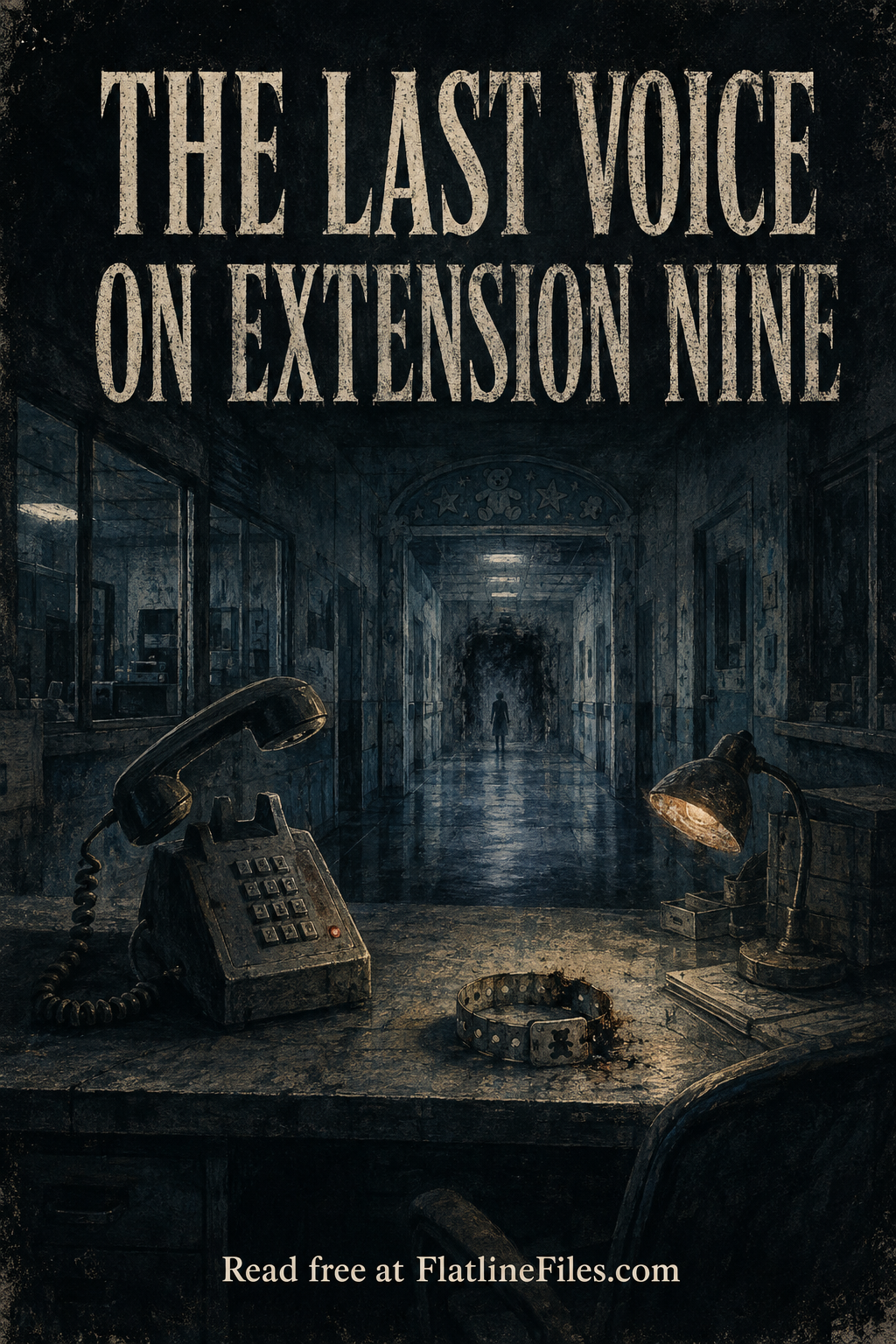
At 2:11 each morning, the telephone beside Nurse Lena Ortiz’s desk rang once. The screen always showed EXTENSION 9, though Mercy Vale Hospital had only eight floors.
The first time, Lena answered because the intensive care unit was quiet and she thought maintenance was testing the lines. A woman whispered, “Room 614. He cannot breathe.” Then the call ended.
In 614, Mr. Bell was asleep beneath a warm blanket. His monitor showed a normal pulse. Lena nearly left, but she noticed his chest moving without air entering his lungs. A mucus plug had sealed his breathing tube. The team cleared it before his oxygen level fell.
The next night, Extension Nine warned her about a patient whose potassium had been entered under the wrong name. The night after that, it sent her to a bathroom where an elderly woman had fallen silently. Every warning was true.
Lena asked the operator to trace the calls. The operator’s face tightened. Extension 9 had belonged to the old pediatric ward, which burned twenty-three years ago. The line had been disconnected since then.
“Who used it?” Lena asked.
The operator opened an archived staff directory. Beside Extension 9 was a photograph of a young nurse named Evelyn March. She had died in the fire after leading six children out. A seventh child had never been found.
Checkpoint: The apparent medical rescue reveals a hidden intelligence, and the protagonist learns the danger has rules.
Chapter 2 — The Price of a Warning
Lena began waiting for the calls. She told herself the dead nurse was protecting patients. She stopped taking breaks at night and kept a notebook beside the telephone. In it she recorded the exact words, the time, the room, and what she found. The warnings never contained more than one sentence. They never explained themselves. Still, Lena began trusting the unseen caller more than the physicians who dismissed her concerns.
Her trust became dangerous. She entered rooms without calling for help and changed care plans before confirming orders. Each time she was right, the shame of breaking protocol faded faster. Evelyn was training her to obey.
Then the warnings changed.
“Room 502,” Evelyn whispered. “Stop his heart before dawn.”
The patient was Daniel Pike, a healthy construction worker recovering from a minor procedure. His tests were normal. Lena refused. At 4:03, a ceiling panel collapsed above a different patient, killing her instantly. On the dusty tile lay a child’s scorched plastic bracelet.
The next night Evelyn said, “Give Mrs. Cho the red syringe.” There was no red syringe in Mrs. Cho’s drawer, but one appeared on Lena’s medication cart after she turned away. It contained enough insulin to kill her.
Lena carried the syringe to the pharmacy, but the pharmacist saw only an empty plastic tube. When Lena touched it, red liquid returned. When anyone else held it, the barrel cleared. Evelyn was isolating her from witnesses, making every refusal look like confusion. Lena called in another nurse and described the choice aloud, hoping shared knowledge would weaken it. The other nurse forgot the conversation before reaching the desk.
Lena locked it in the controlled-drug cabinet. Minutes later, a visitor in the lobby suffered a fatal seizure. A burned handprint appeared on the cabinet glass.
The ghost was not predicting deaths. She was offering exchanges.
Lena searched the fire report. Evelyn had not saved six children. Investigators believed she had started the fire while performing an occult “mercy rite” on terminally ill children. Six had escaped. One—Evelyn’s own daughter—had died. Evelyn had spent her final minutes calling rooms and choosing who should die in the girl’s place.
Checkpoint: The villain is no longer a theory—it is actively using the hospital and its patients to complete a larger design.
Chapter 3 — Room 614
At 2:11 on Friday, every telephone in the unit rang together.
“Room 614,” Evelyn said. “One life, and I leave.”
Mr. Bell had been discharged. The room was empty except for the child’s bracelet resting on the pillow. When Lena entered, the door locked. Smoke seeped from the vents, black and cold. Through the observation window, the unit remained calm. No one could see her pounding.
The bed rails rose by themselves. A small shape appeared beneath the blanket, coughing. Evelyn stood behind it in a burned uniform, her face hidden by moving smoke.
“Choose someone,” she said. “My daughter has waited long enough.”
Names appeared on the monitor: every patient on Lena’s floor. Beside each name was a time of death. Lena understood the trick. Evelyn needed a living caregiver to accept the bargain. That consent was the final part of her rite.
Lena lifted the telephone and called Extension Nine.
The phone in Evelyn’s pocket began to ring.
“I choose the person who started the fire,” Lena said.
Evelyn screamed. The smoke folded inward. For one second her burned face became young and terrified. The small figure under the blanket sat up and reached for her. Mother and daughter vanished as the room filled with clean morning light.
Checkpoint: The protagonist turns the villain’s own rule against it, but the victory leaves one final opening for its return.
Chapter 4 — Someone Still Answers
The calls stopped. Hospital leadership blamed faulty wiring and sealed Room 614 during renovations. Lena kept the scorched bracelet in an evidence bag, although its printed name had faded completely.
Three months later, Lena transferred to another hospital across the city. On her first night, a patient stopped breathing. She restored his airway seconds before permanent injury.
When she returned to the desk, the telephone displayed one missed call.
EXTENSION 9.
Lena played the voicemail. There was no woman’s voice. A child whispered, “Thank you for finding me.”
Then, farther from the receiver, Evelyn said, “Room 302.”
Lena looked toward Room 302. The lights inside went dark.
The phone rang again.