Author: FlatlineFiles

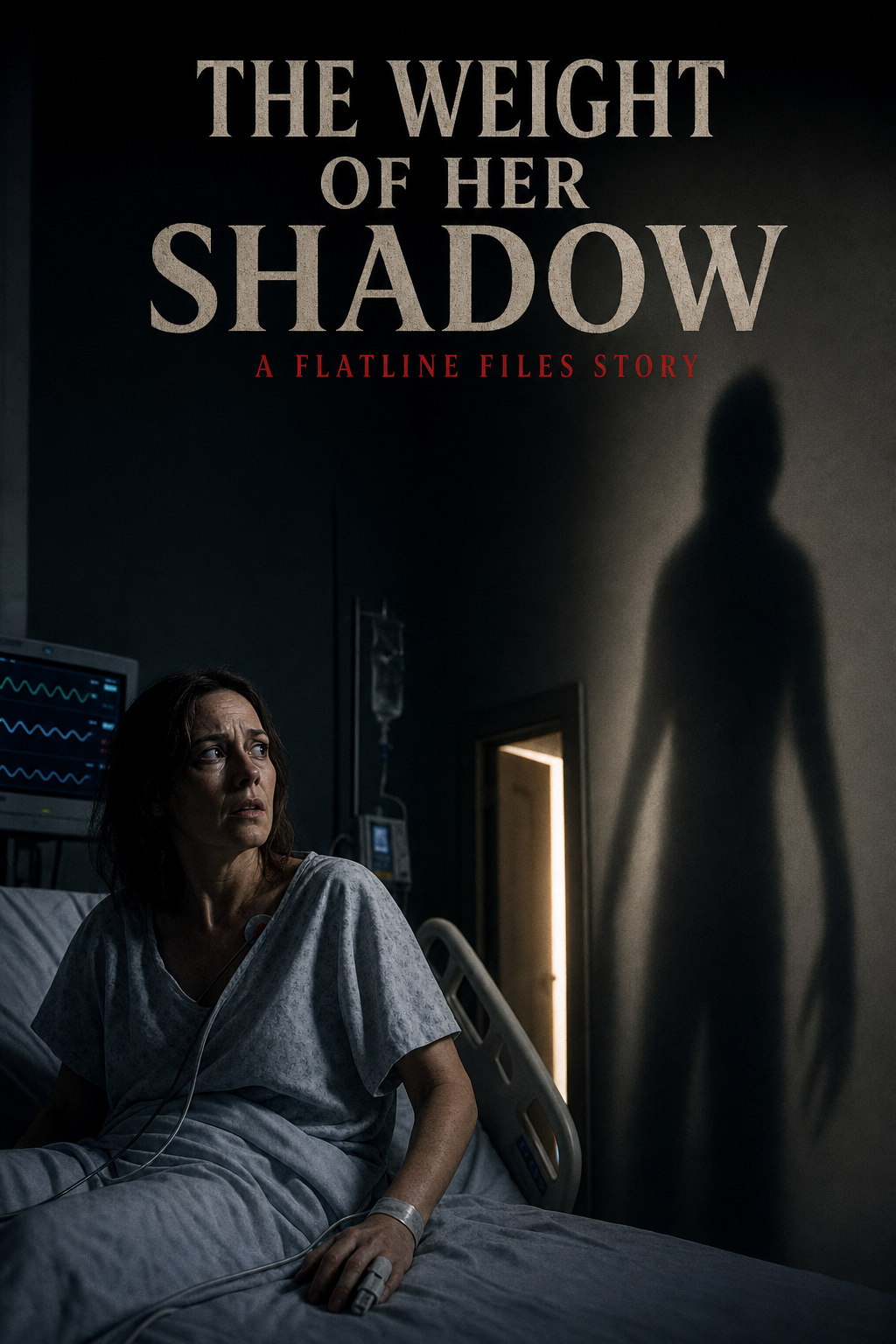
  • THE WEIGHT OF HER SHADOW

    THE WEIGHT OF HER SHADOW

    After thirty-eight-year-old Ada Kerr began falling without warning and waking with bruises she could not explain, doctors considered an inner-ear problem, seizures, nerve damage, low blood pressure, stress, and a sleep disorder. Her scans and blood tests were normal, but her fitness watch recorded thousands of steps during the hours when Ada was lying still in bed. Then a pressure mat in her hospital room showed a second set of footprints crossing the floor beside her, even though Ada’s shadow was the only thing moving.

    Ada fell in the grocery store beside the oranges.

    One second she was standing under the bright white lights, looking at a bag of potatoes. The next, her knees folded as neatly as a chair being closed. Her cheek struck the cold tile. An orange rolled against her mouth and stopped there.

    She did not feel dizzy. That was the part she could not explain later. There was no spinning room, no warning pain, no weak feeling in her legs. It was as if someone had removed the floor from her body while leaving the real floor in place.

    A clerk helped her sit up. Ada kept saying she was fine because people always said that when strangers gathered around them. Her hands were shaking, though. When she looked down, there was a dark purple bruise on the inside of her right wrist. It looked like four fingertips had pressed hard into her skin.

    She lived alone, and no one had held her wrist.

    At the urgent care clinic, the doctor checked her pupils, ears, reflexes, blood pressure, and balance. He asked if she had skipped meals, started new medicine, drank too much alcohol, or had been under stress.

    Ada almost laughed at that last one. Her father had died six months earlier. She had spent the last three months clearing his small house, sorting old bills, donating coats, and trying not to open the closet where he had kept her mother’s things. Of course she was under stress.

    The doctor said stress could make the body do strange things. So could an inner-ear problem, which could upset balance. So could a heart rhythm problem or a seizure. He told her to rest, drink water, and see her regular doctor if it happened again.

    It happened again before dawn.

    Ada woke on the floor beside her bed with one bare foot tucked under her. Her lamp was on. She never slept with the lamp on. The bedroom door stood open, and there was dirt on the hall rug.

    For a few seconds, she thought someone had come into the apartment.

    Then she saw that the dirt was not in random marks. It made a trail of bare footprints. The prints began at her bedroom door, crossed the hall, entered the kitchen, and stopped at the locked front door.

    They were her size.

    Ada checked the chain lock first. It was still hooked. The windows were shut. Her purse was on the chair. Nothing had been taken. But her left ankle ached, and there were fresh bruises around it, thin and dark, like a hand had circled it.

    On the kitchen counter, her fitness watch lay beside a glass of water. She remembered wearing it to bed. The screen said she had walked 8,412 steps between 1:07 and 3:18 in the morning.

    Ada stood in the silent kitchen, staring at that number until sunrise.

    Her regular doctor took the problem more seriously. He ordered blood work, an electrocardiogram to check her heart, and an MRI scan of her brain. He referred her to a neurologist, a doctor who dealt with the brain and nerves.

    Everything came back normal.

    The neurologist was kind, which somehow made Ada feel worse. Dr. Bell had silver hair tied in a loose knot and spoke in a calm voice that made every question sound reasonable.

    Had Ada ever sleepwalked as a child? No. Had she lost time before? No. Did she have headaches? Not often. Did she ever hear or see things that other people did not? Ada said no, then thought of the dirty footprints and added, “Not until this week.”

    Dr. Bell did not write that down right away. “What do you mean?”

    Ada told her.

    The doctor suggested setting up a camera in the apartment. She said it could help tell the difference between sleepwalking, fainting, a seizure, and something called a dissociative episode, where a person can act without forming a clear memory of it.

    “You think I’m doing it myself,” Ada said.

    “I think your body is doing something,” Dr. Bell answered. “We just need to see what.”

    That night, Ada put an old baby monitor camera on a shelf in the corner of her bedroom. It had belonged to her niece years ago. The little green light stared at her from the dark.

    She slept badly. Every time she opened her eyes, she expected to find herself standing in the kitchen, or outside, or holding a knife she did not remember picking up.

    At 4:16 in the morning, she woke with her face pressed against the bedroom wall.

    Her arms were lifted above her head. Her palms were flat against the paint. Her toes barely touched the floor.

    Something was pulling her upward.

    Ada screamed and dropped hard onto the carpet. She lay there gasping, staring at the blank wall. There were no hands around her. No ropes. No one behind her.

    The only thing on the wall was her shadow, stretched long by the lamp.

    It should have dropped when she dropped.

    For one breathless second, it remained standing.

    Then it slid down the wall and joined her.

    Ada did not sleep again. At daylight, she watched the camera recording on her phone with both hands wrapped around a mug of coffee.

    The video showed her sleeping for almost three hours. At 4:14, she sat upright. Her eyes stayed closed. She rose from the bed and walked to the wall.

    That was bad enough.

    Then the picture froze for three seconds.

    When it moved again, Ada was standing with her arms above her head, exactly as she had woken. Her shadow was on the wall beside her, not beneath her feet.

    The shadow had its hands around her wrists.

    Ada watched that part eleven times. She enlarged it until the picture became blocks of gray and black. She told herself it was a camera error. A bad light. A trick caused by the lamp.

    But her shadow’s head was turned toward her face.

    She took the recording to Dr. Bell.

    The doctor watched without speaking. When it ended, she checked the file information and asked whether Ada had edited it.

    “I don’t know how,” Ada said. “I don’t even know why I would.”

    Dr. Bell arranged for Ada to spend two nights in a sleep clinic. They would watch her brain waves, breathing, heart rate, leg movements, and blood oxygen while she slept. It sounded careful and safe.

    Ada was grateful until the evening nurse led her into the room.

    It had one narrow bed, one chair, a camera in the ceiling, and a tall lamp in the corner that could not be turned off. Wires were placed on Ada’s scalp with cool paste. Small stickers were pressed onto her chest. A soft clip went on her finger.

    “We need the lamp for the cameras,” the nurse explained.

    Ada looked at the wall beside her bed. Her shadow was already there, dark and sharp.

    “Can you use a different light?” she asked.

    The nurse smiled as if Ada had made a joke. “This one is fine.”

    At first, Ada tried to stay awake. She watched the nurse leave. She watched a red number change on the wall clock. She watched her shadow lie under the bed rail with its arms folded in the same position as hers.

    At 12:42, the room lights dimmed for the night setting.

    Her shadow did not dim.

    It became darker.

    Ada pressed the call button. A voice asked what she needed.

    “Please come in,” Ada said. “Please don’t turn on the overhead light. Just come in.”

    The door opened. Bright hallway light spilled across the floor. Ada’s shadow snapped back into its proper shape at once.

    The nurse found Ada crying and thought she was having a panic attack. She offered medicine to help her relax. Ada refused it. She was afraid of falling asleep with anything in her body that could make her slower.

    By morning, the test showed nothing dangerous. Ada had slept only forty-three minutes at a time. Her heart was normal. Her oxygen was normal. There was no clear seizure activity.

    But the technician called Dr. Bell into a side room before Ada left.

    Ada heard only pieces through the open door.

    “Movement sensor…”

    “No, she was in bed.”

    “That is not possible.”

    Dr. Bell came back looking tired. She said there had been a problem with one of the floor sensors and that they would repeat the study another night.

    “What did it show?” Ada asked.

    “It showed pressure changes that do not match the video.”

    “Pressure changes where?”

    Dr. Bell looked toward the corner lamp. “Beside your bed.”

    Ada went home with a new fear. She stopped using lamps. She kept every room bright with ceiling lights, even during the day. At night, she slept on the couch with the television on and the kitchen light blazing.

    For two days, nothing happened.

    On the third afternoon, the power went out during a storm.

    The apartment became gray and still. Rain tapped the windows. Ada stood in the kitchen with a flashlight in one hand and her phone in the other, trying to call the electric company.

    The call would not go through.

    Lightning flashed outside.

    Her shadow appeared across the kitchen wall.

    Ada held perfectly still.

    The shadow lifted one arm.

    Ada’s arm stayed at her side.

    The flashlight fell from her hand.

    In the next flash of lightning, the shadow was closer to the floor. It was no longer shaped like her. Its shoulders were too wide. Its neck bent at an angle that made Ada’s stomach cramp.

    It raised a hand and pointed toward the hall closet.

    The power returned before Ada could move. The shadow vanished under the clean yellow ceiling light. The closet door stood shut.

    She did not want to open it. She knew that with the full, childish certainty of a person looking at a dark basement door. Still, she opened it because she had spent six months sorting through her father’s life, and because she was sick of being afraid of things that might only be in her mind.

    Inside were coats, cleaning supplies, and a cardboard box she had brought from her father’s house without opening.

    Her mother’s name was written across the top in her father’s blocky handwriting.

    Ada sat on the floor and pulled the box toward her.

    There were old photographs, a few letters, a wedding bracelet, and a small notebook with a cracked green cover. Her mother had died when Ada was six. Ada remembered very little about her: a lemon smell, a soft singing voice, a blue robe tied at the waist.

    Her father had said she died in a car accident on a rainy road.

    The notebook did not mention a car accident until the final pages.

    At first, it was full of ordinary things. Grocery lists. Ada’s school schedule. Notes about bills. Then the writing changed. It grew tight and shaky.

    Ada says the dark lady comes when the lamps go out.

    She says it looks like me but it is taller.

    Tonight it stood in the doorway while Ada slept.

    There were pages ripped out after that.

    The last complete page was dated three days before her mother died.

    I found handprints on Ada’s wall. They were black, flat, and warm. I have to take her somewhere with no shadows.

    Ada read the page until the words blurred.

    At the bottom, in a different pen, her father had written one sentence.

    She brought it home from the hospital.

    Ada remembered the hospital only in scraps. She had been sick with a fever when she was five. Her father had told her she was in a children’s ward for two days. She had a vague memory of long halls, a red balloon, and her mother sleeping in a chair.

    She called him a liar aloud, though he had been dead for half a year.

    That night, Ada took the notebook to Dr. Bell. The doctor did not laugh. She said childhood memories could become twisted over time, especially after grief. She also said Ada needed to be admitted to the hospital because she was not sleeping and was frightened enough to hurt herself by accident.

    Ada agreed because she had begun to fear what would happen if she did not.

    They placed her in a room with no window. A nurse brought in a special pressure mat, thin as a blanket, and slid it beneath the mattress. Dr. Bell explained that it could measure shifts in weight and movement.

    “We will have a camera on all night,” she said.

    “And lights?” Ada asked.

    “The hall light will stay on. The door can remain open.”

    Ada nodded. Her hands would not stop trembling.

    Near midnight, the nurse checked her vital signs and left. The hallway was quiet except for wheels rolling far away and a monitor beeping somewhere behind another door.

    Ada lay awake looking at the strip of light on the floor.

    Her shadow lay beside the bed.

    At first it was thin. Then it darkened, although the light did not change.

    The pressure monitor beside the bed gave a soft chime.

    Numbers appeared on its screen. Ada could see them from her pillow.

    Her weight: 128 pounds.

    Then another line appeared beneath it.

    31 pounds.

    The second number rose slowly.

    Thirty-four. Thirty-nine. Forty-six.

    Ada hit the call button, but before anyone answered, the shadow on the floor pulled itself upright.

    It climbed the wall like spilled ink running backward. It reached the ceiling. The room grew colder, not icy like winter, but stale and deep, like air from a closed attic.

    Ada could not move her arms.

    She felt fingers close around both wrists.

    Not hard enough to break them. Hard enough to make her understand that something had been holding back.

    The shadow leaned over her bed. It had no face, but Ada smelled lemons.

    And under that smell was something else: wet pavement, rain, and the inside of an old car.

    A memory opened in her so suddenly that she cried out.

    She was five years old. She was sitting in the back seat while rain hammered the windows. Her mother was driving too fast. Her father was shouting from the passenger seat. Ada had been sick for days, burning with fever, and she kept seeing a woman in the dark corners of rooms.

    Her mother looked into the rearview mirror.

    “It isn’t my shadow,” little Ada said.

    Her mother turned around.

    For one terrible moment, the dark shape behind Ada looked back at her.

    The car left the road.

    Ada woke in the hospital afterward. Her mother was gone. Her father told her she had died in the crash. He never told her that Ada had been found outside the wreck, barefoot in a field, half a mile from the road.

    The hands around Ada’s wrists tightened.

    She understood then that it had not come for her now. It had always been with her. During childhood, it had been small. It had waited in corners and under beds and in the faint shapes cast by night-lights.

    As Ada grew older, she had stopped being afraid of the dark.

    And it had grown heavy.

    The hospital door burst open. Hallway light flooded the room. A nurse shouted Ada’s name. Dr. Bell was behind her.

    The shadow dropped flat at once.

    Ada could move again. She sat up screaming, and the pressure monitor began to beep wildly.

    Dr. Bell stared at the display.

    The second weight reading had reached 128 pounds.

    Exactly Ada’s weight.

    By the time security checked the room, the pressure mat showed only one person on the bed. The camera footage showed Ada thrashing in her sleep. Nothing else could be seen.

    Nothing except, at 12:17 a.m., the moment when every light in the room bent toward the wall.

    Ada spent four more days in the hospital. She slept with the lights on. She talked to a therapist. She took medicine for anxiety. The bruises faded from her wrists, then returned once, faintly, on the morning she was discharged.

    No doctor gave her a name for what had happened. Dr. Bell only said that unexplained symptoms did not mean unreal symptoms. She told Ada to keep someone with her for a while.

    Ada moved in with her sister, June. She threw away the old baby monitor, the cracked green notebook, and every lamp from her apartment. For a month, she refused to be alone after dark.

    Slowly, she began to feel foolish. The falls stopped. Her watch recorded normal sleep. Her bruises healed. Even the fear loosened its grip.

    Then June’s little boy came home from school carrying a paper drawing.

    “Look what I made,” he said.

    It showed their family standing beneath a bright yellow sun. June was there. Her husband was there. The boy had drawn himself in blue crayon.

    At the edge of the page was Ada.

    She had no shadow at her feet.

    Behind her, filling the whole bottom half of the paper, was a black shape with two long arms wrapped around June’s sleeping house.


  • THE SMELL OF THE CLOSED WARD

    THE SMELL OF THE CLOSED WARD

    Thirty-one-year-old Rowan Bell began smelling sickly odors that nobody else could detect, followed by vomiting, shaking spells, and short gaps in his memory. Doctors considered sinus disease, migraines, seizures, poisoned air, anxiety, medication reactions, and a problem in the part of his brain that handles smell. Then Rowan found a hospital wristband in his coat pocket with his own name on it, dated seventeen years before he was born.

    Rowan first smelled the oranges while he was driving home from work.

    Not fresh oranges. Not the bright smell of juice or a peeled snack. These smelled rotten and hot, like somebody had left a bag of fruit on a radiator for a year. The stink filled his little gray car so fast that he gagged.

    He rolled down both windows. Cold March air rushed in. The road beside him was empty except for a school bus and a man walking a dog.

    The orange smell did not leave.

    It sat behind Rowan’s eyes. It seemed to come from the back of his throat. He pulled into a gas station, bent over beside the air pump, and threw up until his stomach hurt.

    When he looked up, a nurse in old-fashioned white clothes was standing beside his car.

    Her dress was yellow around the hem. Her face was hidden by a paper mask. She held one finger over her mouth.

    Rowan blinked.

    The woman was gone. In her place was a trash can with a peeling advertisement for windshield cleaner.

    He told himself he was tired. He had been working long shifts at the warehouse since Christmas, loading boxes and fixing broken scanners. He slept badly. He ate too much gas-station food. His mother had always said his body complained when he pushed it too hard.

    But when he got home, he found orange-colored vomit dried on the front of his shirt.

    He did not remember driving the last six miles.

    Rowan’s first attack could have been food poisoning, exhaustion, or a panic spell, but the missing drive home and the masked nurse made him afraid that his senses were lying to him. He decided to watch for the smell if it came back, because he needed proof before he told anyone.

    It came back three nights later while Rowan was brushing his teeth.

    This time it was bleach.

    Not the clean, sharp smell from his bathroom bottle. This bleach smelled old and wet, mixed with sweat, medicine, and something sweet underneath. Rowan dropped his toothbrush. His knees folded before he understood he was falling.

    He woke on the tile floor with water running over one hand.

    The sink had overflowed. The bathroom clock said 2:41 in the morning. His phone, which had been charging in the bedroom, showed 3:28.

    Forty-seven minutes were gone.

    There was a bruise on his left shoulder, dark enough to show through his skin. Rowan stared at it until the room began to tilt again.

    He called his older sister, Leah, because he did not know who else to call.

    Leah arrived in sweatpants and a coat thrown over her pajamas. She checked his pupils with her phone light, touched his forehead, and looked around the apartment as if she expected someone to be hiding behind the shower curtain.

    “You need an emergency room,” she said.

    “I smelled bleach.”

    “There is bleach in your bathroom.”

    “No. It was different.”

    Leah looked at him carefully. She was a school counselor. She knew how to make her voice soft without making it sound fake.

    “Okay,” she said. “Then we tell them exactly that.”

    The emergency room was bright, crowded, and warm. Rowan sat under a thin blanket while a doctor asked about drugs, alcohol, head injuries, new medicine, and stress. Blood tests showed he was dehydrated from vomiting, but nothing else looked badly wrong. A brain scan did not show bleeding or a large growth. His heart rhythm was steady.

    The doctor explained that strange smells could happen with sinus infections, migraines, seizures, or problems in the brain. A smell that was not really there had a name: phantosmia.

    “Like a phantom smell,” Rowan said.

    “Exactly.”

    “Can a phantom smell knock you out?”

    The doctor did not answer right away.

    “A seizure can cause strange smells and lost time,” she said. “So can fainting. We’ll arrange more tests.”

    Rowan wanted that answer to calm him. Instead, it gave the thing in his apartment a medical name and made it feel more real.

    The hospital found dehydration but no simple cause for Rowan’s lost time, and the doctors took seizures and migraines seriously. He left with appointments for a brain-wave test and a nose examination, but he knew the attacks had begun in his apartment and seemed tied to particular smells.

    For the next week, Rowan kept a notebook.

    He wrote down every smell, every time, and every feeling that followed.

    Rotten oranges made his stomach twist.

    Wet bleach made his left shoulder ache.

    Burned wool made him cough until his ribs hurt.

    Once, while waiting in line at the grocery store, he smelled baby powder mixed with metal. His right hand began to tremble so hard that he dropped a jar of pasta sauce. The glass burst across the floor.

    For one fast second, Rowan saw a row of narrow beds under dim yellow lights. A woman cried behind a curtain. Somewhere close by, a baby made a weak, thin sound.

    Then he was back in the store with red sauce on his shoes.

    The cashier asked if he needed help. Rowan said no and ran outside.

    He stopped taking the bus because people’s perfume scared him. He stopped cooking because steam from the stove made him think of hospital disinfectant. He slept on Leah’s couch one night, then two. No attacks came there.

    On the third night, he went back to his own apartment for clothes.

    The moment he opened the door, he smelled burned wool.

    His chest tightened. He grabbed the wall.

    Someone had written on the paint beside the coat hooks.

    NOT THE THIRD FLOOR.

    The words were gray and shaky, as if made with ash.

    Rowan touched them. The powder came away on his fingertips.

    He lived on the second floor.

    Rowan’s attacks had begun to affect his body in different ways, and staying at Leah’s apartment seemed to stop them. The message inside his own home made him believe the danger was connected to the building, so he had to learn what had happened there before he moved in.

    The building manager was named Mr. Dorsey. He was seventy, hard of hearing, and always smelled like coffee and pipe smoke. He seemed annoyed when Rowan asked about the writing on the wall.

    “Kids get in through the back sometimes,” he said.

    “There are no kids in my apartment.”

    “Then somebody you know has a key.”

    “What was this place before it was apartments?”

    Mr. Dorsey stopped moving.

    His hand remained on the office door knob.

    “Why?”

    “I found something on the wall.”

    “This was a nursing home for a while,” he said. “A long time ago. Before that, it was part of St. Anselm’s Hospital.”

    “Part of the hospital how?”

    “Storage. Laundry. Staff rooms. Nothing interesting.”

    He shut the office door before Rowan could ask another question.

    That evening, Rowan searched old newspapers at the public library. St. Anselm’s Hospital had closed in 1989 after a fire in its main building. The articles were short. Eleven patients had died. The official cause was an electrical fault in a basement supply room.

    Then Rowan found a smaller article from two months later.

    It described an investigation into an unlisted ward inside an older building across the street. The ward had been used for patients with severe lung disease during the 1950s and 1960s. It had no proper records. Families claimed people had disappeared there.

    The old building’s address was Rowan’s address.

    A black-and-white photograph showed three stories of dark brick. The windows had been bricked over years before.

    Rowan enlarged the image.

    On the third floor, one window was open.

    In the opening stood a nurse in white.

    Her face was covered by a paper mask.

    The building had once held a hidden hospital ward, and a fire had sealed much of its history away. Rowan still could not explain the smells or missing time, but the warning about the third floor no longer felt like random vandalism.

    Rowan did not want to go upstairs. He told Leah he would wait for the police or the city inspector.

    Then he went home and found his apartment door open.

    Nothing looked stolen. His television was there. His laptop sat on the table. His wallet was still in the kitchen bowl.

    But the notebook of smells was gone.

    On the floor beneath the coat hooks lay a square of folded paper.

    Inside was a hospital wristband.

    It was yellow with age. The plastic had cracked along one edge. Rowan could still read the ink.

    ROWAN BELL.

    MALE.

    WARD 3.

    ADMITTED: OCTOBER 14, 1976.

    He was born in 1993.

    At the bottom, where a date of birth should have been, someone had written only one word.

    RETURNED.

    Rowan sat on the floor until Leah arrived. He did not tell her about the word at first. He only showed her the impossible date.

    Leah stared at it for a long time.

    “Dad worked here,” she said.

    Rowan looked up.

    “At St. Anselm’s?”

    “Before he met Mom. He never talked about it much.”

    “Why not?”

    Leah’s mouth tightened. “Because he hated that place.”

    “You knew?”

    “I knew he had nightmares.”

    Rowan had been six when their father died in a highway crash. He remembered almost nothing except a rough beard against his cheek and the smell of rain on wool.

    Burned wool.

    The wristband gave Rowan an impossible connection to Ward 3, while Leah revealed that their dead father had worked at St. Anselm’s. Rowan now believed his father knew something about the hidden ward, and the smell of burned wool made the old hospital feel tied to his own childhood.

    Their father’s things were stored in Leah’s basement. They spent most of the next day opening boxes that had not been touched in twenty years.

    They found tax papers, fishing gear, old birthday cards, and a faded photograph of their father standing outside St. Anselm’s in a maintenance uniform.

    Behind the photograph was an envelope.

    It had Rowan’s name written on it in their father’s blocky handwriting.

    Inside was one page.

    Rowan read it aloud because Leah could not make herself do it.

    “If the smells begin, do not let them take you upstairs. They are not memories. They are not ghosts. They are what was left when the ward was closed.”

    Below that, their father had drawn a crooked map of the apartment building. A red X marked the third floor laundry room.

    At the bottom was another sentence.

    “The vent must stay sealed.”

    Leah called the police. The police said they could check for trespassers, but the note did not prove a crime. She called the city building office. Their answering machine said an inspector might come in two weeks.

    Rowan listened to the message twice.

    That night, the smell of baby powder woke him at 1:13.

    He was not in Leah’s apartment.

    He was standing barefoot in the hallway of his own building.

    His phone said 3:51.

    His feet were wet. His hands were black with soot.

    Above him, on the third floor, something heavy scraped slowly across the ceiling.

    Rowan learned that his father had warned him about a sealed vent on the third floor, but official help would not come soon enough. After another gap in time carried him back to the building, he understood that whatever had reached him was trying to bring him upstairs.

    He should have left.

    Instead, Rowan went to his apartment and found a flashlight, a screwdriver, and an old dust mask from a box under the sink. He called Leah, told her where he was, and asked her to stay on the phone.

    “Wait for me,” she said.

    “I can hear something up there.”

    “Rowan, wait.”

    The stairwell smelled like wet bleach.

    His left shoulder flared with pain. He climbed anyway.

    The third floor had been closed for repairs since before he moved in. A chain crossed the hallway entrance. Rowan cut the plastic lock with the screwdriver and stepped through.

    The hall beyond was not under repair.

    It was old.

    Dust covered the floor in a thick gray layer. Doors stood along both walls, painted hospital green. The ceiling lights were gone, but a weak yellow glow leaked beneath the last door.

    Rowan’s phone crackled in his hand.

    “I’m coming up,” Leah said through static.

    At the end of the hall, a woman began to cough.

    It was a deep, wet cough. Rowan felt it in his own chest. Burned wool filled his nose.

    He reached the last door and saw faded letters beneath the grime.

    WARD 3 LAUNDRY.

    The door was warm.

    Behind it, something struck metal three times.

    Rowan opened it.

    The room was almost empty. Rusted washing machines lined one wall. A cart stood tipped on its side. In the center of the floor was a square metal vent cover bolted over a dark opening.

    Fresh screws held it down.

    Beside it lay Rowan’s missing notebook.

    Every page had been torn out except the last one.

    On that page, in Rowan’s handwriting, were the words: I OPENED IT BEFORE.

    In Ward 3, Rowan found the sealed vent his father had marked and proof that he had somehow been there before. The attacks were no longer only visions or smells; they had begun to use his body, and he had to decide whether opening the vent was the danger or the only way to stop it.

    Leah reached him just as he was pulling at the first screw.

    She grabbed his wrist. “Don’t.”

    Rowan turned on her.

    For a second, he did not know her.

    Her face looked thin and gray beneath the flashlight beam. Her hair was tucked under a nurse’s cap. Her mouth moved behind a paper mask.

    “You brought him back,” Rowan said.

    Leah froze.

    “What did you say?”

    The strange picture broke apart. Rowan saw his sister again, terrified and crying.

    He backed away from her. “I’m sorry. I don’t know why I said that.”

    Leah looked at the vent. “Dad wrote returned.”

    “I know.”

    “Maybe he meant you.”

    A sound rose from below the metal cover.

    Not a voice. Not quite. It was dozens of people breathing together, each breath catching at a different place. Between those breaths came a soft scraping noise, like fingernails writing on paper.

    Rowan knelt beside the vent.

    He remembered something he had never remembered before.

    A small hand. His own hand, much younger. A hospital corridor filled with smoke. A man in a maintenance uniform carrying him under one arm. His father was crying as he ran.

    “You were there,” Rowan whispered.

    Leah’s face changed. She had remembered it too, or maybe she had heard enough to understand.

    “Dad found you there?”

    Rowan looked at the wristband in his pocket.

    He had never been born in 1976. But perhaps somebody named Rowan Bell had been admitted that year. A child with no family listed. A child their father had carried out during the fire.

    “I wasn’t returned,” he said. “I was taken.”

    Below the vent, the breathing became angry.

    The screws began to turn by themselves.

    Rowan finally understood that his father had rescued him from Ward 3 as a child and given him a new life, while the hidden ward had never truly let him go. The vent was opening on its own, so Rowan and Leah had to seal it before the trapped presence could reach the rest of the building.

    Leah shoved the screwdriver into Rowan’s hand.

    “Tighten them,” she said.

    “They’re moving.”

    “Then move them back.”

    Rowan put the screwdriver into the nearest screw. The metal was hot enough to burn his palm through the handle. He twisted until his wrist shook.

    From beneath the vent came the smell of rotten oranges. He gagged but kept turning.

    Wet bleach followed. His shoulder screamed.

    Burned wool filled the room. Smoke curled from the seams of the cover.

    He saw people around him. Patients in thin gowns. Nurses with blank masks. A little boy standing near the vent with soot on his cheeks.

    The boy looked exactly like Rowan.

    “Come back,” the boy said.

    Rowan almost reached for him.

    Then Leah slapped his hand away from the opening screw.

    “You are not down there,” she shouted. “You are here.”

    That was enough.

    Rowan gripped the screwdriver with both hands and turned until the screw stopped. Leah held the metal cover down with her full weight while he tightened the next one, then the next.

    The last screw fought him hardest. Something beneath the vent pushed upward. The cover rose an inch. Cold air blew against Rowan’s face, carrying the smell of baby powder and bloodless metal.

    He heard a baby crying.

    He heard his father say, “I’m sorry.”

    Rowan drove the screwdriver down and twisted until it snapped.

    The vent slammed shut.

    Every smell vanished at once.

    The room went dark.

    For several seconds, Rowan could hear only Leah breathing beside him.

    Then, far below them, an alarm began to ring.

    Rowan and Leah forced the vent shut, ending the smells and the voices inside Ward 3. They escaped as the old building’s alarm sounded, but Rowan knew the sealed place had recognized him as the child who got away.

    The fire department found no active fire. The city finally inspected the building. They discovered an illegal third-floor space hidden behind newer walls, along with old hospital equipment, rotten pipes, and a sealed shaft running down into the basement.

    The report blamed bad wiring, mold, and unsafe construction. Mr. Dorsey was questioned about why tenants had been allowed to live beneath it. He said he had never been upstairs.

    Rowan moved in with Leah while the building was closed.

    For two months, he slept through the night.

    His brain-wave test showed no seizure disorder. The nose doctor found mild irritation in his sinuses but nothing that explained visions. A therapist helped him with the memories of his father and the fire, though Rowan did not tell her every detail.

    Some things sounded foolish when spoken in a clean office during daylight.

    Then one rainy morning, a package arrived at Leah’s house.

    No return address.

    Inside was Rowan’s old notebook.

    He had watched the fire department carry it out of Ward 3. He had seen it dropped into a black evidence bag.

    Now it was dry and clean.

    Only one page had writing on it.

    Rowan read it standing at Leah’s kitchen counter.

    THE THIRD FLOOR IS SEALED.

    Below that, in smaller letters, were six more words.

    THE BASEMENT DOOR IS NOT.

    From somewhere beneath the house, Rowan smelled rotten oranges.

  • THE QUIET THAT KNEW HER NAME

    THE QUIET THAT KNEW HER NAME

    When thirty-year-old Grace Morrow began losing the sound of certain voices, doctors considered earwax, migraines, stress, a seizure disorder, a problem with the hearing nerves, and damage from years of working around loud library equipment. Her hearing tests were normal, yet the people she could no longer hear soon stopped appearing in phone recordings, security videos, and even other people’s memories. Then Grace woke to find that every sound in her apartment had vanished except a soft voice in the kitchen whispering her name.

    The first voice Grace lost belonged to a dog.

    It was a big yellow dog named Otis that lived across the hall with Mr. Phelan, an old man who wore house slippers outside and spoke to everyone as if they were hard of hearing. Otis barked at elevators, grocery bags, falling leaves, and once at a mop bucket. Grace knew his bark well. It was loud enough to rattle the thin walls of her apartment building.

    One Monday morning, Grace opened her door for work and found Otis standing in the hallway, barking straight at her.

    His mouth opened. His chest jumped. The loose skin around his throat shook.

    But Grace heard nothing.

    She stared at him, confused, while Mr. Phelan pulled the dog back by its leash. “Sorry,” he said. “He thinks he owns the floor.”

    Grace heard Mr. Phelan clearly. She heard the elevator cables groan behind the wall. She heard water moving through the pipes. She heard the click of Otis’s claws as he danced in place.

    Only the barking was gone.

    At first, Grace blamed her earbuds. She used them too much at the public library where she worked, listening to audiobooks while she sorted returns in the basement archive room. She had spent years around old machines too: book scanners, paper cutters, a loud copier that made a high squeal whenever it warmed up. Maybe one sound had simply fallen into a blind spot in her ears.

    That afternoon she tested herself in the staff room. She watched a video of dogs barking. Nothing. She watched another one with three puppies yapping around a food bowl. Still nothing. Yet when a woman in the video laughed, Grace heard every bright, ugly burst of it.

    She called a clinic after work. The nurse told her to come in the next morning.

    The doctor looked inside Grace’s ears with a small light. There was no wax packed against her eardrums. No infection. No swelling. Her blood pressure was normal. The hearing test was normal too. Grace sat in a little booth and pressed a button every time she heard a tone. High tones. Low tones. Soft tones. Sharp tones. She heard all of them.

    “Sometimes the brain sorts sound in strange ways,” the doctor said. “Stress can do that. Migraines can do that too. Have you had headaches?”

    Grace said she had not. The doctor suggested rest, less headphone use, and a follow-up with an ear specialist if it continued.

    For two days, it seemed almost silly. Otis barked silently whenever Grace saw him, but that was all. She could live with one missing sound. In truth, it made the hallway calmer.

    Then, on Thursday night, Grace stopped hearing Mr. Phelan.

    She was carrying a bag of laundry downstairs when she met him by the mailboxes. He had his usual fishing vest on, though Grace had never once seen him go fishing. His lips moved in a friendly way. He pointed at the weather notice taped to the wall. Grace could see that he was talking about the storm coming in.

    Not one sound came out.

    Grace laughed because she thought he was playing a joke. Mr. Phelan did not laugh back. His face tightened. He spoke louder. She could see the red effort in his cheeks. Still nothing.

    “I can’t hear you,” Grace said.

    He looked frightened. He took one step closer and shouted.

    Grace heard the laundry machines turning in the basement. She heard rain tapping the front windows. She heard the keys shaking in Mr. Phelan’s hand.

    But his voice was missing, as cleanly as if someone had cut it out of the air.

    Mr. Phelan wrote on the back of an envelope. Can you hear Otis?

    Grace shook her head.

    He stared at the answer for a long time. Then he wrote, That happened before.

    Grace waited for more, but he folded the envelope into a square and put it inside his vest pocket. He took Otis upstairs without another word.

    That night Grace lay awake listening to rain. Her apartment was on the third floor, over a closed shoe repair shop. The building was old, narrow, and full of sounds that had always bothered her: pipes knocking, people walking overhead, televisions leaking through walls.

    Near midnight, she heard a chair scrape across the floor above her.

    Then she heard a man sobbing.

    It was not Mr. Phelan. The sound came from somewhere closer, perhaps from the hall outside her door. It rose once, stopped, and began again. Grace sat up in bed with her blanket under her chin. She did not move until the sun came through the blinds.

    In the morning, Mr. Phelan’s apartment was empty.

    His door stood open. Otis’s water bowl sat on the floor beside a pair of slippers. There was a coat on a hook, mail on a table, and a half-finished bowl of cereal turning soft near the sink. But there was no Mr. Phelan and no dog.

    Grace called the building manager, Carol Venn. Carol arrived twenty minutes later, annoyed at first and pale by the time she reached the living room.

    “Mr. Phelan?” Carol said. “Who is Mr. Phelan?”

    Grace thought she had heard wrong.

    “The man who lives here. Apartment 3B. With Otis.”

    Carol looked around the room. “Grace, this apartment has been empty since March.”

    “No. I saw him last night.”

    Carol gave her the careful smile people use when they think someone is sick or drunk. “You might have seen the old tenant before she moved out. A woman named Celia. But no man.”

    Grace pointed at the vest hanging by the door. Carol walked over, touched it, and frowned. “This wasn’t here yesterday.”

    Grace grabbed the pocket and found the folded envelope. Her hands were shaking before she opened it.

    There were no words inside.

    Only a wet gray smudge shaped like a thumbprint.

    Carol called the police anyway. Two officers checked the apartment, asked Grace whether she had taken any drugs, and wrote down Mr. Phelan’s name. They found no record of him in the building files. Grace showed them a photo on her phone from two weeks earlier. It was a blurry picture of Otis sitting in the hall with a party hat left over from someone’s birthday.

    In the photo, the dog was there.

    Mr. Phelan was not.

    Grace remembered taking the picture because Mr. Phelan had been crouched beside Otis, holding a strip of bacon over the dog’s head. She remembered his laugh. She remembered his cracked thumbnail and the stain on the knee of his pants. Yet the picture showed only an empty hand floating beside the dog’s collar.

    By the end of the day, Grace had begun to doubt herself.

    Her ear specialist saw her the following week. Dr. Bell was younger than Grace expected, with tired eyes and a calm voice. He did another hearing exam, then ordered a scan of Grace’s head to look for problems around the hearing nerve.

    “It could be a kind of migraine without pain,” he explained. “It could be a seizure problem. It could be something called auditory processing trouble, where the ears work but the brain has trouble sorting sounds. We need to rule things out.”

    “Can a brain problem make people disappear?” Grace asked.

    Dr. Bell paused. “Do you mean disappear from your view, or disappear completely?”

    Grace hated the question because she did not know.

    The scan was normal. Blood tests were normal. An electrical test that measured the tiny signals traveling from her ears toward her brain was normal. Dr. Bell said that was good news, but Grace felt no better. Good news did not explain Mr. Phelan’s empty apartment.

    At work, she began writing down every strange thing that happened. She kept the notebook in her desk drawer beside the library stamps.

    Tuesday: Could not hear the toddler crying near children’s books. Heard mother speaking. Heard cart wheels.

    Wednesday: Could not hear Mrs. Abarca at checkout. Could hear her cane tapping. She was upset when I asked her to write.

    Thursday: Mrs. Abarca did not return the book she checked out. Computer says she has never had a library card.

    Grace went cold reading that last line.

    Mrs. Abarca had come to the library every Friday for nearly four years. She smelled like talcum powder and carried mystery novels in a cloth bag with blue birds on it. Grace knew which chair she liked by the window. She knew that Mrs. Abarca always returned books late and always brought a wrapped peppermint as an apology.

    When Grace asked her coworker Sam about her, he looked puzzled. “Abarca? Sorry. I don’t know that name.”

    Grace took him to the chair by the window. A peppermint lay beneath it, flattened into the carpet. Sam picked it up and stared at the wrapper.

    “That’s weird,” he said. “I haven’t seen these in years.”

    By Friday, the chair was gone.

    Grace did not tell Dr. Bell about Mrs. Abarca. She told him she was anxious and sleeping badly. That was true. She told him she heard crying in the hall at night. That was true too. She left out the notebook because she was afraid he would stop looking for a medical reason and start looking for a psychiatric one.

    Instead, she bought a small voice recorder. She put it on her kitchen table every night. It recorded the hum of the refrigerator, traffic beyond the windows, and her own footsteps when she got up for water.

    On the fourth night, it captured a sound at 2:17 in the morning.

    Grace listened to it on the bus to work. At first she thought it was wind. Then she turned up the volume.

    Someone was whispering.

    The voice was low and rough, like a person talking with a mouth full of cotton. It spoke slowly, stopping between each word.

    “Grace,” it said.

    She nearly dropped the recorder.

    “Grace Morrow.”

    After that came a quiet dragging sound. Not footsteps. Not breathing. It sounded like a heavy blanket being pulled across a wood floor.

    Grace played the recording for Sam in the staff room. He listened with his eyebrows raised.

    “It says your name,” he agreed.

    “Do you recognize the voice?”

    “No.”

    “Could somebody get into my apartment?”

    Sam asked if she had changed the locks. She had not. He offered to come over after work and check the windows, which made Grace feel embarrassed and relieved at the same time.

    They searched every room together. Sam checked the fire escape, the closet, the space beneath the bathroom sink. There was nowhere for anyone to hide. The front door lock was old but working. The windows were painted shut. The only strange thing Sam found was a thin gray strip caught beneath the kitchen baseboard.

    He pulled it free with tweezers from Grace’s first-aid kit.

    It looked like a shred of old cassette tape.

    Grace had not owned a cassette player since high school.

    Sam held the strip up to the light. It was not plastic. It was softer than that. Almost like damp hair.

    “Don’t touch it,” Grace said.

    He had already touched it. He wiped his fingers on his jeans and laughed uneasily. “Okay. You’re right. That was creepy.”

    They put it in a glass jar. The next morning, the jar was empty.

    Sam did not come to work that day.

    Grace sent him three messages. No answer. She called twice. The call rang and rang. At lunch, she asked the branch manager if Sam was sick.

    The manager stared at her over his glasses. “Who?”

    Grace felt the room tilt.

    She ran to Sam’s desk. His nameplate was gone. His family photo was gone. Even the dent in the chair where he always leaned back had vanished. Other workers watched Grace pull open drawers and search through supplies as if she had lost something important.

    “Sam Dorsey,” she said. “He works here. He came to my apartment last night.”

    Nobody answered.

    Then Grace noticed something worse.

    She could no longer remember Sam’s voice.

    She remembered his crooked teeth. His red backpack. The way he ate crackers over the keyboard and never got crumbs on the keys. But when she tried to picture him saying her name, there was only a blank place in her mind.

    Grace left work and went straight to Dr. Bell’s office without an appointment. She cried in the waiting room until a nurse took pity on her and found a space for her at the end of the day.

    Dr. Bell listened without interrupting. When she finished, he asked whether she had ever lost time before. Whether she had family members with mental illness. Whether she had recently started a new medicine. Grace said no to all of it.

    “I know how this sounds,” she said. “I know.”

    “I believe that you are frightened,” Dr. Bell said.

    It was kind, but it was not the same as believing her.

    He arranged an overnight test at a sleep clinic. Small round sensors would be placed on Grace’s scalp to watch brain activity while she slept. A microphone and camera would record the room. If she was sleepwalking, having seizures, or doing something she could not remember, the test might show it.

    Grace agreed because she had run out of ideas.

    The sleep room was clean and bright, with one narrow bed and a camera in the ceiling corner. A technician stuck wires to Grace’s head and chest. She felt foolish lying there under a thin hospital blanket, waiting for a machine to explain her life.

    At 2:17, she woke without opening her eyes.

    The room was silent.

    Not quiet. Silent.

    The air conditioner had stopped. The monitor beside her bed showed a green line rising and falling, but its usual beeping sound was gone. Rain struck the window without a patter. Somewhere beyond the wall, a person must have been moving, but Grace could not hear even the shape of it.

    Then she heard a voice beside her bed.

    “Grace Morrow.”

    Her eyes flew open.

    No one stood there.

    The camera’s tiny red light was dark.

    Grace tried to call for help. Her throat worked. She felt the word leave her mouth.

    But she could not hear herself.

    On the floor, beneath the bed, something made a slow dragging motion.

    Grace rolled toward the edge and looked down.

    There was only darkness under the frame. Yet a thin gray strip slid out from beneath it, curling over the tile like a worm. Then another appeared. Then another.

    Each strip was made of the same soft, wet material Sam had pulled from her baseboard.

    They gathered into letters.

    WE HEAR YOU.

    Grace screamed. This time, sound came back all at once. The monitor alarmed. The air conditioner roared. Rain hammered the glass. A technician burst through the door as Grace stumbled away from the bed.

    By then, the gray strips were gone.

    The camera had recorded something, though not what Grace saw. Dr. Bell showed her the video the next morning. Grace lay asleep until 2:17. Then she sat up, looked at the floor, and began speaking in a low rough voice.

    “Grace Morrow,” the recording said.

    Grace watched herself say it again.

    “Grace Morrow.”

    Her mouth formed the words, but the voice on the recording was not hers.

    Behind her on the video, the wall clock changed from 2:17 to 2:18.

    Then it changed back to 2:17.

    It did that twelve times.

    Dr. Bell looked shaken now. He sent the recording to a neurologist. He told Grace not to stay alone. He used words like dissociation and unusual seizure activity, but his voice had lost its old confidence.

    Grace went home anyway. She did not know where else to go.

    Her apartment door was unlocked.

    Inside, every sound had vanished.

    The refrigerator light was on, but its motor made no hum. A car passed outside, and Grace saw its headlights sweep across the ceiling without hearing tires on wet pavement. Her own breathing moved her chest, but there was no sound in it.

    On the kitchen table sat the glass jar from Sam’s visit.

    It was full.

    Gray strips pressed against the inside of the glass. Some were thin as threads. Others were broad and folded. They moved together in a slow, patient knot.

    Grace walked closer despite herself.

    The strips flattened against the glass and formed a face.

    Not a real face. Just the rough idea of one: hollows for eyes, a line for a mouth, a dark place where a nose should be.

    The mouth opened.

    Grace heard Mr. Phelan’s voice.

    “Don’t let it take the last sound,” he said.

    Then Sam’s voice said, “Break the jar.”

    Then Mrs. Abarca’s voice whispered, “Please.”

    Grace grabbed the jar and threw it against the kitchen wall.

    The glass exploded across the floor. The gray strips scattered, and every one of them made a different human sound. A laugh. A cough. A child crying. Otis barking. Sam saying her name. Mr. Phelan calling for his dog.

    Grace covered her ears, but the sounds came through her hands.

    The strips raced toward the open crack beneath the baseboard. Grace dropped to her knees and swept at them with a dish towel. She caught some. Others slid into the dark gap and vanished.

    One strip wrapped around her wrist.

    It was cold. It tightened like a tiny hand.

    Grace pulled it free and heard her own voice come from it, small and frightened.

    “Grace Morrow.”

    She froze.

    The apartment went silent again.

    From the hall came a knock at her door. Grace could see the knob turn, though no sound reached her. Carol Venn stood outside. Her mouth moved fast. She looked angry at first, then afraid.

    Grace opened the door.

    Carol held a phone in one hand. On its screen was an emergency alert from the building’s security system. Someone had entered Grace’s apartment, though no one had been seen on camera.

    Carol pointed down the hall.

    Apartment 3B was open again.

    Inside it, Otis stood in the center of the empty living room. He was barking hard enough to shake his whole body. Mr. Phelan knelt beside him, clutching the dog’s collar.

    Grace could see them. She could see Mr. Phelan shouting at Carol. But neither of them made a sound.

    Carol looked into the room and saw nothing.

    “There’s nobody there,” she said.

    Grace stepped over the threshold.

    Mr. Phelan grabbed her arm. His hand felt real. His eyes filled with tears.

    He pointed at the far wall, where the old wallpaper had been torn away in a long vertical strip.

    Behind it was a narrow black opening.

    From inside came the faintest sound Grace had ever heard: thousands of voices, packed together, whispering names into the dark.

    And beneath them all, clear and close, was Grace’s own voice calling from somewhere far below.

    “Grace Morrow.”

    Carol seized Grace’s shoulder and pulled her backward. The moment Grace crossed into the hall, Mr. Phelan and Otis vanished from sight.

    Carol screamed then, because the apartment door slammed shut by itself.

    Grace never saw Mr. Phelan again. She never saw Sam or Mrs. Abarca. The building manager moved her to a hotel, and police sealed apartment 3B after finding an empty wall cavity full of old speaker wire, rotten insulation, and broken glass. They found nothing living. They found no hidden room.

    Dr. Bell said Grace’s tests still showed no clear illness. A therapist said trauma could change memory in powerful ways. Grace tried to believe them. For a while, she almost did.

    Then the hotel staff began asking why she talked in her sleep.

    Grace bought a new recorder and placed it beside the bed.

    Every night at 2:17, the recording begins with a soft dragging sound.

    Then a crowd of voices whispers the names of people Grace can no longer hear.

    At the end, just before the file cuts off, a stranger says one new name in a voice that sounds very much like hers.

    “Grace Morrow.”

  • THE DUST BENEATH HER NAILS

    THE DUST BENEATH HER NAILS

    When thirty-two-year-old Nora Bell began waking with black dust packed beneath her fingernails and painful stiffness in both hands, doctors considered eczema, a fungal infection, sleepwalking, anxiety, and chemicals from her job at a print shop. The dust looked like soot, but tests found no smoke damage in Nora’s apartment, no sign that she had left her bed, and no reason her fingertips should carry traces of old human bone. Then Nora found a tiny brass house key buried beneath the nail of her left thumb, even though the lock it opened had been sealed inside her apartment wall for eighty years.

    Nora woke before the alarm because her hands were closed so tight they hurt.

    For a few seconds, she did not understand what was wrong. The room was gray with early morning light. Rain tapped against the window. Her cat, Mr. Peaches, sat at the end of the bed with his back bent high and his ears flat. He was staring at Nora’s hands.

    She opened her right fist first. Black powder fell onto the white sheet.

    It was under every nail. Thick under the thumbnails. Packed into the little folds of skin around her fingers. Her palms were marked with dark smears, as if she had spent the night digging through a cold fireplace.

    Nora sniffed her hands. The smell was not quite smoke. It was older than smoke. Dry, bitter, and sour at the same time.

    Mr. Peaches hissed.

    “It is just dirt,” Nora whispered, though there was no dirt in her bed, no dirt on the floor, and no reason to whisper.

    She washed her hands three times. The powder swirled down the drain in black strings. By the time she dressed for work, the skin around her nails was red and sore from scrubbing.

    At the print shop, Nora tried to forget it. She spent her days making funeral cards, menus, graduation banners, and flyers for local plumbing companies. Ink stained her fingers often. Paper dust got in her hair. Strange smells clung to her clothes. It was easy to tell herself that she had brought something home from work.

    But when she emptied her pockets that afternoon, she found a small gray pebble inside the right one.

    It was warm.

    Nora lived alone in a third-floor apartment above a closed furniture store. The building was old, but she liked it. The windows were tall. The rent was cheap. From her kitchen, she could see the river between two brick warehouses.

    Her grandmother had hated the place.

    “Old buildings keep things,” Grandma Bell had said when Nora first signed the lease. “Not mice. Not mold. I mean memories.”

    Nora had laughed then. Her grandmother had been alive for ninety-one years and had earned the right to say strange things.

    Now, standing at her kitchen sink with the warm pebble in her hand, Nora did not laugh.

    The second morning was worse.

    She woke with both hands tucked under her pillow. Her fingers were numb. When she pulled them out, black dust spilled across the pillowcase. There was more this time. It covered the backs of her hands and gathered in the lines of her wrists.

    There was also a deep scrape along her left index finger.

    Nora stared at it. The scrape was thin and straight, not serious, but it had bled enough to leave a rusty brown spot on her sheet.

    She checked the apartment door. Still locked. The chain still on. Windows shut. No one under the bed. No one in the closet. No broken glass. No muddy footprints.

    Mr. Peaches would not come near her.

    At the urgent care clinic, a tired nurse asked if Nora had changed soaps, cleaning products, detergents, lotions, or medicines.

    “No,” Nora said.

    “Do you work with dyes, ink, ash, metal, or solvents?”

    “Ink and paper.”

    The doctor looked at Nora’s fingertips through a bright magnifying light. He was kind, though his face showed the careful look people used when they thought a patient might be embarrassed.

    “The skin is irritated,” he said. “You may have contact dermatitis. That means your skin is reacting to something it touches. It could also be a mild fungal problem.”

    He gave her cream for the redness and told her to wear cotton gloves at night.

    Nora did exactly that.

    She bought two pairs of white cotton gloves from a pharmacy. She pulled them on before bed. Then she taped the cuffs gently around her wrists with medical tape. She set her phone on a shelf across from the bed and started a video recording.

    At first, she slept badly. Every small sound woke her. Pipes knocked somewhere in the walls. Rain ticked against the window. Mr. Peaches yowled once from the hallway, then went quiet.

    At 2:17 in the morning, Nora opened her eyes.

    She had no idea why.

    The room was dark except for the blue light from her phone screen. Her hands were resting on top of the blanket. The gloves were still taped in place.

    But something was scratching inside the wall beside her bed.

    Slowly. Patiently.

    Scratch. Scratch. Scratch.

    Nora held her breath.

    The sound stopped.

    Then, from inside the wall, came three soft knocks.

    Nora did not sleep again.

    In the morning, she watched the video.

    For hours, nothing happened. She turned over. She sat up once to drink water. Mr. Peaches walked across the foot of the bed and stared at the wall. At 2:17, Nora jerked awake and looked toward the same wall where she had heard the scratching.

    Then the video filled with static for eleven minutes.

    When the picture returned, Nora was asleep again.

    The gloves were still on her hands.

    They were black.

    The tape was unbroken.

    Nora watched that part six times. Her throat felt tight. She wanted to believe the phone had made a mistake. It was an old phone. The camera could have failed. Maybe the gloves had been stained before she put them on. Maybe the black dust was loose fabric dye.

    Then she took the gloves to work and asked her boss, Harv, if he could look at them.

    Harv had owned the print shop for thirty years. He could tell the difference between charcoal, toner, graphite, and burnt paper by rubbing a speck between his fingers.

    He held the glove near the window, frowned, and said, “This is not ink.”

    “What is it?”

    “Ash, maybe. Fine ash.”

    “From what?”

    Harv looked at her hands. “You got a fireplace?”

    “No.”

    He did not ask another question. Instead, he folded the gloves into a clean paper envelope and gave Nora the address of a lab that tested materials for contractors and insurance companies.

    The lab technician was a woman named Tara who wore safety glasses and spoke in a calm voice. She scraped a little of the black powder from one glove into a glass dish.

    “It could be ash,” Tara said. “Could be soil. Could be old building dust. There are minerals in almost everything.”

    “Can you tell me if it is dangerous?” Nora asked.

    Tara glanced up. “Why? Are you breathing it?”

    “It is under my fingernails when I wake up.”

    Tara paused. “Do you sleepwalk?”

    “I do not think so.”

    Nora went to her regular doctor two days later. Dr. Imani checked her hands, ordered blood tests, and asked about stress.

    Nora almost laughed at that. Everyone asked about stress when they did not know what else to ask.

    Still, she tried to answer honestly. Her grandmother had died six months earlier. Nora had broken up with a man named Colin the year before. Money was tight. She had not been sleeping well even before the dust started.

    “Stress can affect sleep,” Dr. Imani said. “Some people scratch, pick at their skin, or move around without remembering it. There are also sleep disorders where a person does things while the brain is partly asleep.”

    “Could I be digging in my walls?” Nora asked.

    Dr. Imani gave a small, worried smile. “I am not saying that. I am saying we should rule out the ordinary things first.”

    The blood tests were normal. No sign of infection. No sign of a problem with Nora’s liver or kidneys. Her iron was a little low, but not enough to explain anything.

    Three days later, Tara called from the lab.

    “I have an unusual result,” she said.

    Nora sat down hard at her kitchen table.

    “The sample has ash, yes. Old wood ash. Plaster dust. Brick powder. Rust. A little lime.”

    “That sounds like my building.”

    “It does. But there is something else.”

    Nora waited.

    “The sample contains calcium phosphate. That can come from many places. Fertilizer. Some cleaning products. Bone.”

    Her mouth went dry. “Animal bone?”

    “Possibly. It is too small a sample to say more. I do not want to frighten you.”

    But Nora was already frightened.

    That night, she did not sleep in her bedroom. She slept on the couch with every lamp turned on. Mr. Peaches stayed behind the television stand, refusing food and staring toward the hall.

    At 2:17, the lamps blinked.

    Nora sat upright.

    Three knocks came from the bedroom wall.

    Then three more.

    She called her landlord in the morning. His name was Glenn, and he sounded annoyed before she even finished explaining.

    “Old pipes,” he said.

    “There are no pipes in that wall.”

    “Old building. There are pipes everywhere.”

    “Something is making ash appear in my bed.”

    “You got a fireplace?”

    Nora closed her eyes. “No.”

    Glenn came that afternoon anyway. He was a heavy man with a ring of keys clipped to his belt. He inspected the wall beside Nora’s bed. He tapped it with his knuckles. He ran a small electronic stud finder over the plaster.

    “Hollow spot,” he said.

    “What is behind it?”

    “Probably old framing.”

    “Can you open it?”

    Glenn gave her a flat look. “Not unless there is a reason.”

    Nora pointed at the black stain on her pillowcase, which she had saved in a plastic bag.

    “There is a reason.”

    Glenn agreed to bring someone the next day.

    That evening, Nora made a decision she knew was foolish. She took a hammer from the kitchen drawer. She stood beside the wall, listening.

    Nothing scratched. Nothing knocked.

    She raised the hammer anyway.

    Before it touched the plaster, her left thumbnail split down the middle.

    Nora screamed and dropped the hammer.

    Pain shot up her arm. Blood welled beneath the nail. Something small and hard pressed against the broken edge.

    She ran to the bathroom, shaking so badly she could barely turn on the light.

    With tweezers, she pulled at the hard thing.

    A tiny brass key slid out from under her thumbnail.

    It was black with age. Its round head was stamped with the number 3.

    Nora did not call the police. Later, she hated herself for that. At the time, she thought they would ask where she got the key. She thought they would look at her torn nail and dusty hands and see what everyone else saw: a tired woman who had started believing things.

    Instead, she called her mother.

    Her mother went silent when Nora described the key.

    “Mom?”

    “What number did you say?”

    “Three.”

    “Your grandmother lived in apartment three when she was little.”

    Nora stared at the peeling paint on her own apartment door. A brass number 3 hung at eye level.

    “This building?”

    “Before it was apartments, it was a boarding house. Your great-grandfather worked near the river. They rented one room here for a while.”

    “Why would Grandma never tell me that?”

    Her mother made a sound that was almost a sob. “She did tell me something once. I thought it was a dream from when she was a child.”

    Nora gripped the counter. “Tell me.”

    “She said there was a boy in the wall.”

    The next morning, Glenn arrived with a handyman and a sheet of plastic. Nora stood in the hall with Mr. Peaches inside his carrier. The cat had clawed her arm when she tried to pick him up.

    The handyman cut a square into the wall beside Nora’s bed.

    At first, there was only darkness behind the plaster. Old wooden slats. Dust. A nest of dead wires.

    Then his flashlight found a narrow space between the wall and a brick chimney.

    “That is strange,” he said.

    “What?” Nora asked.

    He did not answer right away.

    He widened the hole.

    Inside the hidden space was a small wooden door, no taller than Nora’s knee. It had a rusted lock plate at the center.

    The keyhole was shaped like a circle with a thin line beneath it.

    Nora felt the brass key in her pocket pull downward, as if it had become heavy.

    Glenn swore under his breath. “That should not be there.”

    “What is it?” Nora asked.

    His face had gone pale. “There used to be a coal chute. Before my father owned the building. But it was sealed before I was born.”

    Nora stepped forward.

    “Ma’am,” the handyman said, “do not touch that.”

    She did not listen.

    The little key fit.

    When she turned it, the lock opened with a soft click.

    The door swung inward by itself.

    A smell poured out: damp brick, cold ash, and something sweet that had gone rotten long ago.

    There was no room behind the door. Only a narrow shaft dropping down into darkness.

    On the bottom, caught in a mound of gray dust, lay a child’s red shoe.

    Beside it was a small metal lunch pail.

    The handyman called the police then. Everyone was made to leave the apartment. Officers came. Then more officers. Then people in white suits with masks and boxes.

    Nora sat in her car across the street for nearly five hours. Her hands ached inside her pockets. She watched people enter the building and come out again with careful faces.

    Near sunset, an older detective came to her window.

    “Ms. Bell?”

    Nora lowered the glass.

    He removed his hat. “We found human remains in the shaft. They appear to be very old.”

    She could not speak.

    “There was a second opening lower down,” he said. “It looks like someone closed it from the outside. We will need time to understand what happened.”

    Nora looked at the building. Her bedroom window was dark now. Someone had covered it from inside.

    “Was it a boy?” she asked.

    The detective hesitated. “We do not know yet.”

    He held out a clear evidence bag. Inside was a small paper tag, browned with age. Written on it in faded pencil were two words.

    FOR NORA.

    “Did you know the person?” the detective asked.

    Nora shook her head.

    But she did know the handwriting.

    It was her grandmother’s.

    They let Nora stay with her mother that night. Her mother made tea and kept touching Nora’s shoulder as if making sure she was real. Mr. Peaches hid under the guest bed for hours, then finally crawled out and slept against Nora’s ankle.

    Nora did not tell her mother about the last thing she found beneath her nails.

    She found it while washing her hands before bed.

    There was no dust this time. No ash. No blood.

    Only a tiny strip of folded paper pressed beneath the nail of her right thumb.

    Her hands were still sore, but she pulled it free.

    The paper had been folded so many times it nearly came apart. On the inside, in the same faded pencil, were words written in a child’s uneven hand.

    HE IS STILL DOWN THERE.

    Nora read it twice.

    Then Mr. Peaches began to growl at the bedroom wall.

    From somewhere far below the house, behind brick and ash and sealed-up dark, came three patient knocks.

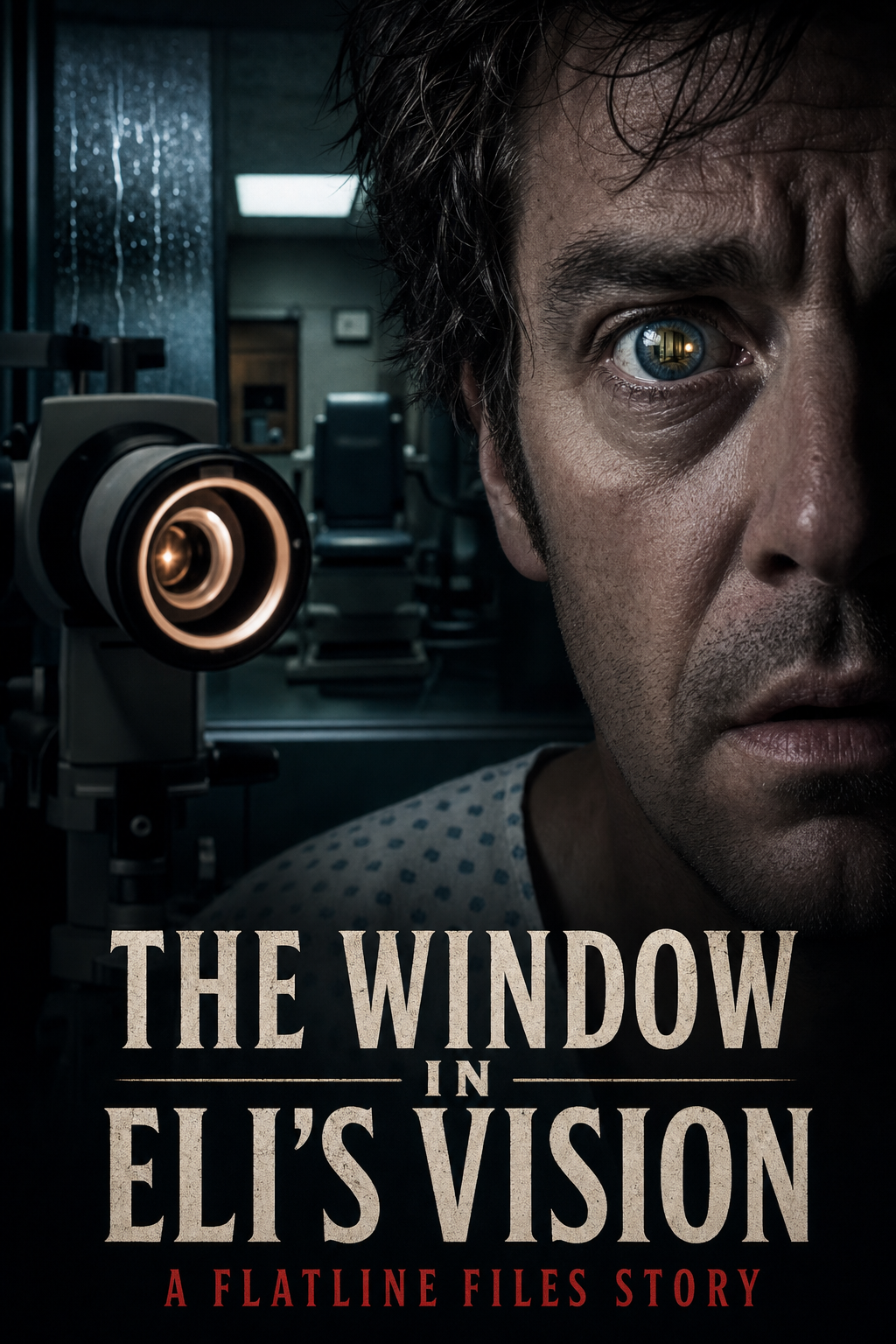
  • THE WINDOW IN ELI’S VISION

    THE WINDOW IN ELI’S VISION

    After Eli Mercer began seeing a small bright window floating in the left side of his vision, doctors considered migraines, a damaged retina, seizures, stress, and a side effect from his blood pressure medicine. The window showed the same empty little room no matter where Eli looked, but every eye test said his vision was almost perfect. Then a camera meant to photograph the inside of his eye captured a pale hand resting against the far side of the glass.

    The first time Eli saw the window, he was driving a school bus full of sleeping children through rain.

    It was nearly midnight. The bus smelled like wet coats, cracker crumbs, and the rubber floor mats he had cleaned that afternoon. Eli had spent twenty years driving buses for the county school district. He knew every bump in every road. He knew which turns made children wake up and which ones made them sleep harder.

    That night, on the long road past the soybean fields, a square of yellow light appeared beside the stop sign ahead.

    At first Eli thought it was a house window. Then he realized the square was moving with his eyes.

    He looked right. It slid right.

    He looked left. It slid left.

    He blinked hard. It stayed.

    The square was no bigger than a postage stamp. Inside it was a room with faded green walls, a crooked lamp, and a wooden chair facing away from him. The room did not shake with the bus. It did not blur in the rain. It sat there in his vision, calm and bright, like somebody had cut a hole through the world.

    Eli gripped the wheel until his hands hurt.

    He did not pull over. There were sixteen children behind him, all coming home from a late band competition. He kept his eyes on the wet road and tried to ignore the little room floating near the left edge of his sight.

    But when the bus passed the old water tower, the chair inside the window slowly turned around.

    There was nobody sitting in it.

    Eli made it safely to the school lot. He waited until every child had been collected by a tired parent before he shut off the bus. Then he sat in the driver’s seat for almost an hour.

    The window was gone by then.

    He told himself it had been a migraine. His sister, June, got migraines that made bright zigzags flash in her eyes. Eli had never had one, but he was forty-three, overworked, and sleeping badly since his divorce. Strange things happened when a person was tired.

    That explanation lasted two days.

    The window came back while he was brushing his teeth.

    This time the room was darker. The lamp was off. Rain tapped against a window inside the room, though the sky outside Eli’s bathroom was clear. He leaned close to the mirror and lifted his left eyelid with one finger.

    His eye looked normal. Blue iris. White around it. A small red vein near the corner, nothing else.

    Then, in the tiny bright room, somebody knocked three times.

    Eli dropped his toothbrush into the sink.

    He went to an urgent care clinic that same night. The nurse checked his blood pressure, which was a little high, and tested his vision by having him read letters off a wall. Eli could read nearly all of them.

    “Any headache?” the doctor asked.

    “Not really.”

    “Flashing lights?”

    “No.”

    “Any weakness in your arms or face?”

    “No.”

    Eli almost told him about the room. He had the words ready. There is a window inside my left eye. But the doctor looked tired, and Eli already knew how it would sound.

    So he said, “It’s like a little blind spot, except I can see something in it.”

    The doctor paused. “See what?”

    “Just shapes.”

    They sent him home with a referral to an eye doctor and instructions to return right away if he got a bad headache, chest pain, weakness, or sudden loss of sight.

    The eye doctor was named Dr. Bell. She had silver hair, red glasses, and a calm voice that made Eli feel foolish for being scared. She put drops in his eyes that made everything bright and soft. Then she shined lights into them, took pictures, and looked through a machine that showed a close-up image of the back of his eye.

    “Your retina looks healthy,” she said.

    Eli knew what a retina was because she explained it. It was the thin layer at the back of the eye that caught light, almost like film in an old camera.

    “Could there be something behind it?” he asked.

    Dr. Bell smiled gently. “Not a room, if that’s what you mean.”

    Eli stared at her.

    “You said shapes,” she added. “People often mean familiar things when they describe vision changes. A migraine can make the brain turn light and shadow into something that feels very real.”

    He had not told her about the room.

    “Maybe,” Eli said.

    She ordered more tests anyway. One was a scan that made a map of the layers inside his eye. Another checked the pressure in his eye. A third had him sit in a dark room and press a button whenever a small light appeared.

    Everything was normal.

    For one week, Eli tried to believe that was good news.

    Then the window began appearing every evening at 8:17.

    It did not matter where he was. He saw it while warming soup. He saw it while standing in the grocery store, staring at canned beans. He saw it while watching a baseball game alone in his apartment.

    The room inside it was always the same. Green walls. One chair. One lamp. A narrow window with rain sliding down the glass.

    At 8:17, the lamp came on.

    At 8:23, it went off.

    After that, the little window vanished.

    Eli began writing everything down in a notebook. He wrote the date, the time, what he had eaten, how much coffee he had drunk, whether he had taken his medicine. He wrote down his sleep. He wrote down the weather.

    On the ninth night, he added a new note.

    8:19. Chair moved closer to window.

    On the tenth night, he wrote:

    8:20. Heard knocking. Not in apartment. Inside left side of head.

    On the eleventh night, he was sitting at his kitchen table when someone spoke from the room.

    Not loudly. Not clearly.

    Just a child’s voice, muffled behind glass.

    “Dad?”

    Eli stood so fast his chair fell over.

    His daughter, Mae, was eleven. She was spending the week with her mother in another town, three hours away. Eli had talked to her on the phone that afternoon. She had complained about a spelling test and asked if he would come to her school play next month.

    He called her mother at once.

    “Is Mae okay?” he asked.

    “She’s asleep,” his ex-wife said. “Eli, what’s wrong?”

    “Nothing. I just wanted to hear her.”

    “At eight-thirty at night?”

    He could hear the old anger in her voice. The worry behind it was worse.

    “Sorry,” he said. “I’m sorry. I’ve been having eye trouble.”

    He hung up before she could ask more.

    The next day, he told Dr. Bell the truth.

    She did not laugh. She did not tell him he was crazy. Instead, she asked many quiet questions. Did he hear voices at other times? Did he smell things that were not there? Had he passed out? Did he lose time? Did anyone in his family have seizures?

    “My father had them after his stroke,” Eli said.

    “That does not mean you have them,” she said. “But I want a brain doctor to see you.”

    The brain doctor ordered an MRI, a machine that used magnets to take pictures inside Eli’s head. He also ordered an EEG, which measured the small electrical signals in Eli’s brain through wires taped to his scalp.

    Eli wanted one of the tests to show something simple. A swollen nerve. A hidden infection. A medicine problem. Anything with a name, a treatment, and an ending.

    The MRI was normal.

    The EEG was normal.

    “That is good,” the doctor said.

    Eli nodded because that was what people did when doctors said good.

    But when he got home, he sat in his truck outside his apartment building and cried until his chest hurt.

    Normal was starting to feel like a locked door.

    June came over that Friday with pizza and a bottle of ginger ale. She was younger than Eli by five years, but she had always been the one who acted older. Their mother used to say June came into the world already tired of everybody’s nonsense.

    “Show me the notebook,” she said.

    Eli handed it to her.

    She read every page. She did not make a joke until she reached the part about the voice.

    “Maybe it was Mae on television,” she said.

    “My television was off.”

    “Maybe a neighbor’s kid.”

    “It came from the room.”

    June stopped smiling.

    “You need to stop being alone,” she said.

    “I am not sick in the head.”

    “I did not say you were.”

    “You were thinking it.”

    “I was thinking you’re scared.”

    That made him angry because it was true.

    At 8:16, June sat across from him at the kitchen table. Eli placed his phone between them with the camera recording. He wanted proof for himself more than for any doctor.

    At 8:17, the window appeared.

    “It’s here,” he whispered.

    June watched his face. “What do you see?”

    “The room.”

    “Describe it.”

    He did.

    Then the chair turned toward him.

    Eli stopped talking.

    Something was in the chair.

    It was a boy, maybe ten years old. He wore a yellow raincoat. His dark hair was plastered flat against his forehead, as if he had walked through a storm. He had his back to Eli.

    “Who is that?” June asked.

    “I don’t know.”

    The boy raised one hand and pressed it against what looked like the glass of the window.

    June grabbed Eli’s wrist. “Your eye is bleeding.”

    Eli touched his cheek. His fingertip came away wet and red.

    The room vanished at 8:23.

    His phone video showed Eli sitting still at the table, staring ahead with one eye wide open. At 8:20, a thin line of blood ran from his left eye.

    Nothing else appeared in the video.

    No window. No room. No boy.

    Dr. Bell saw him first thing Monday morning. She found a tiny scratch on the clear front surface of his eye. It was not deep, but it was real.

    “Have you rubbed your eye?” she asked.

    “Not that I know of.”

    “Do you sleepwalk?”

    “No.”

    “Has anyone been in your apartment?”

    “No.”

    She gave him ointment and told him to avoid touching the eye. Then she repeated the retinal photographs.

    Eli sat at the machine with his chin on a rest. A bright flash filled his vision. He heard the camera click.

    Dr. Bell looked at the first image.

    Her face changed.

    “Take another,” she told the technician.

    The technician took another.

    “Again.”

    “What is it?” Eli asked.

    Dr. Bell did not answer.

    She turned the computer screen toward him.

    The picture showed the back of his left eye in red and gold colors. Blood vessels spread from the center like branches. Eli did not understand most of it.

    But near the middle was a pale square.

    It looked like a reflection.

    Inside the square was a green wall and the corner of a wooden chair.

    On the third picture, a small white hand rested against the square.

    Eli could see five narrow fingers.

    He made a sound that did not feel like it came from him.

    Dr. Bell called the hospital. She said she wanted him admitted for observation, which meant they would keep him overnight and watch him closely. Eli wanted to refuse. He hated hospitals. His father had died in one, and the smell of floor cleaner always made his stomach turn.

    But June came, and she took his keys from him.

    “You’re going,” she said.

    At the hospital, they checked his blood, his heart, his blood sugar, and his temperature. They asked him the same questions again. A young doctor suggested that his brain might be making a false image because of stress or an unusual kind of seizure. Another said the strange shape in the photograph could be a camera error.

    “Can a camera error make a hand?” June asked.

    No one answered her.

    They gave Eli a private room on the sixth floor. He hated that it had one chair, one lamp, and pale green walls.

    “No,” he said when the nurse switched on the lamp.

    “Sorry?”

    “Turn it off.”

    She did.

    At 8:16, a nurse attached a small monitor to his finger. It measured the oxygen in his blood. Another nurse checked the wires on his chest. June sat beside the bed with her coat still on, like she was ready to run.

    “We’ll get through this,” she said.

    “What if it isn’t in my head?” Eli asked.

    June looked toward the dark window. “Then we’ll still get through it.”

    At 8:17, the room in his vision opened.

    It was closer than before.

    The green walls filled nearly half of his left eye. The wooden chair was empty. Rain struck the inner window in hard silver lines.

    Then the boy in the yellow raincoat stepped into view.

    He turned around.

    Eli knew him.

    Not because he had seen him recently. Not because he had ever met him as an adult.

    He knew him from an old photograph kept in a box at June’s house.

    The boy was Eli.

    He was ten years old, thin and solemn, with dark hair falling into his eyes.

    Young Eli pressed both palms against the glass. His mouth moved.

    “Dad?”

    Eli’s father had been alive then. He had been driving the family home through a thunderstorm when their truck slid off a bridge and rolled into a ditch. Eli had survived with broken ribs and a cut over his eye. His father had pulled him from the truck before the water rose too high.

    His father had not made it out.

    For thirty-three years, Eli had remembered almost nothing after the crash. A cold hand. Mud in his mouth. Rain. A bright light swinging over him.

    Now he remembered more.

    He remembered waking in a little room with green walls. He remembered sitting in a wooden chair while rain struck the window. He remembered waiting for his father to come through the door.

    He remembered a doctor telling someone outside, very softly, that the man had died.

    “Eli?” June said.

    He was crying. He had not noticed.

    “That’s me,” he said.

    The monitor on his finger began to beep faster.

    Young Eli pulled one hand from the glass. In his fist was something small and dark.

    He held it up.

    It was a child’s shoe.

    Not Eli’s shoe.

    A red shoe with a white buckle.

    Then somebody moved behind the boy.

    A tall shape crossed the green wall. It had no clear face. Its head bent too low beneath the ceiling. One long hand came down onto young Eli’s shoulder.

    Eli screamed.

    The hospital lights flickered. June shouted for the nurse. Eli clawed at his left eye before someone caught his wrist.

    For one second, the window widened.

    He did not see the old room anymore.

    He saw the hospital room from the other side.

    He saw himself on the bed, June standing beside him, nurses rushing through the door.

    And in the dark corner behind them, near the real window, stood the tall shape.

    It was watching through Eli’s eye.

    Then everything went black.

    He woke the next morning with a patch over his left eye and a pounding headache. June was asleep in the chair beside him. Dr. Bell stood by the window, holding a paper cup of coffee.

    “You scratched your eye badly,” she said. “But it should heal.”

    “What happened?” Eli asked.

    “You had a brief seizure-like event,” she said carefully. “Your brain showed unusual activity for less than a minute. It may explain some of what you have been seeing.”

    “May?”

    Dr. Bell looked tired.

    “The camera in the room recorded a problem,” she said.

    She handed him a printed still image.

    The picture showed Eli in bed, with June beside him. It was dark but clear enough to see their faces. Behind them was the corner near the window.

    There was nothing there.

    “The strange part,” Dr. Bell said, “is that the recording has twenty-three seconds missing. Not blurry. Not damaged. Just missing.”

    Eli stared at the paper.

    “And the retinal images?” he asked.

    “We repeated them this morning. They are normal.”

    “You saw the hand.”

    “I did.”

    Her voice was quiet now. “I saved the files in three places. By morning, they were gone from all three.”

    For two weeks after he left the hospital, Eli wore the patch, used the ointment, took the new seizure medicine, and slept at June’s house. He did not drive the school bus. He did not stay alone. Every night at 8:17, June watched him closely.

    The window never came back.

    Little by little, Eli began to breathe normally again. He went back to work, first cleaning buses in the garage, then driving short daytime routes. He called Mae every night. He even told her he loved her before hanging up, which was something he had too often assumed she already knew.

    Three months passed.

    On a rainy Saturday, Mae came to stay with him.

    They made pancakes, watched a silly movie, and built a blanket fort in the living room. Eli let her choose the music in the truck when they went to buy groceries. For the first time in a long while, he felt like he had climbed out of a deep hole.

    That evening, Mae was drawing at the kitchen table while Eli washed dishes.

    “Dad?” she said.

    “Yeah?”

    “What was Grandma’s house like when you were little?”

    Eli turned off the faucet.

    “Why?”

    “I don’t know. I had a dream about it.”

    His mother’s old house had been torn down years ago. Mae had never seen it.

    “What did you dream?” he asked.

    Mae kept coloring.

    “There was a room with green walls. And a chair.”

    The dish towel slipped from Eli’s hand.

    Mae looked up at him. Her face had gone pale.

    “Dad,” she whispered, “why is that little boy looking at me through the window?”

  • THE MOUTH BELOW HER TONGUE

    THE MOUTH BELOW HER TONGUE

    After Claire Wren began waking with blood on her pillow and a painful lump beneath her tongue, doctors considered an infected salivary gland, an allergy, a dental problem, stress, and a small harmless cyst. The lump vanished whenever anyone examined her, yet Claire kept hearing a child softly clicking its teeth inside her mouth. Then a scan showed a perfect row of tiny teeth buried where no teeth could possibly grow.

    Claire woke with the taste of pennies in her mouth.

    At first, she thought she had bitten her tongue in her sleep. That happened sometimes. She ground her teeth when she worried, and lately she had worried about everything: rent, her mother’s bad knees, the broken heater in her apartment, the fact that she was twenty-nine and still working double shifts at a grocery store.

    But when she touched her tongue, her fingers came away red.

    There was blood on the pillowcase too. Not much. Three dark drops near her cheek.

    Claire sat up quickly. Her bedroom was still dark except for the orange streetlight pushing through the blinds. She went to the bathroom, switched on the light, and opened her mouth.

    At first she saw nothing.

    Then she lifted her tongue with two fingers.

    A pale bump had risen from the soft skin beneath it. It was round, wet, and about the size of a grape. A thin red line ran across it.

    Claire stared at the bump.

    Click.

    The sound came from inside her mouth.

    She froze.

    Click. Click.

    It was a small sound. Like someone tapping a fingernail against a glass. Or like tiny teeth touching together.

    Claire slammed her mouth shut so hard that pain shot through her jaw.

    For several seconds, she stood over the sink with both hands gripping the counter. Her own face looked frightened in the mirror. Her eyes were wide. Blood had marked one corner of her lips.

    She told herself it was her jaw joint. People got clicking jaws. Her cousin had one. Sometimes it popped when he chewed gum.

    But Claire did not chew gum.

    And the sound had come from below her tongue.

    By daylight, the swelling was gone.

    Claire almost talked herself out of going to urgent care. She had no health insurance through work, and missing a shift meant losing money. But when she drank coffee, a hot sting ran across the bottom of her mouth. She also found a second spot of blood on her collar.

    The doctor at the clinic was a tired-looking woman named Dr. Patel. She listened while Claire explained the lump, the bleeding, and the clicking sound.

    Claire left out the part about teeth.

    Dr. Patel looked under her tongue with a small light. She pressed gently beneath Claire’s jaw. Then she checked her ears, throat, and neck.

    “I do not see a lump now,” she said. “But there are little scratches under your tongue. You may have irritated a salivary gland.”

    “Can salivary glands make a clicking sound?” Claire asked.

    Dr. Patel smiled in the careful way doctors smiled when they did not want to embarrass someone. “Your jaw can click. Your ears can make strange sounds when you are congested. Stress can make those things seem louder.”

    She suggested warm salt-water rinses, more fluids, and a dental visit if the pain continued. She also told Claire to return right away if she had fever, trouble breathing, or swelling in her neck.

    For two days, Claire felt foolish.

    Then she woke at 3:17 in the morning with someone whispering her name.

    “Claire.”

    The voice was soft and wet.

    She bolted upright in bed. Her room was empty. The closet door was closed. Her cat, Miso, sat on the windowsill with its back arched and fur standing high along its spine.

    “Claire,” the voice said again.

    It came from her own mouth.

    She clamped both hands over her lips.

    Miso hissed at her.

    Claire stumbled to the bathroom. Under the bright light, she saw the bump again. It was larger than before. It pushed the floor of her mouth upward. A thread of clear fluid shone along one side.

    Click. Click. Click.

    Claire grabbed her phone and took a picture.

    On the screen, the picture showed her open mouth, her tongue, and darkness beneath it.

    No bump.

    She took six more pictures. Every one showed smooth skin.

    When she looked in the mirror, the lump was still there.

    Claire did not sleep again that night.

    The next morning, she called in sick and made an emergency appointment with a dentist. The dentist was a young man named Evan Moore, who spoke too fast and wore bright blue shoes.

    He checked every tooth. He tapped them with a metal tool. He took X-rays.

    “No infection,” he said. “No cracked tooth. Your gums look good.”

    Claire watched him studying the black-and-white image on his computer.

    His smile faded.

    “What?” she asked.

    “There may be something on the image,” he said. “It could be a shadow from the machine.”

    “What kind of something?”

    He turned the screen toward her.

    Claire did not understand the X-ray at first. She saw the white roots of her teeth and the curved shape of her jaw. Then she saw a second curved line below the roots of her lower teeth.

    There were small white shapes along it.

    Twenty, maybe more.

    They looked like teeth.

    Not adult teeth. Tiny teeth. Pointed teeth, crowded together in a neat half-circle beneath her tongue.

    Claire felt her stomach turn.

    “Could that be another person’s X-ray?” she asked.

    Evan looked offended for half a second. Then he looked scared.

    “No,” he said. “This is yours.”

    He took another image.

    The row was gone.

    He checked the machine. He checked Claire’s name. He took a third image.

    This time there was only one small white mark beneath her jaw, no bigger than a grain of rice.

    “I want you to see an ear, nose, and throat specialist,” Evan said. “Today, if possible.”

    Claire left with copies of the first image in a brown envelope. She did not look at them again until she was sitting in her car.

    When she opened the envelope, the strange row of teeth was missing from the print.

    Only the grain-sized white mark remained.

    That afternoon, Claire began to wonder if she was losing her mind.

    Her father had lost his mind near the end, or that was what her mother used to say. He had started hearing someone in the walls of their old house. He would stand in the hallway at night with one ear pressed to the plaster.

    “Your sister is crying,” he once told Claire when she was eight.

    Claire had no sister.

    Her father died when she was eleven. A heart attack, her mother said. Quick and sad and ordinary.

    Claire had spent years trying not to remember him standing in the dark hallway.

    At the specialist’s office, a nurse asked Claire if she had been under unusual stress. Claire said yes. The nurse asked if she had ever heard voices before. Claire said no.

    That was almost true.

    While she waited alone in the exam room, the clicking started.

    Click. Click.

    Then the soft wet voice said, “Mama lied.”

    Claire screamed.

    The specialist hurried in with the nurse behind him. Dr. Harlan was an older man with silver hair and kind eyes. Claire tried to explain, but the words came out tangled.

    “There is something under my tongue,” she said. “It talks. It said my mother lied.”

    Dr. Harlan did not laugh. He examined her carefully. This time the swelling did not disappear.

    He went quiet.

    “There is a mass there,” he said at last. “We need imaging.”

    “A mass?”

    “A lump. That word sounds frightening, but there are many kinds. A blocked gland can make one. So can a cyst, which is a pocket of fluid. We need to see it more clearly.”

    Claire was sent for a CT scan. The machine was a large white ring that hummed around her head. She lay still with her arms tight against her sides.

    Halfway through the scan, she heard breathing.

    Not the machine. Not her own breath.

    It was a small, shallow breath, coming from beneath her tongue.

    “Do not let them cut me,” the voice whispered.

    Claire jerked so hard that the technician stopped the scan.

    When Dr. Harlan came back, he looked pale.

    “The scan shows a growth in the floor of your mouth,” he said. “It has bone-like material inside it.”

    “Teeth,” Claire said.

    He did not answer right away.

    “Sometimes a rare kind of growth can contain hair, skin, or even tooth-like tissue,” he said carefully. “It can happen when cells grow in the wrong place before birth. It does not mean what you think it means.”

    “What do I think it means?”

    Dr. Harlan looked at the floor.

    Claire began to cry.

    She called her mother from the parking lot.

    Her mother answered on the fourth ring. “Claire? Honey, are you all right?”

    “Did I have a twin?”

    There was silence.

    Cars hissed past on the wet road. Claire could hear the clinic doors opening and closing behind her.

    “Why would you ask that?” her mother said.

    “Because there is something in my mouth. They found teeth under my tongue. It said you lied.”

    Her mother made a sound Claire had never heard before. It was not quite a sob. It was like someone choking on a memory.

    “Come home,” her mother said.

    Claire had not been to her childhood home in almost two years. It was a narrow brick house at the end of a quiet street, with plastic flowers in the front window and a porch that sagged in the middle.

    Her mother sat at the kitchen table holding an old cardboard box.

    She looked smaller than Claire remembered.

    “Your father made me promise,” she said.

    Claire stayed standing. “Promise what?”

    Her mother opened the box.

    Inside were hospital papers, old photographs, and a tiny knitted cap yellowed with age.

    “You were not twins,” her mother said. “Not exactly.”

    Claire laughed once. It came out sharp and ugly. “That does not explain anything.”

    “The doctor said there had been two babies at first. Very early. Then one stopped growing.”

    Claire stared at her.

    “They said it was absorbed,” her mother whispered. “That means your body took it in. They told us it happens. They said there was nothing left.”

    “Nothing left,” Claire repeated.

    Her mother’s hands shook over the box. “After you were born, you would not nurse. You screamed all night. Your father said he heard another baby crying when he held you.”

    Claire felt the lump move beneath her tongue.

    Click.

    “He wanted doctors to look again,” her mother said. “But they told him he was grieving something that never lived. He got worse after that. He started hearing things. He thought the house was full of children.”

    “Was it?” Claire asked.

    Her mother looked at her, and Claire knew the answer.

    “I do not know,” she said.

    That night, Claire slept in her old bedroom because she was too afraid to drive home.

    She pushed a chair under the doorknob. She put on every light. She lay awake beneath the faded quilt and listened to the old house settle around her.

    At 2:13 in the morning, her mouth began to hurt.

    The pain was terrible. It ran from her tongue down her throat and deep into her chest. Claire rushed to the bathroom and looked in the mirror.

    The swelling below her tongue had split open.

    There was no blood at first.

    There was a small mouth.

    It was no larger than a walnut. Its lips were pale and smooth. Inside were tiny white teeth, close and sharp. A little tongue moved behind them.

    Claire made a broken sound and fell against the sink.

    The mouth opened.

    “I was cold,” it said.

    The voice was not a child’s voice now. It was Claire’s voice, but thinner. Younger. As if it had been waiting many years to grow strong enough to speak.

    Claire ran from the bathroom. Her mother found her crouched in the hallway, spitting blood into her hands.

    By the time they reached the emergency room, the mouth had closed. The doctors saw only a torn swelling under her tongue.

    Claire was admitted to the hospital before dawn. Dr. Harlan came in later that morning. He said a surgeon should remove the growth. He said the scans suggested a rare tissue mass. He said it could become infected or block her airway if it kept growing.

    Claire wanted it gone.

    She wanted it gone more than she had ever wanted anything.

    But when she tried to sign the surgery form, something moved under her tongue.

    “Please,” it whispered.

    Claire dropped the pen.

    For the next two days, she lived in a private room under bright lights. Nurses checked her temperature and blood pressure. They gave her pain medicine and soft food. The swelling came and went.

    Sometimes it was only a sore place.

    Sometimes she could feel the little teeth pressing upward.

    Her mother sat beside the bed and cried quietly when she thought Claire was asleep.

    On the second night, Claire heard her father’s voice from the corner of the room.

    “Do not leave her alone,” he said.

    Claire opened her eyes.

    No one stood there.

    But the hospital monitor beside her bed gave one long, steady beep.

    Then a second heartbeat appeared beneath her own.

    The nurses came running. They checked the wires and changed the pads on her chest. The second line vanished.

    One nurse said the monitor had made a mistake.

    Claire did not argue.

    Before surgery, Dr. Harlan asked if she wanted to talk to someone from the hospital mental health team. He spoke gently. He said fear, lack of sleep, and pain medicine could make a person hear things.

    Claire almost said yes.

    Then the mouth below her tongue said, “Tell him about the blue dress.”

    Claire looked at Dr. Harlan.

    “My father used to keep a blue dress in the attic,” she said.

    Her mother gasped from the chair by the window.

    “How did you know that?” Claire asked her.

    Her mother covered her face.

    “It was for a girl,” she whispered. “Before we knew.”

    Claire understood then that whatever lived inside her had not learned things by magic. It had been there. It had heard every argument, every bedtime story, every whispered confession through the years.

    It knew her father’s voice because it had heard him from inside her.

    It knew loneliness because it had never known anything else.

    That made Claire feel worse, not better.

    On the morning of surgery, she was rolled toward the operating room. The ceiling lights passed above her in white squares. Her mother walked beside the bed until the doors marked SURGERY stopped her.

    “I am sorry,” her mother said.

    Claire wanted to say she forgave her.

    Instead, her jaw locked.

    The pain below her tongue became unbearable.

    The orderly stopped the bed. “Claire?”

    She could not answer.

    Her tongue lifted by itself.

    The small mouth opened beneath it.

    Everyone saw it.

    The orderly screamed. A nurse stumbled backward into the wall. Dr. Harlan stood frozen at the double doors with his surgical cap already on.

    The mouth was larger now. Its teeth were no longer tiny. They were the size of baby teeth, wet and bright beneath Claire’s tongue.

    “I do not want to be cut out,” it said.

    Claire could feel its fear moving through her own body. It was not separate from her. Not completely. Its panic made her heart race. Its grief filled her throat.

    Then it said something else.

    “There are more.”

    Claire stopped struggling.

    “What?” Dr. Harlan asked.

    The mouth closed.

    On the floor beneath the hospital bed, a drop of blood fell from Claire’s lips.

    It spread across the pale tile in a thin red line.

    Then another line joined it.

    And another.

    The blood moved in a circle around the bed, making the shape of a small open mouth.

    From somewhere inside the walls, far beyond Claire’s room, came the soft sound of children clicking their teeth.

    Click.

    Click.

    Click.

  • THE ROADS BENEATH DANIEL’S SKIN

    THE ROADS BENEATH DANIEL’S SKIN

    When Daniel Price woke with thin red lines crawling across his arms and chest, doctors considered hives, an allergic reaction, a blood vessel problem, stress, and even marks caused by sleepwalking. The lines faded before most tests could be completed, but each morning they returned in a different pattern, and Daniel noticed they matched streets, alleys, and footpaths in his hometown. Then one night, the map beneath his skin showed a road that had been buried for more than sixty years—and it was leading straight toward his house.

    Daniel Price woke at 4:18 in the morning because his arm hurt.

    At first, he thought he had slept on it wrong. His left arm was numb from the shoulder down, heavy as wet laundry. He rolled onto his back and rubbed at it in the dark.

    Then he felt the raised lines.

    They ran from his wrist to the inside of his elbow. There were three of them, thin and hot beneath his fingertips. One bent sharply near his thumb. Another crossed it. A third ended in a small round mark in the center of his palm.

    Daniel switched on the lamp.

    The marks were red, but not like scratches. They looked like something had pressed a map into the skin of his arm from below. The lines were too straight in some places and too neat at the corners. He stared at them until his eyes began to water.

    He lived alone, and he had no pets. His bedroom door was locked. His windows were shut.

    Still, he got out of bed and checked the whole apartment.

    Nothing was out of place. No broken glass. No wet footprints. No sign that anyone had come inside.

    When he returned to the bathroom, the lines had spread. A red path now crossed his ribs beneath his T-shirt. Another ran up the side of his neck.

    Daniel took pictures with his phone. His hand shook so badly that the first few came out blurry.

    By sunrise, the lines were gone.

    Daniel was thirty-two and worked at a hardware store on the edge of Bellwether, a small town with an old mill downtown and new houses spreading across the hills. He was not the kind of man who rushed to a doctor over a rash. He had spent two winters with a sore shoulder before finally learning he had torn something lifting boxes of tile.

    But he showed the photographs to a doctor at an urgent care clinic that afternoon.

    The doctor, a tired woman named Dr. Arlen, looked closely at the screen. She asked whether Daniel had changed soap, laundry detergent, sheets, food, or medicine. She asked if he had been hiking, working with chemicals, or sleeping somewhere else.

    Daniel said no to all of it.

    She examined his arms. His skin looked normal now, except for a few pale spots where the redness had been.

    “It may be hives,” she said. “Hives can appear suddenly and vanish fast. Stress can bring them on. So can allergies, heat, cold, pressure, sometimes nothing we ever find.”

    “Do hives make little street corners?” Daniel asked.

    Dr. Arlen gave him a careful look. “They can make strange shapes.”

    She suggested an allergy pill and told him to return if he had trouble breathing, swelling in his throat, fever, chest pain, or marks that did not fade.

    Daniel nodded. He felt foolish before he even left the clinic.

    That feeling lasted until the next morning.

    He woke at 4:18 again.

    This time the lines covered his stomach.

    He stood before the bathroom mirror in his underwear, holding his breath. There were dozens of red paths across him. Some were thin as threads. Others were wider, made of tiny red dots close together. They crossed his belly, curved around his hip, and climbed toward his chest.

    He took photographs from every angle.

    Then, because he could not stop himself, he opened the map app on his phone.

    Daniel had grown up in Bellwether. He knew the streets well. He knew where every pothole was on his drive to work. He knew the shortcut past the old mill. He knew which back road flooded when it rained.

    The shape on his stomach looked like the road behind the grocery store.

    He zoomed in on the map.

    His breath caught.

    The red line across his ribs bent at the same sharp turn as Cinder Lane. A small round blotch near his navel sat exactly where the town fountain stood. Two tiny branching lines near his left side matched the narrow walking paths through Harlow Park.

    He told himself it was only his mind finding pictures in random shapes. People saw faces in clouds. They saw animals in stains on walls.

    Still, he went to work with his shirt buttoned all the way to his neck.

    At lunch, he showed the pictures to his coworker, Marcy. She was older than Daniel by twenty years and had known him since he was a teenager. She leaned over his phone near the break-room vending machine.

    “That looks painful,” she said.

    “It is. Not awful. It burns.”

    “You should go back.”

    “I did. They think it is hives.”

    Marcy studied one picture longer than the others. “Why did you draw on it?”

    “I didn’t.”

    “That square. Right there.”

    Daniel looked.

    Near the center of his chest was a red square with four lines leading away from it. He had not noticed it before. It did not match the current town map.

    But it felt familiar.

    That afternoon, Daniel printed an old street map from a history website. Bellwether had once been larger around the mill. Before the river changed course, there had been worker homes, a church, a market, and a whole row of brick buildings near the water.

    The square on his chest matched a place called Market Cross.

    Market Cross had been torn down in 1962.

    The next day, Daniel went to his regular doctor. Dr. Singh listened without laughing. She looked at the pictures, checked his pulse and blood pressure, and examined his skin with a bright magnifying lamp.

    “The pattern is unusual,” she said.

    Daniel was grateful for the word unusual. It was better than crazy.

    She ordered blood tests. She explained that some illnesses could cause rashes or marks on the skin. A problem with blood vessels could leave red or purple lines. An immune problem, where the body attacked itself by mistake, could cause strange skin changes. Some infections could do it too.

    “Could it be in my head?” Daniel asked.

    Dr. Singh paused before answering. “Stress can cause real symptoms. That does not mean you are making them up.”

    “But could I be doing it in my sleep?”

    “Maybe. We will start with what we can test.”

    His blood work came back almost normal. No fever. No clear infection. No sign of a major immune illness. His liver and kidneys were fine. His blood cells looked healthy.

    Dr. Singh sent him to a skin specialist anyway.

    For four nights, Daniel slept badly. He set alarms for 3:45, 4:00, and 4:15. He drank coffee before bed. He taped a small camera to a shelf facing his bed.

    On the first night, he woke at 4:18 with the lines burning beneath his shoulder blades. On the second, he woke at 4:18 with them across both thighs.

    On the third, he did not wake at all.

    The camera showed him sitting upright at 4:17.

    Daniel watched the recording at his kitchen table, his coffee growing cold beside him. On screen, he sat perfectly still in bed. His eyes were open. His face was empty.

    Then he stood.

    He walked to the front door, unlocked it, and stepped outside.

    The camera could not show where he went.

    At 5:06, he returned. His bare feet were muddy. He stood in the hallway for nearly a minute, staring at the wall. Then he went back to bed.

    Daniel looked down at his own feet.

    There was dried brown mud beneath his toenails.

    He did not remember leaving.

    The skin specialist took a small sample from one of the red marks the following morning. She numbed his side and removed a tiny round piece of skin. Daniel barely felt it.

    “The marks could be a kind of physical hives,” she said. “Sometimes skin reacts to pressure or rubbing. We call it dermatographia. It means skin writing.”

    “My skin is writing maps,” Daniel said.

    She gave a tight smile. “It may look that way to you because you have been looking at maps.”

    Daniel wanted to argue, but he was tired. He had dark half-moons under his eyes. He had started leaving every light on in the apartment. He wore socks to bed because the thought of waking with mud on his feet made him feel sick.

    The biopsy showed mild swelling and irritation. Nothing dangerous. Nothing that explained why his body seemed to know roads that no longer existed.

    Dr. Singh suggested a sleep study, a night in a clinic where people could watch his breathing, heart rhythm, brain activity, and movements. Daniel agreed at once.

    He wanted someone else to see it happen.

    The sleep room was small but clean. Wires ran from little sticky pads on his chest and head to a machine beside the bed. A nurse named Luis explained each one in plain words. The head wires watched for unusual brain activity. The chest pads watched his heart. A clip on his finger measured oxygen in his blood.

    “You may not sleep well,” Luis said. “Most people don’t the first night.”

    “I haven’t slept well in weeks.”

    Luis looked sorry for him. “We’ll keep an eye on you.”

    Daniel lay awake until after midnight. The room had no clock he could see, but he knew when 4:18 was getting close. His skin began to prickle. The lights were off. The wires tugged when he moved.

    At some point, he fell asleep.

    He woke with a cry.

    The pain was worse than before. It felt as if hot strings were being pulled under his skin from every direction.

    He looked down.

    The front of his hospital gown was open.

    Red lines covered his chest and arms.

    But that was not what made him scream again.

    The lines were moving.

    Not quickly. Not like worms. They slid in slow, steady shifts, a corner stretching across his ribs, a path joining another path on his shoulder. Daniel watched a red circle form over his heart.

    Luis and another nurse rushed in. They saw Daniel clutching at himself. They saw the marks.

    “Don’t touch them,” Daniel said. “Please. They’re changing.”

    Luis did not touch him. He stared at the pattern, then looked toward the monitor outside the room.

    “Your heart rate is up,” he said. “You’re safe. You’re here with us.”

    Daniel grabbed his phone from the bedside table and took pictures.

    By the time Dr. Singh arrived, the lines had faded to pale pink.

    The sleep test did not show a seizure. It did not show Daniel walking. His oxygen stayed normal. His heart raced during the pain, but otherwise his body behaved as if he were having a nightmare.

    There was one strange thing.

    At 4:18, the microphone in Daniel’s room picked up a sound below the floor.

    It was faint. A long scraping noise. Then three dull knocks.

    The clinic building had a basement, but no one was down there. Security checked it before sunrise. The basement door had been locked all night.

    Daniel listened to the recording again and again.

    Scrape.

    Knock. Knock. Knock.

    His father had made the same sound on Daniel’s bedroom wall when he came home late from the night shift. Three gentle knocks, so Daniel would know it was him and not a stranger.

    Daniel had not heard that sound since he was eleven years old.

    His father had died in a car crash on Old Quarry Road.

    Daniel did not tell Dr. Singh about the memory. He was afraid of what she would say. More than that, he was afraid she would be right.

    Instead, he went home and searched old records at the public library.

    Bellwether had been built in layers. First came the mill and its worker houses. Then the flood of 1962 tore through the low part of town. Afterward, the town filled in damaged roads, knocked down homes, and built over pieces of the old neighborhood.

    Daniel found a black-and-white map from 1958.

    His hands went cold.

    Every red mark from the night at the clinic was there.

    The circle over his heart was Market Cross. A heavy line down his left arm was the old river road. A crooked mark across his collarbone was called Willow Cut, a narrow lane that once led from the mill district to the quarry.

    Daniel copied the map and spread it over a current map of Bellwether.

    Most of the old roads were gone.

    But one red line from his newest photograph did not appear on either map.

    It began beneath the old quarry, crossed the river, passed through the mill district, and stopped at his apartment building.

    It did not end there.

    It curved around the building and pointed directly at his bedroom window.

    That evening, Daniel drove to the quarry.

    Rain had fallen all day, and the roads were shining black. The quarry had closed before Daniel was born. A chain-link fence ran around the entrance, rusted and bent in places. Beyond it stood trees, broken stone walls, and a dark slope leading down.

    He parked on the shoulder and stood in the rain, holding the old map beneath his jacket.

    His skin began to burn.

    Daniel lifted his sleeve.

    A fresh red line was appearing on his forearm.

    It pointed through a gap in the fence.

    He should have left. He knew that. He had no flashlight except the one on his phone. The rain was cold. The quarry was private land, and the ground could give way without warning.

    But for weeks, something had been happening to his body while he slept. Now, for the first time, he had a direction.

    He climbed through the gap.

    The path below the fence was nearly hidden by weeds. Daniel slipped twice in the mud. He followed the red mark on his arm as it grew darker, line by line.

    At the bottom of the slope, he found an old concrete drainpipe half buried beneath leaves. It was wide enough for a person to crawl into. A shallow stream of rainwater ran from its mouth.

    Three knocks came from inside.

    Daniel froze.

    “Hello?” he called.

    Nothing answered.

    His phone light shook across the wet concrete. Far inside, maybe thirty feet away, he saw something pale caught in the mud.

    It was a child’s shoe.

    Daniel went in.

    The pipe smelled of wet earth and old metal. He crawled on his hands and knees, trying not to think about the stone pressing down above him. The red lines on his arm throbbed with each beat of his heart.

    The shoe belonged to a small boy. It was old, not fresh. The leather had cracked. A faded blue marble sat inside it.

    Beyond the shoe, the pipe opened into a low brick chamber.

    Daniel swept the light around.

    There were names written on the walls.

    Some were scratched into the brick. Some were written in pencil. Some had faded almost away. Daniel saw dates beside them, most from the early 1960s.

    Then he saw one that was new.

    DANIEL PRICE.

    Under it was tomorrow’s date.

    He scrambled backward so fast that he hit his head on the pipe. His phone flew from his hand and landed in the water. The light spun across the tunnel walls.

    For one second, Daniel saw a figure standing in the chamber.

    It was only a shape. Thin. Wet. Head lowered.

    Then the phone light went out.

    Daniel ran blind until he saw the gray mouth of the drainpipe ahead. He burst into the rain, climbed the hill, and did not stop until he reached his car.

    For the first time since the marks began, he called the police.

    They searched the quarry the next morning. Daniel went with them, though he wanted nothing more than to stay under his blankets and never look at his skin again.

    The drainpipe was there.

    The chamber was there too.

    But the wall was clean brick.

    No names. No shoe. No marble. No writing with his name on it.

    The officers found an old bicycle frame and a few beer cans. They found no person. They found no sign that anyone had been living underground.

    One officer asked if Daniel had taken any drugs. Another asked whether he had been sleeping.

    Daniel showed them the pictures of his skin. Neither officer knew what to say.

    That night, Marcy came over with soup and a bag of groceries. Daniel had not asked her to. She simply appeared at his door, took one look at him, and walked inside.

    “You look terrible,” she said.

    “Thank you.”

    “Eat something.”

    He tried to laugh, but it came out wrong.

    Marcy sat at his kitchen table while he told her everything. Not all the medical details. Not every fear. But enough.

    When he finished, she was quiet.

    “My mother grew up near the mill,” she said at last. “She used to tell stories about the flood.”

    Daniel looked up.

    “People got trapped below ground,” Marcy said. “Old storm tunnels. Storage rooms. Things nobody knew were connected. The town said everyone was counted. But my mother never believed it.”

    “Why would it be happening to me?”

    Marcy looked toward the window. Rain tapped the glass.

    “Your dad worked for the road crew, didn’t he?”

    Daniel nodded slowly.

    His father had spent years repairing streets, clearing drains, and patching broken pavement. In Daniel’s childhood, he always came home with mud on his boots and orange safety paint on his hands.

    “After the flood,” Marcy said, “some roads were covered over. Maybe your father knew things.”

    Daniel thought of the three knocks in the sleep clinic. He thought of the shape in the tunnel. He thought of his father tapping softly on the wall.

    “He died when I was eleven,” Daniel said.

    “I know.”

    “He used to tell me never to play near the quarry.”

    Marcy did not answer.

    At 4:18, Daniel woke screaming.

    Every light in his apartment was on.

    His bedroom window stood open.

    Rain blew across the floor.

    The marks covered him from throat to ankle. They were no longer red. They were dark blue, raised high beneath his skin like veins. The map was larger than it had ever been, too large to understand all at once.

    Daniel ran to the bathroom mirror.

    The old streets were there.

    But there were new ones too.

    They spread beyond Bellwether. They crossed hills, fields, and roads he had never seen. Hundreds of tiny paths branched from a black circle over his stomach.

    At the center of the circle was a single pale mark.

    It looked like a door.

    Then someone knocked three times from inside Daniel’s chest.

    He dropped to the floor.

    The knocking came again. Not from his heart. Lower. Deeper. Like a fist striking a wall under his ribs.

    Daniel crawled to the phone and called Dr. Singh. He did not care that it was the middle of the night. He did not care if she thought he was losing his mind.

    She told him to unlock the door and call an ambulance. She stayed on the line until the sirens came.

    At the emergency room, nurses took his blood pressure, his temperature, and an electrocardiogram, a test that traced the beat of his heart. Everything was nearly normal except for his racing pulse.

    The dark lines began to fade before anyone could photograph them properly. Daniel fought to keep his eyes open.

    “You need to look,” he told Dr. Singh when she arrived. “There is something under me. It is trying to get out.”

    She ordered a scan of his chest and stomach.

    Daniel lay inside the machine, listening to its hard banging sounds. He imagined dark tunnels beneath the hospital. He imagined roads folding through his body like roots.

    When the scan ended, Dr. Singh stood beside him with a face Daniel could not read.

    “What is it?” he asked.

    “There is nothing in your chest,” she said softly.

    Daniel laughed once, sharp and scared. “That is good, right?”

    “Yes.”

    “Then why are you looking at me like that?”

    Dr. Singh turned the screen toward him.

    The scan showed his body in gray layers. Ribs. Lungs. Heart. Stomach. Normal things.

    But behind the image of Daniel’s back was another shape.

    It was not inside him.

    It was beneath the hospital floor.

    A long black tunnel ran under the building, even though the hospital plans showed only packed earth below that wing. The tunnel stretched away beneath Bellwether in thin branching lines.

    At the far end, directly below Daniel’s apartment, was a small bright square.

    Like a door.

    Daniel stared at it until the screen blurred.

    Then, from somewhere deep below the emergency room, three gentle knocks sounded through the floor.

    Dr. Singh heard them too.

    Everyone in the room did.

    Daniel looked down at his bare arm.

    A single red line had returned at his wrist.

    It was moving slowly toward his palm.

  • THE TEMPERATURE OF A STRANGER

    THE TEMPERATURE OF A STRANGER

    Thirty-four-year-old Miriam Cole began waking in a warm apartment with blue lips, shaking hands, and a body temperature low enough to kill her. Doctors considered a thyroid problem, infection, bad medicine, a broken thermometer, sleepwalking, and even hidden drug use, but no test explained why her body turned cold at exactly 2:13 every morning. Then a hospital thermal camera showed a second human-shaped patch of cold curled beneath Miriam’s blanket, although no one else was in the bed.

    The first time Miriam woke cold, she thought she was dead.

    She was standing barefoot in her kitchen at two in the morning. The floor tiles felt like ice. Her hands were pressed against the dark window over the sink. Outside, rain moved across the parking lot in silver sheets. Inside, the heat was running hard enough to make the vents rattle.

    Still, Miriam could see her own breath on the glass.

    Her lips were numb. Her teeth knocked together so hard that her jaw hurt. When she looked down, her nightshirt was damp with sweat, but her skin had the gray-blue color of old milk.

    “Mom?” came a small voice from the hallway.

    Miriam turned too fast. The room rolled sideways. Her daughter, Josie, stood holding a stuffed rabbit by one ear.

    “Why are you outside?” Josie asked.

    “I am not outside.”

    Josie looked toward the window. “You were. I heard the door. I saw you standing by the tree.”

    Miriam looked at the locked apartment door. Rainwater shone in a thin trail across the kitchen floor. It ran from the door to her bare feet.

    She did not remember going anywhere.

    At the emergency room, a nurse pushed a thermometer under Miriam’s tongue, frowned, and tried another one. Then she used a special thermometer that measured deep body temperature in Miriam’s ear.

    “Ninety-two point eight,” she said.

    Miriam knew enough to understand that was bad. Normal was close to ninety-eight. Ninety-two meant her body was colder than it should ever be in a heated apartment.

    A doctor named Patel asked calm questions while warm air blew over Miriam from a thick blanket. Had she been drinking? Taking pills not prescribed to her? Had someone left her outside? Did she have diabetes? Did she have thyroid trouble? Was she trying to hurt herself?

    Miriam answered no until the word meant nothing.

    Dr. Patel checked her eyes, her chest, and her belly. Blood was drawn. An electrocardiogram, the test that watches the heart’s electrical signals, showed that her heartbeat was slow but steady. Her blood sugar was normal. There was no alcohol in her system. No sign of a serious infection. No dangerous poison.

    By sunrise, after warm fluids through an IV and three heated blankets, Miriam’s temperature had climbed back to normal.

    Dr. Patel sat beside her bed with a tired, kind face. “Sometimes we do not find the reason right away,” he said. “Cold exposure can happen during sleepwalking. Certain medicines can affect temperature. So can hormone problems. We will test your thyroid. I want you to follow up with your regular doctor.”

    Miriam stared at the rain streaking down the window. “My daughter says I was outside.”

    “Do you remember leaving?”

    “No.”

    He was quiet for a moment. “Then do not be alone tonight if you can help it.”

    Her older sister, Beth, took Josie for two nights. Miriam slept with every lamp on, wearing socks, sweatpants, and a heavy sweatshirt. She wedged a chair under the apartment door. She set her phone on the bedside table and turned on a recording app.

    Nothing happened the first night.

    The second night, she woke at 2:14 with her face pressed against the bedroom wall.

    Her phone was on the floor. The recording had stopped at 2:13.

    Her body temperature was ninety-four.

    This time she had not gone outside. The chair still blocked the front door. The windows were locked. Yet the wall in front of her was wet. Not damp from a leak. Wet in the shape of a narrow shoulder and a round head, as if someone had stood there dripping rainwater.

    Miriam called Beth before she called the hospital.

    “You need sleep,” Beth said. Her voice was careful. “You work late. You are raising a kid alone. You have been worried about money for months. Maybe you had a nightmare.”

    “My temperature was ninety-four.”

    That stopped her.

    “Come get us,” Miriam said. “Please. Just come get us.”

    Beth arrived twenty minutes later. She found Miriam sitting on the bed with Josie wrapped in her arms. The wet shape on the wall had already dried, leaving only a faint brown stain.

    Josie would not look at it.

    “There was a lady,” she whispered.

    Miriam held her tighter. “What lady?”

    “The lady under your blanket.”

    Beth gave Miriam a quick look, the kind people give when they are trying not to show fear.

    “She was cold,” Josie said. “She wanted to get in mine.”

    That afternoon, Miriam’s regular doctor ordered more tests. Her thyroid was normal. Her blood tests were normal. A scan of her head found no tumor, no bleeding, and no sign of a stroke. A sleep doctor asked about nightmares, panic attacks, and strange behavior at night.

    Miriam felt foolish answering him.

    “I do not see things,” she said. “I know how that sounds, but I do not. I clean offices at night. I get tired. That is all. I am not losing my mind.”

    The sleep doctor, Dr. Leung, did not laugh. “I believe that you are frightened,” she said. “And I believe something is happening to your body. Those are different things.”

    She scheduled Miriam for an overnight sleep study. Miriam would sleep in a small hospital room while cameras watched her breathing, movement, heart rate, and brain activity.

    Miriam did not want to go. She hated the idea of strangers watching her sleep. But Beth had taken Josie home, and Miriam could not bear the thought of the cold woman coming near her daughter again.

    The sleep room looked almost cheerful. It had a narrow bed, pale blue walls, and a painted picture of mountains over the sink. A technician placed small sticky circles on Miriam’s scalp and chest. Wires ran from them to a box beside the bed.

    “The wires will not hurt,” the technician said. “Try to sleep normally.”

    “That is the problem,” Miriam said.

    At 1:50, she was still awake.

    At 2:08, she felt the room change.

    It was not the air conditioner. That was Miriam’s first thought, because it was a sensible thought. The vent above the door had stopped making noise. Then the skin on her arms tightened. Her breath came out in a white cloud.

    Miriam reached for the call button.

    Her fingers would not move.

    Something touched the side of the mattress.

    The bed dipped beside her.

    Miriam could not turn her head. She could only stare at the painted mountains on the wall while the cold spread beneath the blanket. It climbed from her feet to her knees, then higher. She felt a weight settle against her back, light as a child and terribly still.

    She tried to scream. What came out was a weak clicking sound.

    Then the room lights burst on.

    Two technicians and Dr. Leung rushed inside. One pulled the blanket away.

    The bed was empty except for Miriam.

    But nobody spoke for several seconds.

    Miriam saw why when she looked toward the monitor by the door.

    The regular camera showed her lying alone on the bed, curled on her side. The thermal camera, which showed heat as bright colors and cold as dark ones, showed something else.

    Miriam was a long orange shape under the blanket.

    Pressed against her back was another shape.

    It was dark blue, almost black. Human-sized, but smaller than Miriam. Its knees were drawn to its chest. Its head rested between Miriam’s shoulder blades.

    On the screen, it lifted one hand.

    Miriam felt fingers close around her wrist.

    She screamed then. The sound came back all at once.

    Dr. Leung grabbed the monitor and turned it away, but Miriam had already seen enough. The dark hand on the screen had five fingers. It had touched her exactly where a pale mark was now rising on her skin.

    Her temperature had dropped to ninety-one point nine.

    They admitted her to the hospital for observation. The staff spoke softly around her after that. Nobody said ghost. Nobody said monster. They said camera error, electrical interference, a strange reflection from the blanket. They said they would repeat the test.

    Miriam listened because she needed their explanations. A camera could fail. A machine could lie. A frightened person could mistake one thing for another.

    But the bruise on her wrist did not lie.

    It looked like five tiny gray fingerprints.

    In the morning, Beth brought Josie to the hospital. Josie ran into Miriam’s arms, then stopped.

    “It came here too,” she said.

    Miriam felt all the warmth leave her face.

    “What came here?”

    Josie pointed at the empty chair in the corner.

    “The lady.”

    Beth knelt beside her. “Sweetie, there is nobody there.”

    “She is under the chair,” Josie said. “She is waiting for Mom to sleep.”

    Miriam looked at the chair. A thin puddle had formed beneath it. The room was dry everywhere else.

    That evening, she asked Beth to bring a plastic box from their mother’s attic. Their mother had died three years earlier, and Beth had never wanted to talk about the things she left behind. But Miriam remembered an old box marked HOSPITAL PAPERS in faded marker.

    Inside were baby pictures, bills, and a yellowed folder from St. Agnes Women’s Hospital, the place where Miriam had been born. The building had closed before Josie was born. Miriam had not thought of it in years.

    She found a note written in her mother’s small, slanted handwriting.

    Miriam was born February 11, 2:13 a.m. Snowstorm. Power failed for nine minutes. Nurses said she stopped crying and went cold. I told them there was another baby in her blanket. They said I was confused from the medicine.

    Miriam read it three times.

    At the bottom, her mother had added one more line.

    When they brought her back, she had a wet handprint on her chest.

    Beth stood at the foot of the bed, holding the paper with both hands. “Mom was sick after you were born,” she said. “She had bad dreams. She said things that did not make sense.”

    “Did she ever tell you this?”

    “No.”

    “Did she tell you why she kept the heat so high in the house? Why she never let me sleep without socks?”

    Beth’s face changed. “I thought she was just strange.”

    That night, Miriam did not sleep.

    She sat upright beneath warming blankets and watched the chair. Nurses came in every hour. One checked her temperature. One brought tea. At 2:10, Miriam was still fully awake.

    At 2:12, frost crept over the inside of the window.

    At 2:13, the chair scraped across the floor by itself.

    The nurse on duty heard it. Her name was Carmen, and she did not run. She stared at the chair, then looked at Miriam.

    “Call Dr. Leung,” Miriam said.

    Carmen pressed the button at the wall.

    The overhead lights dimmed. The room became so cold that the plastic cup beside Miriam’s bed cracked with a sharp little pop.

    Then Josie cried out from the couch.

    She had fallen asleep beside Beth.

    A dark shape covered the child on the thermal monitor above Miriam’s bed.

    Miriam tore the wires from her chest. Alarms began to shriek. She stumbled from the bed, dragging her IV line behind her, and crossed the room before anyone could stop her.

    Josie’s skin felt cold through her pajamas.

    “No,” Miriam said. “No, not her.”

    The cold was around Josie like a person crouching over her. Miriam could not see it with her eyes. She could only see the empty couch and her daughter’s frightened face. But she could feel something between them, something with a grip like frozen water.

    Miriam wrapped both arms around Josie and pulled her close.

    For one awful moment, the cold thing pulled back.

    It did not pull Josie.

    It pulled Miriam.

    The hospital room vanished behind a wash of white pain. Miriam was somewhere else, somewhere dark and loud. Wind battered a window. A woman sobbed nearby. Miriam smelled blood, disinfectant, and snow melting on wool coats.

    She was tiny. She knew that without seeing herself. She was wrapped in a blanket. Something cold was pressed against her chest.

    Not another baby.

    A little girl.

    The girl had wet hair stuck to her face. Her eyes were open, but they did not blink. She was shaking so hard that the blanket trembled around them both.

    “Please,” the girl whispered.

    Then Miriam was back in the hospital room, on her knees beside the couch.

    Dr. Leung was holding Josie’s hand. Carmen stood near the monitor, crying without making a sound.

    The dark shape had returned to Miriam’s body on the screen.

    Miriam knew what it wanted then. Not her daughter. Not even her warmth.

    It wanted the place it had been trying to reach for thirty-four years.

    It wanted the blanket.

    Miriam looked at the empty space beside her daughter. “You were there that night,” she whispered. “You were alive.”

    The room seemed to hold its breath.

    “They left you,” Miriam said. “They thought you were gone, and they left you there.”

    A soft sound came from beneath the couch. Not a voice. More like a child breathing through chattering teeth.

    Miriam remembered her mother’s note. Another baby in the blanket. A snowstorm. A power failure. Confusion. Perhaps a child had been brought in from somewhere else. Perhaps a nurse had set her down for one moment and never understood what happened next.

    Perhaps Miriam had been born warm, and the stranger had found her.

    “I cannot be your bed anymore,” Miriam said.

    Her teeth were chattering now. The cold had reached her bones. “You cannot have my daughter.”

    The thermal monitor flickered. The dark shape slowly unfolded from Miriam’s outline.

    For the first time, it looked almost clear.

    A small girl sat at the edge of the couch, knees against her chest. She was no more than seven or eight. Her hair hung wet around her face. Her mouth was blue.

    Josie lifted her head from Miriam’s shoulder.

    “She is scared,” she whispered.

    Miriam could barely breathe. Still, she reached toward the empty space.

    “I know,” she said.

    The girl-shaped cold lifted one hand.

    Miriam felt the frozen fingertips brush her cheek.

    Then the monitor went black.

    Every light in the room flashed at once. The cold broke apart so suddenly that Miriam fell forward, gasping. Warm air rushed back through the vent overhead. The frost on the window melted into long, clear tears.

    Josie’s skin was warm.

    For the next two days, Miriam’s temperature stayed normal. The bruise on her wrist faded. Hospital staff repeated the thermal test twice, but the second shape never returned. Dr. Leung gave Miriam copies of the recordings, though she warned her not to expect anyone else to understand them.

    St. Agnes Hospital had no records of an unknown little girl during the storm on the night Miriam was born. The old files were incomplete. The hospital had changed owners, then closed. Paper records had been lost in a basement flood years ago.

    But Beth found one thing in their mother’s attic.

    It was a photograph Miriam had never seen. In it, their mother sat in a hospital bed, exhausted and pale, holding newborn Miriam against her chest. The picture was blurry, taken in poor light.

    At first, Miriam saw only herself and her mother.

    Then she noticed the small hand curled around the edge of Miriam’s blanket.

    It was too old to be a newborn’s hand.

    Its fingers were long and blue-gray.

    Miriam kept the photograph in a drawer and bought an electric heater for Josie’s room anyway. She checked the locks every night. She checked Josie’s forehead before bed and again before dawn.

    Winter passed. Spring came. Miriam started believing that the cold girl had finally gone wherever she had meant to go.

    Then, in July, Josie brought home her school picture.

    She stood in the front row with a bright smile, wearing a yellow shirt. Behind her was the painted classroom wall, a row of backpacks, and the edge of a window full of summer sunlight.

    There was one other thing in the picture.

    Pressed close behind Josie’s shoulder was a dark, blurry shape with the outline of a small hand.